 Save
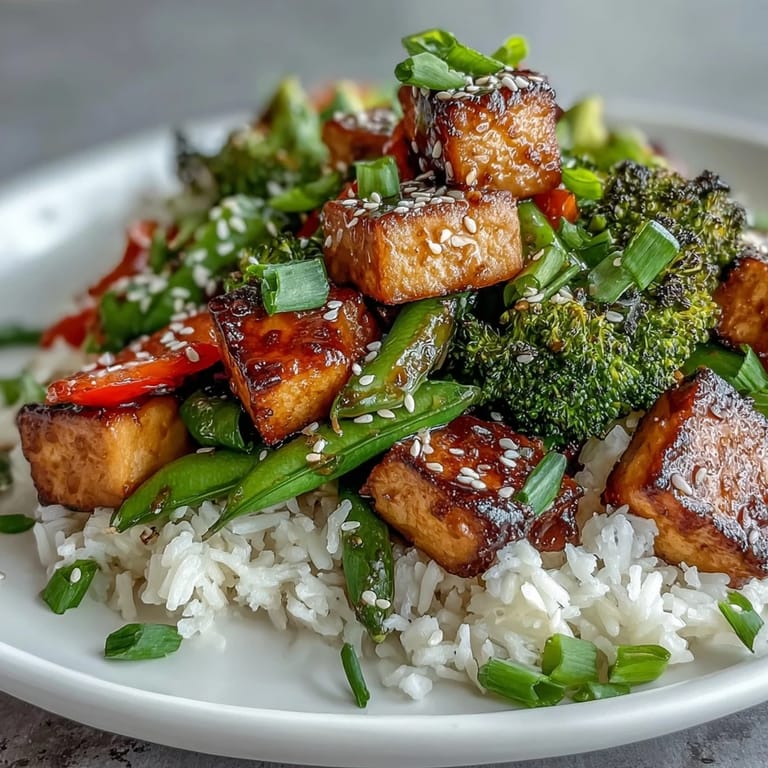
Save My roommate came home one evening to the smell of sesame oil and ginger filling our tiny kitchen, and she immediately demanded to know what I was making. I'd been experimenting with tofu after years of avoiding it, convinced it was bland and impossible to cook right, but something clicked when I learned the trick of pressing and crisping it first. That night, watching her twirl noodles coated in glossy teriyaki sauce and perfectly golden tofu cubes, I realized this dish had quietly become my go-to dinner on nights when I wanted something that felt fancy but took barely half an hour.
I made this for a friend who swore they didn't like tofu, and I watched their face change with that first bite of the crispy, sauce-coated cubes. They asked for the recipe before dessert, and now I get texts asking me to make it whenever they visit. That moment reminded me that good food isn't about impressing people with complicated techniques, it's about proving that simple ingredients, when treated with care, can genuinely surprise you.
Ingredients
- Firm tofu (400 g): The foundation of this dish, and pressing it properly is non-negotiable—it removes moisture so the cubes can actually crisp up instead of steaming.
- Cornstarch (for tofu): This is what gives you that golden, slightly crunchy exterior that makes people forget they're eating tofu.
- Vegetable oil (2 tbsp): Use something with a high smoke point like vegetable or peanut oil so it can handle the heat without burning.
- Broccoli florets (300 g): The sturdy florets hold up to high heat and stay crisp-tender if you don't overthink it.
- Snap peas (150 g): These add sweetness and a satisfying snap that contrasts beautifully with the soft tofu.
- Red bell pepper: Sliced thin so it cooks quickly and adds both color and a subtle sweetness to balance the savory sauce.
- Spring onions: A fresh, sharp finish that you add at the very end to preserve their brightness.
- Soy sauce (60 ml): The savory backbone of the sauce, and yes, tamari works perfectly if you need gluten-free.
- Maple syrup or honey: This rounds out the sauce with subtle sweetness without being cloying.
- Rice vinegar (1 tbsp): The acid that keeps the sauce from feeling one-dimensional and heavy.
- Sesame oil (1 tbsp): A small amount goes a long way, so don't skip it—this is where the aromatic depth comes from.
- Fresh ginger and garlic: Minced fresh, never from a jar, because the difference is genuinely noticeable in a sauce this simple.
- Cornstarch slurry: This is what transforms the sauce from loose and watery to glossy and clingy in just a minute or two.
Tired of Takeout? 🥡
Get 10 meals you can make faster than delivery arrives. Seriously.
One email. No spam. Unsubscribe anytime.
Instructions
- Press and cut your tofu:
- Wrap your drained tofu block in a clean kitchen towel and place it on a cutting board with something heavy on top—a cast iron skillet, some cans, whatever you have—for about 10 minutes. This step is worth the wait because it removes enough moisture that your tofu will actually brown instead of stew in its own liquid.
- Coat and fry the tofu:
- Cut the pressed tofu into roughly 2 cm cubes, toss them in cornstarch until every surface is dusted, then add them to hot oil in a large skillet or wok. You'll hear that satisfying sizzle immediately, and you want to resist the urge to move them around—let each side get golden and crispy before turning, about 8-10 minutes total.
- Stir-fry the vegetables:
- Once the tofu is done, push it to the side of your pan and add the broccoli, snap peas, and bell pepper to the same skillet with its leftover oil. Keep everything moving with quick tosses and tosses, and stop as soon as the vegetables are just tender but still have a slight bite to them—this takes about 3-4 minutes.
- Build your sauce:
- While the vegetables cook, whisk together your soy sauce, maple syrup, rice vinegar, sesame oil, ginger, and garlic in a small bowl so everything is ready to go.
- Bring it together:
- Return the tofu to the pan with the vegetables, pour in your sauce, and let it come to a gentle simmer so all the flavors meld.
- Thicken and finish:
- Stir your cornstarch slurry one more time to recombine it, then pour it into the simmering pan and stir constantly for 1-2 minutes until the sauce thickens and coats everything in a glossy sheen. You'll see it transform from loose and thin to rich and clingy, and that's when you know it's perfect.
- Plate and garnish:
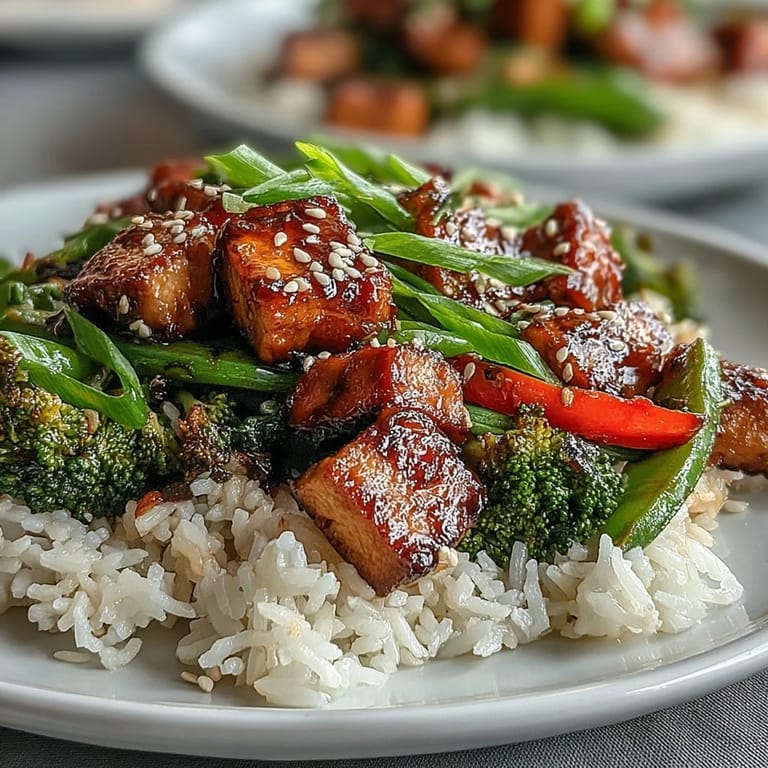
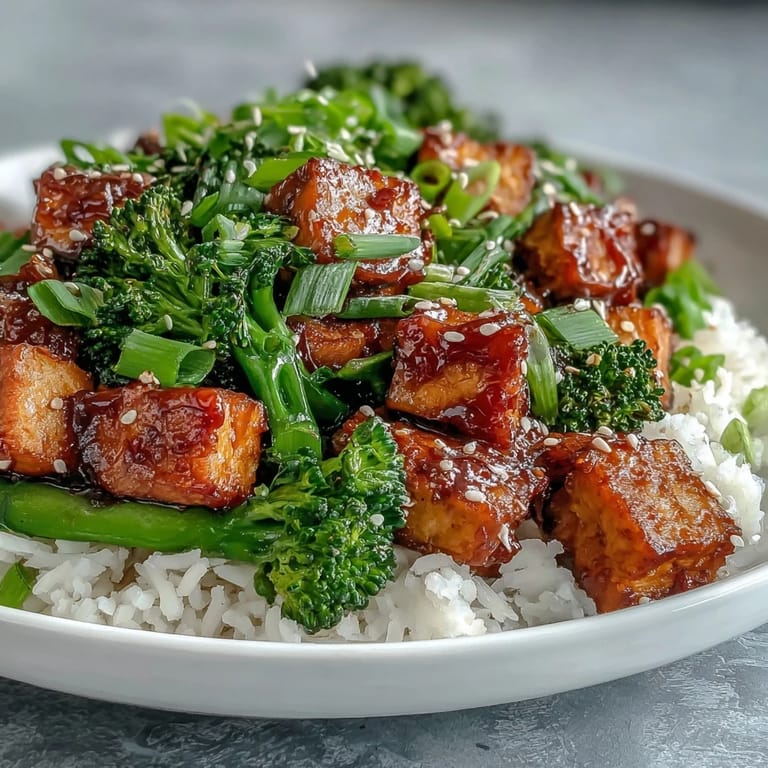
- Remove from heat, scatter sesame seeds and fresh spring onions on top, and serve immediately over rice or noodles while everything is still hot and the sauce is at its glossiest.
 Save
Save There's a specific moment right when you add the sauce to the pan and everything comes together—the smell of ginger and sesame rises up in a warm cloud, the vegetables glisten, and you realize you've just made restaurant-quality food in your regular kitchen. That's when it stops being a weeknight dinner and becomes something you actually look forward to cooking.
Why Crispy Tofu Changes Everything
For years I thought tofu was rubbery and flavorless because I was essentially steaming it, not cooking it. The moment I understood that you need high heat, dry cubes, and patience to let them brown, everything shifted. Now the tofu is actually the star of this dish instead of just a protein filler, with a texture that rivals anything you'd order at a restaurant.
Building Flavor in a Simple Sauce
The beauty of this teriyaki sauce is that it proves you don't need a dozen ingredients to create something complex and delicious. Soy sauce gives you umami and salt, maple syrup adds subtle sweetness and body, ginger and garlic provide warmth and aromatics, and the rice vinegar keeps everything balanced so no single flavor overwhelms the others. The cornstarch thickens it just enough that it clings to every piece instead of running off onto your plate, which is a small detail that makes an enormous difference in how satisfying the final dish feels.
Timing and Temperature Tips
The secret to keeping vegetables crisp is understanding that they cook faster than you think, especially once you're using high heat. Start checking them around the 3-minute mark, and remember that they'll continue cooking slightly from residual heat even after you remove the pan from the stove, so it's better to pull them out when they still have a tiny bit of resistance. One more thing that took me a while to learn: don't let the sauce simmer too long after you add the cornstarch slurry, because it can break down and become thin again if you cook it too much.
- Medium-high heat is your sweet spot for crisping tofu without burning it on the outside while the inside stays cold.
- If your sauce looks too thin at the end, you likely didn't stir the cornstarch slurry enough before adding it, so give it another whisk in the bowl.
- Serve immediately while everything is hot and the sauce is glossy, because it will thicken more as it cools and can become gluey if it sits too long.
 Save
Save This is the kind of dinner that makes you feel capable in the kitchen because it looks impressive but requires almost no special skills, just a little attention and patience. Once you nail it once, you'll make it again and again, and everyone will assume you're secretly a professional cook.
Recipe FAQs
- → How do I get tofu crispy without it sticking?
Coat tofu cubes evenly with cornstarch and cook them in hot vegetable oil without moving too much. This helps form a crispy crust and prevents sticking.
- → Can I substitute the vegetables in this dish?
Yes, feel free to swap broccoli and snap peas for other crisp vegetables like green beans, zucchini, or bell peppers for seasonal variations.
- → What is the best way to thicken the sauce?
Mix cornstarch with cold water to create a slurry, then stir it into the simmering sauce. This will thicken it to a glossy finish that coats tofu and vegetables evenly.
- → How long should I marinate the tofu for more flavor?
Marinating tofu in soy sauce for about 10 minutes before cooking infuses a deeper flavor, enhancing the overall dish.
- → What sides pair well with this dish?
This savory tofu and vegetable combination goes wonderfully with jasmine rice, soba noodles, or steamed grains of choice.