 Save
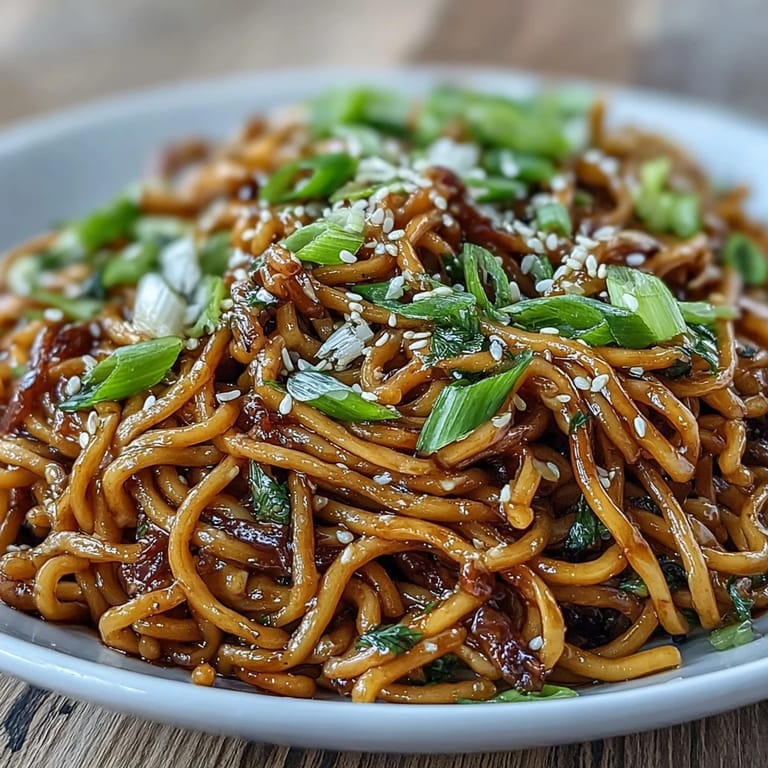
Save My neighbor knocked on my door one Tuesday evening with a steaming takeout container, insisting I try what she'd just made. One bite of those glossy, aromatic noodles and I was hooked—so much so that she laughed and handed me her hastily scribbled notes. It turns out this dish, which tastes like it requires restaurant-level skill, is actually something you can pull together in your kitchen on a random weeknight while your water boils.
I made this for friends last month who were skeptical about my cooking skills, and the moment they twirled those first forkfuls, their faces just changed. One of them asked if I'd been secretly training in a wok somewhere, which felt like an absolute victory for my kitchen confidence. That's when I realized this dish has this quiet power to impress without making you feel like you're performing.
Ingredients
- Wheat noodles (350g): Lo mein, ramen, or even spaghetti works beautifully—just cook them until they're just barely tender because they'll soften slightly more when tossed in the glaze.
- Neutral oil (4 tbsp): Canola or grapeseed keeps the focus on the aromatics without adding competing flavors, and it has a high enough smoke point that you won't worry about it burning.
- Scallions (4 plus 1 for garnish): Separating whites and greens isn't fussy—it's the secret to building flavor in layers, with the whites giving you deep, mellow notes and the greens bringing fresh brightness at the end.
- Fresh ginger (2 tbsp minced): This is where the magic starts; fresh ginger gives you that tingling, alive sensation that no powder can replicate, and mincing it fine means it distributes evenly instead of catching in your teeth.
- Garlic cloves (2 minced): Two cloves strikes that sweet spot between noticeable and not overwhelming—trust me, I learned this by trial and more than a few overly pungent batches.
- Red chili (1 small, sliced): Optional, but it adds a whisper of heat and a pop of color that makes the dish feel intentional.
- Soy sauce (4 tbsp): The backbone of your glaze, bringing that essential umami that makes your brain keep reaching for more noodles.
- Dark soy sauce (1 tbsp optional): If you have it, use it—it deepens the color and adds a subtle molasses-like undertone that feels luxurious.
- Oyster sauce (1 tbsp): This ingredient confused me for years until I understood it as liquid savory richness; use vegan versions if needed and don't skip it.
- Brown sugar (1 tbsp): Just enough to balance the salty and tangy elements without making the dish taste sweet.
- Rice vinegar (1 tbsp): The acidity cuts through richness and keeps the flavors from feeling heavy, even on a full stomach.
- Toasted sesame oil (1 tsp): A small amount goes a long way, adding that toasted, nutty complexity that makes people ask what your secret ingredient is.
- Water (2 tbsp): Helps the glaze coat the noodles evenly and prevents it from clinging in sticky clumps.
- Toasted sesame seeds (1 tsp) and cilantro (optional): These aren't just garnish—they're the final punctuation mark that makes each bite feel complete.
Tired of Takeout? 🥡
Get 10 meals you can make faster than delivery arrives. Seriously.
One email. No spam. Unsubscribe anytime.
Instructions
- Cook your noodles until they're just shy of done:
- Bring a large pot of water to a rolling boil, add noodles, and cook according to package directions, but pull them out about a minute early—they should still have a slight firmness to them. Drain and rinse under cold water to stop the cooking process, shaking the strainer gently so they don't clump.
- Mix your soy glaze in a quiet moment:
- In a small bowl, whisk together soy sauce, dark soy sauce if using, oyster sauce, brown sugar, rice vinegar, sesame oil, and water until the sugar dissolves completely. This takes maybe two minutes and you can set it aside while you prep the aromatics.
- Get your oil singing with aromatics:
- Heat your neutral oil in a large skillet or wok over medium heat until it shimmers slightly, then add just the white parts of the scallions along with your minced ginger, garlic, and sliced chili if using. Stir-fry for 1 to 2 minutes, watching carefully—you want the kitchen to smell absolutely incredible but nothing should brown.
- Introduce the noodles to the fragrant oil:
- Add your drained noodles to the skillet and toss everything together, using two utensils to lift and turn the noodles so they get coated with the aromatic oil. This only takes about a minute and the noodles will start to glisten.
- Pour in your glaze and toss with intention:
- Pour the soy glaze over the noodles and toss continuously for 2 to 3 minutes so every strand gets coated in that glossy, savory sauce. You'll notice the noodles will start clumping slightly and then separate again as the heat works through them.
- Finish with the bright green parts:
- Pull the skillet from heat and add the green parts of your scallions, tossing gently so they don't wilt completely but just soften enough to release their fresh aroma.
- Serve immediately with all your garnishes:
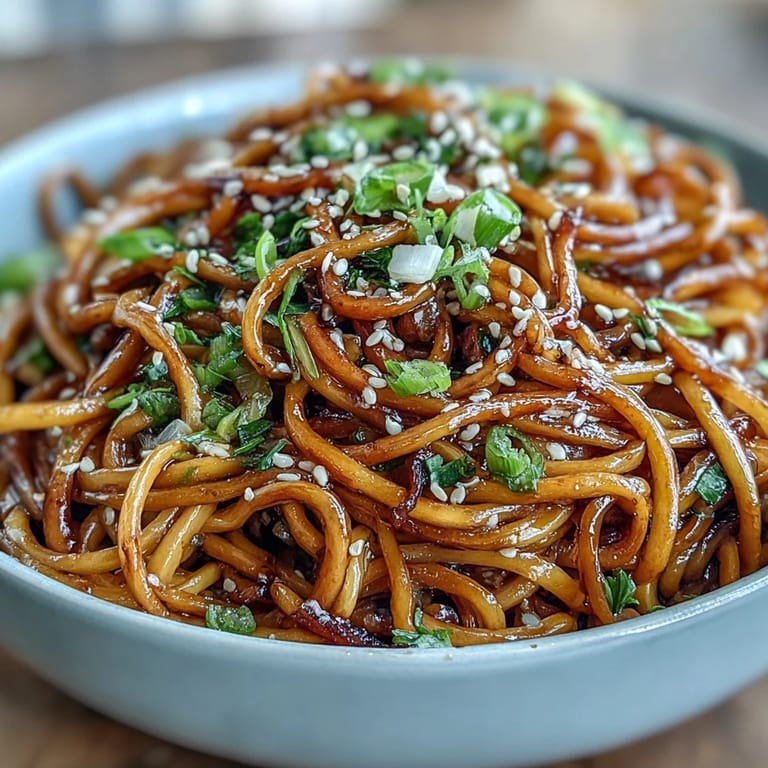
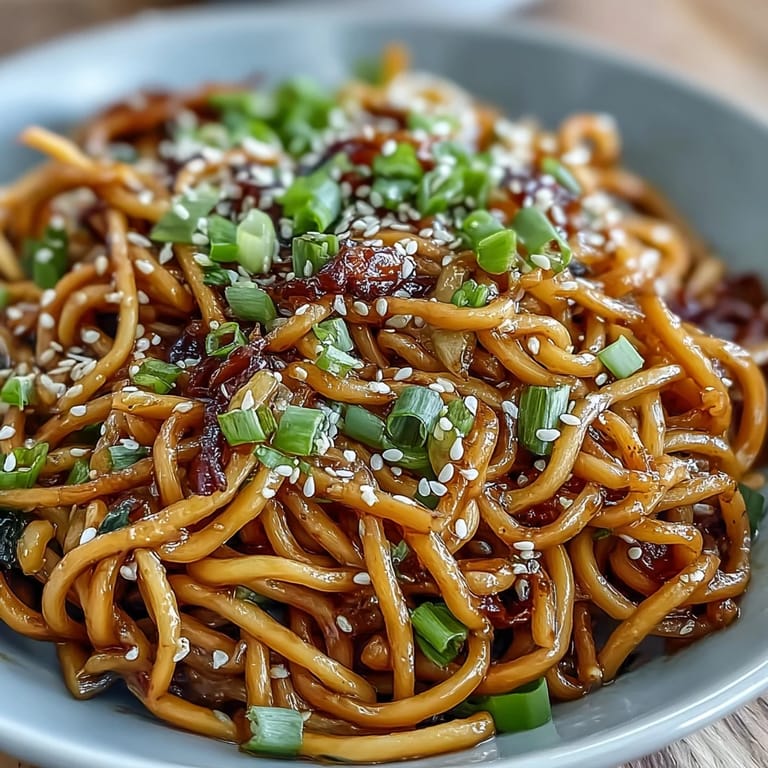
- Transfer to plates or bowls right away and scatter toasted sesame seeds, additional sliced scallion greens, and cilantro leaves on top if you like. The noodles taste best when they're still warm and the green scallions haven't gone limp.
 Save
Save There's something almost meditative about this dish—the way the aroma builds as the ginger and garlic hit the oil, how the noodles catch the glaze like they're catching the light. I've made it on days when I felt too tired to cook and walked away feeling genuinely proud of myself.
The Science of Layered Flavor
This dish works because you're building flavor in stages rather than dumping everything together at once. The whites of the scallions and ginger release their compounds when they hit hot oil, creating a deep aromatic base that your palate recognizes as complex. Then the glaze adds sweetness, salt, and acid, and finally the fresh greens and cilantro bring brightness that makes you taste everything all over again.
Why This Beats Takeout
Restaurant versions of this often use oil more liberally than necessary and can leave your stomach feeling heavy. When you make it at home, you control the balance—you get all the flavor with none of that greasy aftertaste. Plus, your kitchen smells better than any restaurant, and you're done eating and cleaning in under an hour.
Customizing Without Apology
I've made this with mushrooms, snap peas, shredded carrots, and bok choy, and honestly, every version felt like a completely valid meal. The soy glaze is flexible enough to carry whatever vegetables you add, and the aromatics stay prominent no matter what. If you want a protein, crispy tofu or shrimp both work beautifully tossed in at the same time as the noodles.
- Sautéed mushrooms add an earthy depth that makes the dish feel more substantial without weighing it down.
- A drizzle of chili oil on top gives heat and richness—especially good if anyone at your table is feeling adventurous.
- Keep a jar of pickled cucumbers nearby because the acidity cuts through the richness in a way that feels almost cleansing between bites.
 Save
Save This recipe became my go-to because it never fails and always tastes intentional, even when you're making it on a Tuesday with whatever's in your pantry. That's the kind of dish that sticks around.
Recipe FAQs
- → What type of noodles work best?
Wheat noodles such as lo mein, ramen, or even spaghetti provide ideal texture and absorb the glaze well.
- → Can I make this dish vegan?
Yes, use vegan oyster sauce or substitute with extra soy sauce to keep it plant-based without compromising flavor.
- → How do I prevent the aromatics from burning?
Stir-fry scallions, ginger, garlic, and chili gently over medium heat for 1–2 minutes until fragrant but not browned.
- → What are good optional additions?
Sautéed mushrooms, shredded carrots, bok choy, or snap peas add color, texture, and nutrients.
- → How should I serve the finished dish?
Serve immediately after tossing with scallion greens and garnishing with toasted sesame seeds and fresh cilantro if desired.