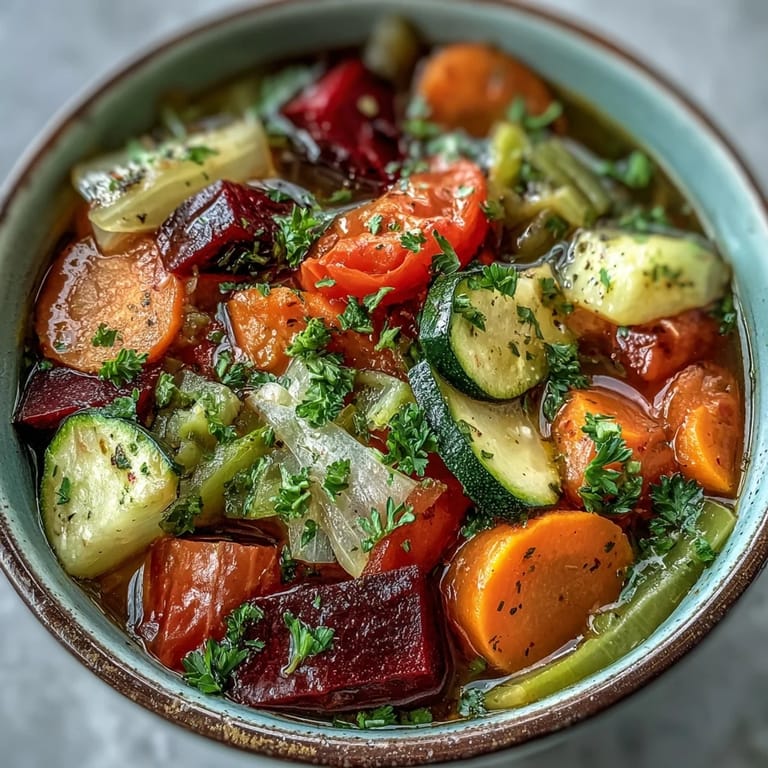
 Save
Save My kitchen smelled like a farmer's market had exploded the afternoon I first made this soup—beets staining my cutting board deep crimson, carrots catching the sunlight in orange ribbons. A friend had just texted asking what I was making for dinner, and honestly, I was tired of the same old routine. So I grabbed whatever colorful vegetables were lingering in my crisper drawer and threw them into a pot with good intentions. That first spoonful, bright and warm with those whispers of turmeric and cumin, felt like I'd accidentally stumbled onto something I'd been craving without knowing it.
Last winter, I made this soup for my sister when she was recovering from the flu, and watching her eat something so vibrant when everything else seemed gray felt oddly symbolic. She told me later that the colors alone made her smile before she even tasted it. Now whenever I make it, I think about how food can be both nourishing and healing in ways that have nothing to do with calories or detoxing, and everything to do with feeling cared for.
Ingredients
- Beetroot: This is the star that gives the soup its gorgeous deep magenta hue and a subtle earthy sweetness; peel it with gloves or your hands will look like you've been in a crime scene for hours.
- Carrots: They soften beautifully and add natural sweetness that balances the deeper flavors; I slice them a bit thinner than the other veggies so they cook at the same pace.
- Courgette: This keeps things light and adds a tender texture without overwhelming the broth; add it later in cooking so it doesn't turn mushy.
- Tomatoes: Fresh ones are always better here, but if they're mealy in winter, don't be shy about using canned ones instead.
- Green bell pepper: It brings a slight sweetness and freshness that keeps the soup from feeling too heavy; don't skip this one.
- Red onion: The purple color matters here both visually and in flavor—it's slightly sweeter and more delicate than yellow onions.
- Garlic: Two cloves is the right amount; too much and it becomes aggressive, too little and you miss that warmth underneath everything else.
- Baby spinach: Optional but I never skip it—it wilts in moments and adds iron and brightness at the very end.
- Vegetable broth: Use good quality broth or make your own; the foundation matters more than you'd think.
- Olive oil: Just enough to build flavor without making the soup feel heavy or greasy.
- Lemon juice: This is the secret weapon that wakes everything up at the end; don't skip it or omit it.
- Cumin, turmeric, and smoked paprika: These three spices work together to add warmth and subtle complexity without tasting medicinal or weird.
- Fresh parsley or coriander: The garnish matters more than it sounds—it adds a fresh green note that cuts through the earthiness and makes each bowl feel special.
Tired of Takeout? 🥡
Get 10 meals you can make faster than delivery arrives. Seriously.
One email. No spam. Unsubscribe anytime.
Instructions
- Build your aromatics:
- Heat the olive oil in a large pot over medium heat and add your finely chopped red onion and minced garlic. Let them soften together for two to three minutes—you'll know it's right when the kitchen smells fragrant and the onion turns slightly translucent at the edges.
- Add the hardest vegetables first:
- Stir in your diced beetroot, sliced carrots, and green bell pepper. Let these cook for four to five minutes, stirring occasionally, so they start to soften and release their flavors into the oil.
- Layer in the rest:
- Now add your diced courgette and chopped tomatoes, then sprinkle in the cumin, turmeric, smoked paprika, salt, and pepper. Stir everything together and let it cook for another two minutes so the spices toast slightly and wake up.
- Bring it all together:
- Pour in your vegetable broth and bring the whole pot to a boil. Once it's bubbling, reduce the heat to low and let it simmer uncovered for twenty to twenty-five minutes, or until all the vegetables are tender and the flavors have melded into something greater than their parts.
- Add the final touches:
- Stir in the baby spinach if you're using it and let it wilt for just a minute or two. Remove from heat, squeeze in your lemon juice, and taste—adjust your salt and pepper until it tastes exactly right to you.
- Serve with intention:
- Ladle the soup into bowls and scatter fresh parsley or coriander over the top. The green makes it all feel more alive somehow.
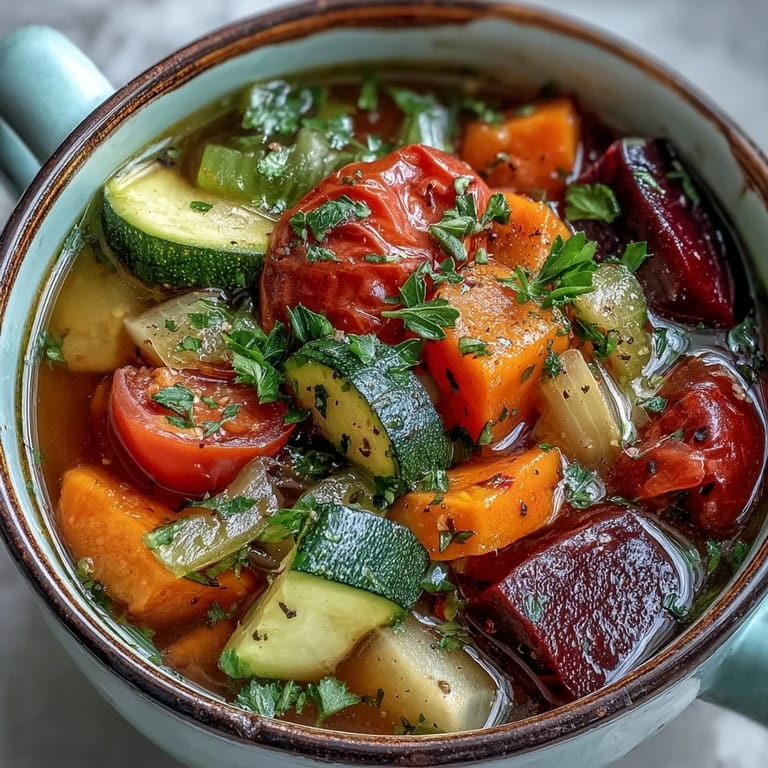 Save
Save There's something almost meditative about watching a pot of vegetables gradually transform into something cohesive and nourishing. My neighbor once called me when she smelled this cooking and asked if I was opening a restaurant, which made me laugh because it's really just humble vegetables doing what they do best.
Ways to Make It Your Own
This soup is forgiving and flexible, which is exactly why I love it. One evening I had no carrots, so I used sweet potato instead and it was just as beautiful and perhaps even better. Another time I added a can of drained chickpeas for protein and richness, which transformed it from a light side into a proper meal. You can swap the green pepper for red or yellow, add celery if you have it, throw in some kale at the end, or even experiment with different herbs. The framework stays the same, but your kitchen and your mood get to decide the details.
Serving and Pairing
I've served this soup at casual weeknight dinners and at slightly fancier gatherings, and it works beautifully in both contexts because it looks so vibrant on the table. A crusty slice of whole-grain bread alongside feels right, or sometimes I pair it with a simple grain like quinoa stirred in for substance. For beverages, a crisp white wine like Sauvignon Blanc complements the vegetables nicely, though honestly a cup of herbal tea is equally lovely and perhaps more aligned with the spirit of the thing.
Storage and Leftovers
This soup keeps beautifully in the refrigerator for up to four days, and the flavors actually deepen and become more integrated as it sits. You can also freeze it in portions for up to three months, though the vegetables will be softer when thawed—still delicious, just slightly less textured. I often find myself making a double batch because having this in the freezer feels like having something genuinely nourishing waiting for a moment when I need it.
- Cool the soup completely before storing or freezing to prevent condensation and off-flavors.
- Add the fresh herbs and lemon juice after reheating rather than before storing, so they taste bright and fresh.
- If the soup seems too thick after sitting, just add a splash more broth when you reheat it.
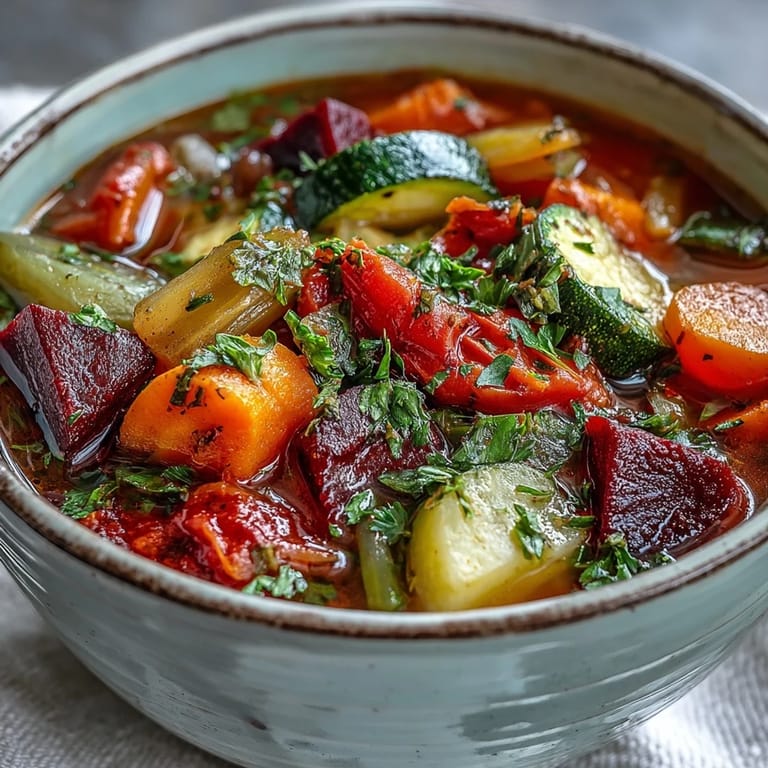 Save
Save This soup has become my answer to so many moments—when I want to feel grounded, when someone I care about needs feeding, when my kitchen feels a little too quiet and needs the sound of something gently simmering. It's simple enough to make without thinking too hard, but nourishing enough that you feel genuinely better after eating it.
Recipe FAQs
- → How long does this soup keep in the refrigerator?
This soup stores well in an airtight container for up to 4 days. The flavors often develop and improve after a day or two. Reheat gently on the stove, adding a splash of water or broth if needed.
- → Can I freeze this rainbow soup?
Yes, this soup freezes beautifully for up to 3 months. Let it cool completely before transferring to freezer-safe containers. Thaw overnight in the refrigerator and reheat on the stove.
- → What vegetables can I substitute?
Feel free to swap seasonal vegetables based on what's available. Sweet potatoes, butternut squash, bell peppers in different colors, or leafy greens like kale work wonderfully. Maintain the rainbow effect by using various colored vegetables.
- → How can I make this more filling?
Add protein like chickpeas, white beans, or lentils when pouring in the broth. Serve with crusty whole-grain bread or a side of quinoa. A dollop of yogurt or coconut milk also adds richness.
- → Is this suitable for meal prep?
Absolutely! This soup is ideal for meal prep. Make a batch on Sunday and portion into containers for the week. It reheats perfectly and actually tastes better as the spices meld together over time.
- → What's the purpose of the lemon juice?
The lemon juice adds brightness and helps balance the earthy sweetness of the root vegetables. It also enhances the absorption of certain nutrients and adds a refreshing finish to the rich, spiced broth.