 Save
Save There's something almost meditative about roasting butternut squash on a crisp autumn afternoon—the way the kitchen fills with that sweet, almost caramel-like aroma. I discovered this soup quite by accident one October when I had half a squash sitting in my pantry and a craving for something warm that didn't feel heavy. What started as curiosity became my go-to recipe whenever the weather shifts and I want to feel nourished without spending hours in the kitchen.
I made this for my partner on a genuinely awful day—one of those mornings where everything felt slightly off. Watching them slowly relax over a bowl of this soup, asking for seconds while the steam warmed their face, reminded me that cooking can be the gentlest form of care. It became our winter comfort ritual after that.
Ingredients
- Butternut squash (about 900 g / 2 lbs): The star that roasts into golden tenderness—peeling it raw is annoying, so don't hesitate to microwave it for 2 minutes first to soften the skin.
- Red lentils (150 g / 3/4 cup): These break down into the soup naturally, creating creaminess without any dairy, and they cook in about 15 minutes so the timing works perfectly.
- Carrots (2 medium): They soften into sweetness that balances the earthier lentils and spices beautifully.
- Onion (1 large): This becomes the aromatic base that everything else builds on—don't skip the sauté step.
- Garlic (2 cloves): Mince it fine so it distributes evenly and doesn't create any sharp bites in the finished soup.
- Ground cumin: One teaspoon is enough to add warmth and subtle earthiness without overpowering anything else.
- Ground coriander (1/2 tsp): This adds a delicate citrus note that keeps the soup from feeling too heavy.
- Ground turmeric (1/2 tsp): It brings both color and a gentle bittersweet note that works with the squash's natural sweetness.
- Ground cinnamon (1/4 tsp): Just a small amount creates a warmth that makes people wonder what that cozy undertone is—they rarely guess cinnamon.
- Chili flakes (1/4 tsp, optional): Add these if you want a subtle heat that builds slowly as you eat.
- Olive oil (2 tbsp total): One tablespoon goes to the squash for roasting, the other to build your aromatics—this keeps everything light and clean-tasting.
- Vegetable broth (1.2 liters / 5 cups): Use good quality broth if you can—it becomes the backbone of flavor, so it matters.
- Lemon juice (1/2 lemon): This brightness at the end lifts everything and prevents the soup from tasting one-dimensional.
- Fresh cilantro or parsley: Choose whichever feels right to you; cilantro adds brightness while parsley is gentler and more understated.
Tired of Takeout? 🥡
Get 10 meals you can make faster than delivery arrives. Seriously.
One email. No spam. Unsubscribe anytime.
Instructions
- Set your oven and prep the squash:
- Preheat to 200°C (400°F), then toss your cubed butternut squash with 1 tablespoon olive oil, salt, and pepper. Spread it in a single layer on a baking sheet—this matters because crowding creates steam instead of that golden caramelization you're after.
- Roast until golden:
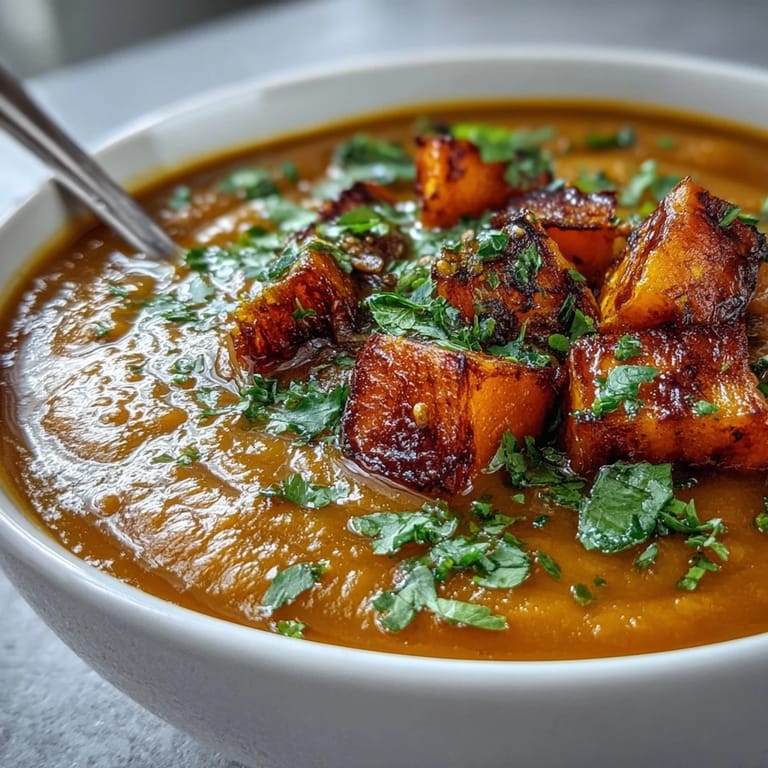
- About 25 minutes in the oven transforms the squash into something almost creamy, with edges that catch just slightly darker. Your kitchen will smell incredible.
- Build your flavor base:
- While the squash roasts, heat your remaining tablespoon of olive oil in a large pot over medium heat. Add the diced onion and sliced carrots, stirring occasionally for about 5 minutes until the onion becomes translucent and the kitchen starts to smell a little sweeter.
- Toast the spices:
- Add your minced garlic, cumin, coriander, turmeric, cinnamon, and chili flakes if using. Stir constantly for just 1 minute—this blooms the spices and releases their essential oils, making them taste more vibrant and less dusty.
- Introduce the lentils:
- Pour in your rinsed red lentils and stir everything together so they get coated in the spiced oil. They'll start to smell warm and toasty.
- Combine and simmer:
- Add your roasted squash and the vegetable broth, then bring everything to a boil. Once it's bubbling, reduce the heat and let it simmer gently for about 15 minutes until the lentils are completely soft and starting to break down naturally.
- Blend to your preference:
- Use an immersion blender to create a smooth, creamy texture, or leave it slightly chunky if you prefer some texture in your spoon—both are wonderful. If you're using a regular blender, work in batches and be careful with the hot liquid.
- Finish with brightness:
- Stir in the lemon juice and taste carefully, adjusting salt and pepper until it feels balanced. The lemon should make you taste the spices more clearly.
- Serve with love:
- Ladle into bowls and scatter fresh cilantro or parsley on top—the green adds visual lightness and a fresh note that feels almost summery against the warm spices.
 Save
Save My neighbor mentioned she was going through a difficult time, so I brought her a container of this soup with some bread. A week later, she told me she'd made it three times already, and it had become her quiet moment before bed. That's when I realized this recipe isn't just about feeding people—it's about giving them something warm to return to.
Why Blending Matters
When you blend this soup, the red lentils break down completely and create this silky base that feels almost indulgent, even though there's no cream anywhere near it. The first time I made it without blending, thinking the texture would be nice and rustic, it ended up tasting a bit grainy instead of cohesive. Now I understand that the blending step isn't optional—it transforms the soup from good to genuinely craveable.
The Power of Timing
Cooking the onions and carrots for exactly 5 minutes before adding spices means they'll be soft enough to break down in the final blending but still retain enough structure to add texture to the finished soup. Start the roasting and sautéing at roughly the same time, and everything finishes within minutes of each other—it's like a small miracle of kitchen coordination that makes you feel genuinely in control.
Making It Your Own
This recipe is flexible in the best ways possible, once you understand the core technique. I've added coconut milk when I wanted richness, swapped in yellow split peas when I ran out of lentils, and once even added a handful of kale at the very end for extra nutrition. The foundation is sturdy enough to support your creativity without falling apart.
- Creaminess upgrade: A splash of coconut milk stirred in before blending adds luxurious richness without dairy.
- Spice spectrum: Add extra chili flakes if you want real heat, or skip them entirely if you prefer something gentle and warming.
- Texture options: Blend it smooth for elegant simplicity, or pulse it a few times for something you can actually chew.
 Save
Save This soup somehow feels like both a hug and a celebration at the same time. Keep it close for the months ahead.
Recipe FAQs
- → Can I make this soup ahead of time?
Absolutely. This soup actually improves after sitting in the refrigerator for a day or two as the spices continue to develop. Store in an airtight container for up to 5 days and reheat gently on the stovetop, adding a splash of broth if needed to adjust consistency.
- → Is it necessary to roast the squash first?
Roasting isn't strictly required, but it adds significant depth and sweetness. If you're short on time, you can simmer raw squash cubes directly in the broth. However, the roasting step concentrates flavors and creates those caramelized edges that make the final soup taste more complex and satisfying.
- → Can I use green or brown lentils instead of red?
Red lentils work best because they break down completely, creating that smooth, creamy texture. Green or brown lentils hold their shape and would result in a chunkier soup. If you prefer more texture, they're a viable option—just expect a different consistency and slightly longer cooking time.
- → How can I make this soup more filling?
Adding coconut milk before blending increases richness and calories. You can also serve with crusty bread, naan, or a grain side like quinoa or rice. For extra protein, top with toasted pumpkin seeds or a dollop of Greek yogurt if you're not strictly vegan.
- → What's the best way to blend this soup?
An immersion blender is ideal since you can blend directly in the pot without transferring hot liquid. If using a regular blender, work in batches, never fill more than halfway, and vent the lid to let steam escape. A food processor also works but may require more liquid to achieve smooth results.