 Save
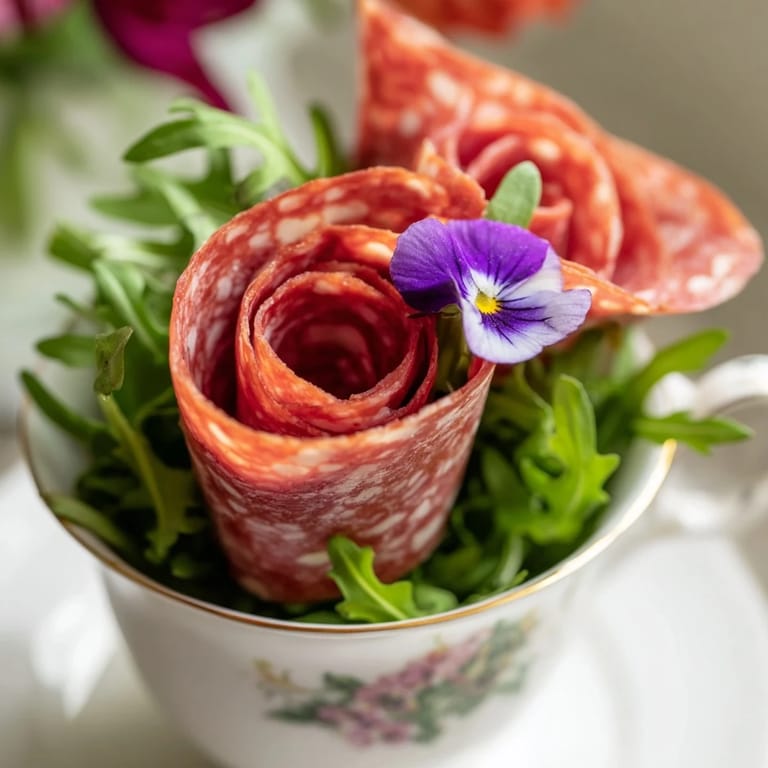
Save I discovered this little trick at a flea market tea party, of all places, where someone had arranged cured meats in teacups as a joke. But the more I looked at those spiral roses made from salami and pepperoni, the more I realized they weren't meant to be funny at all—they were genuinely elegant. That evening, I grabbed some slices from my fridge and spent twenty minutes rolling, tweaking, and discovering that the most charming appetizers sometimes come from the silliest inspirations.
The first time I made these for a gathering, I was nervous about whether anyone would actually eat them—they seemed too pretty to touch. But watching someone pick up a teacup, admire the rose, and then laugh with delight as they realized it was salami made the whole thing click. That's when I understood: food that makes people smile before they even taste it has already succeeded.
Ingredients
- Salami slices (18 large, thin ones): These form your foundation roses and need to be thin enough to roll without cracking but sturdy enough to hold their shape—ask your deli counter to slice them on the thinner setting.
- Pepperoni slices (18 large, thin ones): The sharper, more vibrant cousin to salami; they add visual contrast and a bolder flavor note to your presentation.
- Porcelain teacups (6 small ones): These aren't just serving vessels—they're the entire concept, so choose ones you genuinely love looking at.
- Fresh basil or baby arugula (optional): A soft green base layer that keeps the roses from sliding around and adds a whisper of freshness.
- Edible flowers like pansies or violets (optional): These are the final brushstroke that transforms appetizer into art.
- Assorted crackers, mild cheeses, and grapes (optional board accompaniments): Create a small edible landscape around your teacups to give guests something to nibble between admiring your roses.
Tired of Takeout? 🥡
Get 10 meals you can make faster than delivery arrives. Seriously.
One email. No spam. Unsubscribe anytime.
Instructions
- Lay your foundation:
- Arrange six salami slices in a slightly overlapping line on your work surface, each one covering about a third of the previous slice. Think of them like shingles on a roof, each one ready to spiral inward.
- Roll your first rose:
- Starting at one end, gently and slowly roll up the line of overlapping slices into a tight spiral. When you've rolled the whole length, stand it upright on your work surface and gently loosen the outer petals with your fingers until it resembles an actual rose—loose, organic, not too perfect.
- Repeat for pepperoni:
- Use six pepperoni slices and follow the exact same rolling and petal-loosening technique. The pepperoni's deeper color creates a gorgeous visual contrast if you place it next to a salami rose.
- Double your bounty:
- Make a second round of both salami and pepperoni roses until you have three of each type.
- Prepare your teacups:
- If you're using them, gently nestle a basil leaf or a few baby arugula leaves into the bottom of each cup as a soft cushion.
- Place and adjust:
- Carefully set each rose inside a teacup, one per cup, and use your fingertips to gently adjust the outer petals so they look full, natural, and a little loose rather than rigid.
- Final flourish:
- If you have edible flowers on hand and you're feeling it, tuck one gently into the side of a rose. This is the optional detail that makes someone stop mid-conversation to ask where you got these.
- Arrange and serve:
- Place your six teacups on a serving board, leaving room around them for crackers, cheeses, and fresh fruits. This creates a little tablescape that says you didn't just make appetizers—you made an experience.
 Save
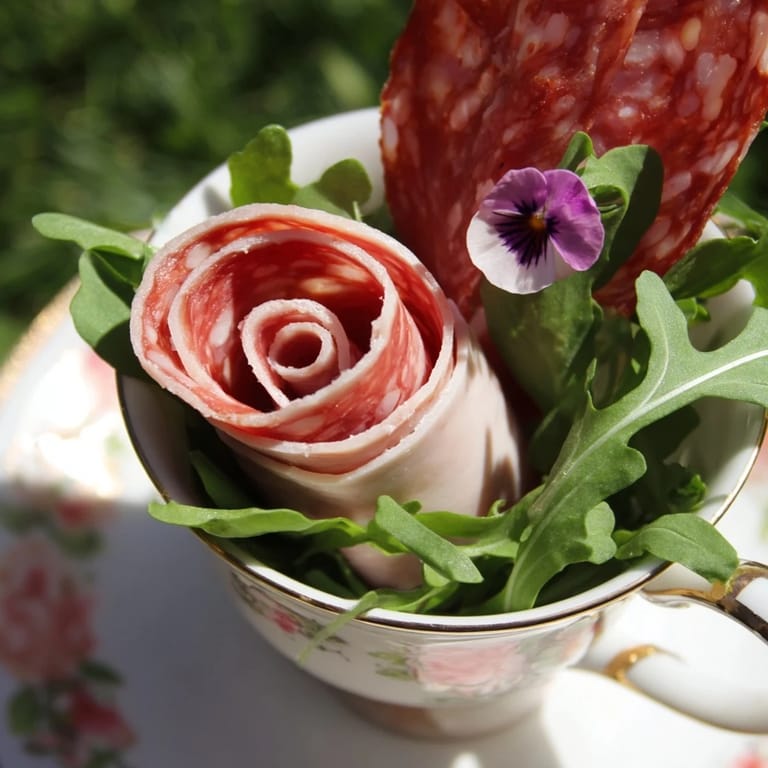
Save I'll never forget my grandmother asking if she could take a photo of these before eating them, something I'd never seen her do with food before. That single moment made me realize that presentation isn't vanity in cooking—it's a form of respect for the people you're feeding.
Small Details That Change Everything
The difference between a rose that looks like something you grabbed from a jar and one that looks genuinely handcrafted comes down to how you handle the petals at the end. Spend an extra thirty seconds loosening them, fanning them out slightly, and letting them look a little imperfect and lived-in. A rose that looks too tight looks like you were rushing; a rose with softly separated petals looks like you understood the assignment.
Optional Flavor Layers
While these roses are delicious as pure, simple meat spirals, I've learned that a whisper of extra flavor can elevate them from impressive to unforgettable. A light brush of olive oil mixed with cracked black pepper before rolling adds complexity without overpowering the delicate presentation. Prosciutto creates a more delicate rose with a silkier mouthfeel, while coppa brings earthiness and a deeper color that photographs beautifully.
Timing and Temperature
These roses are best served slightly chilled, which actually makes them easier to handle and gives them a satisfying firmness when you bite into them. You can assemble them up to two hours ahead of your event and keep them in the refrigerator, which means you can spend your hosting time actually talking to people instead of panicking in the kitchen. The flavors settle and meld during that chill time, making each rose taste even more deliberate and thoughtful.
- Prepare these up to two hours in advance and refrigerate until your guests arrive.
- If the petals seem to droop slightly during storage, give them a gentle finger-adjustment right before serving.
- Remove them from the refrigerator about five minutes before serving so they're chilled but not stiff.
 Save
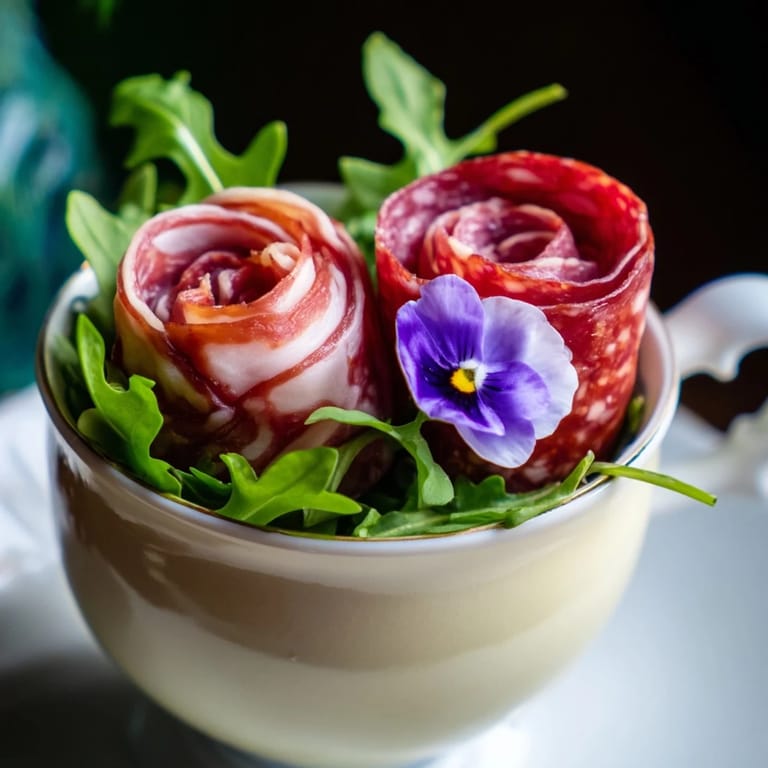
Save These roses remind me why I cook: not to prove anything, but to see someone's face light up when they realize that beauty and flavor don't have to be complicated. Serve these with confidence.
Recipe FAQs
- → How do I make the salami and pepperoni into rose shapes?
Lay slices overlapping in a straight line, then roll tightly to form a spiral. Stand upright and gently loosen the edges to resemble petals.
- → Can I prepare the roses ahead of time?
Yes, prepare up to 2 hours in advance and refrigerate to maintain freshness and shape.
- → What garnishes complement the presentation?
Fresh basil or baby arugula leaves line the teacups, and edible flowers like pansies add a decorative touch.
- → Are there alternative meats to use for the roses?
Varieties such as prosciutto or coppa can be substituted to add different flavors and textures.
- → How should I serve this appetizer?
Arrange the teacups on a serving board paired with assorted crackers, mild cheeses, and fresh fruit for a complete presentation.