 Save
Save I discovered passionfruit tarts quite by accident at a tiny patisserie tucked between cobblestone streets, where the baker handed me a sample still warm from the oven. The tartness hit first, then the sweetness, then that cloud of meringue that dissolved on my tongue like edible air. I stood there a bit too long, staring at the pastry case, and decided right then that I needed to learn how to make this myself—not to replicate it perfectly, but to understand why something so simple felt so elegant.
My first attempt happened on a Saturday morning when my partner's parents were visiting unexpectedly that evening. I'd never made meringue before, and watching it transform from foamy egg whites to glossy peaks felt like actual magic happening in my mixer bowl. When I torched the top and it blushed golden brown, they both gasped—and that moment, more than any compliment about the taste, made me feel like a real baker.
Ingredients
- All-purpose flour: Use the weight measurement if you have a scale, as it's far more reliable than cups, which can vary wildly depending on how you scoop.
- Cold unsalted butter: This is non-negotiable for flakiness; if it warms up while mixing, your pastry will be dense rather than tender.
- Ice water: Keep it actually cold—I learned this the hard way by using room temperature water and ending up with a tough, uncooperative dough.
- Passionfruit pulp: Fresh is best if available at your market, but frozen works beautifully; strain out the seeds for a smooth curd unless you want texture.
- Lemon juice: This brightens the curd and prevents it from tasting one-dimensional; don't skip it thinking passionfruit is enough.
- Cream of tartar: This stabilizes the meringue and helps it hold its shape; omit it only if you're comfortable with slightly less stable peaks.
Tired of Takeout? 🥡
Get 10 meals you can make faster than delivery arrives. Seriously.
One email. No spam. Unsubscribe anytime.
Instructions
- Prepare your workspace and preheat:
- Set your oven to 350°F and get a 9-inch tart pan ready with a light greasing of butter. Having everything in place before you start makes the next steps feel less rushed.
- Mix and chill the pastry dough:
- Combine flour, sugar, and salt, then work in the cold butter using your fingertips until it resembles coarse breadcrumbs—this should take just a minute or two. Add the egg yolk and ice water, stirring gently until the dough barely comes together, then press it into your tart pan, trim the edges clean, and chill while you take a breath.
- Blind bake the crust:
- Line your pastry with parchment paper and fill it with pie weights or dried beans to prevent puffing, baking for 15 minutes. Remove the weights and parchment, then bake another 8 to 10 minutes until the crust is pale golden and smells toasted, then let it cool completely—this patience step matters more than you'd think.
- Create the passionfruit curd:
- In a saucepan, whisk together the passionfruit pulp, sugar, eggs, egg yolks, lemon juice, and salt, then place it over medium-low heat and whisk constantly for about 8 minutes. You'll feel it thicken gradually, and when it coats the back of a spoon without dripping immediately, it's done—remove it from heat and whisk in the butter until silky smooth.
- Fill and chill the tart:
- Pour your warm curd into the cooled pastry shell, smooth the top with a spatula, and slide the whole thing into the refrigerator for at least an hour to set properly. This resting time lets everything firm up and makes the final assembly much easier.
- Whip the meringue to stiff peaks:
- In a completely clean bowl, beat the room-temperature egg whites with cream of tartar until they form soft peaks, then gradually add sugar while beating until the mixture is thick, glossy, and stands in stiff peaks. Beat in the vanilla extract at the very end, and try not to overbeat or the texture becomes grainy.
- Top and brown the tart:
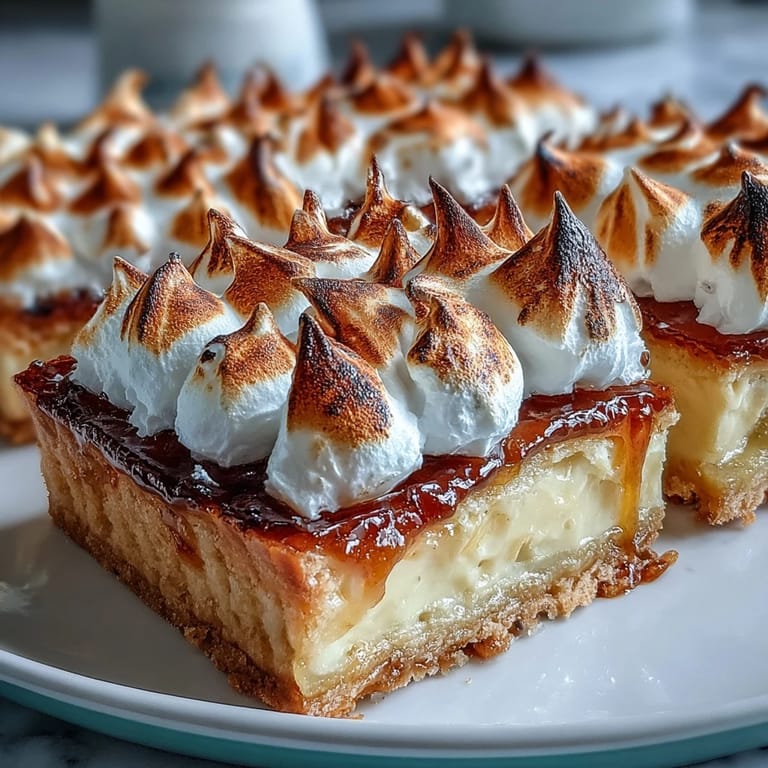
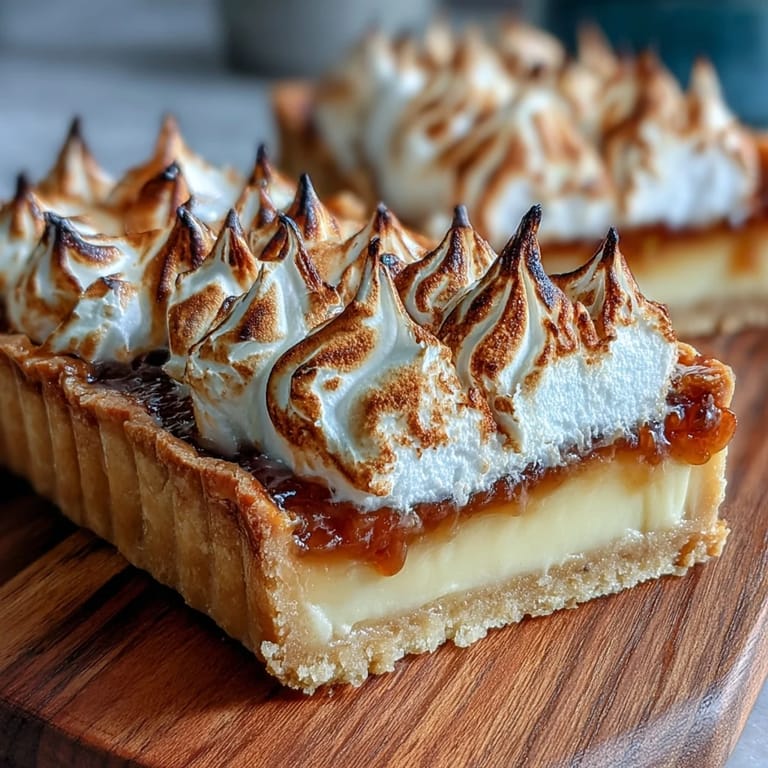
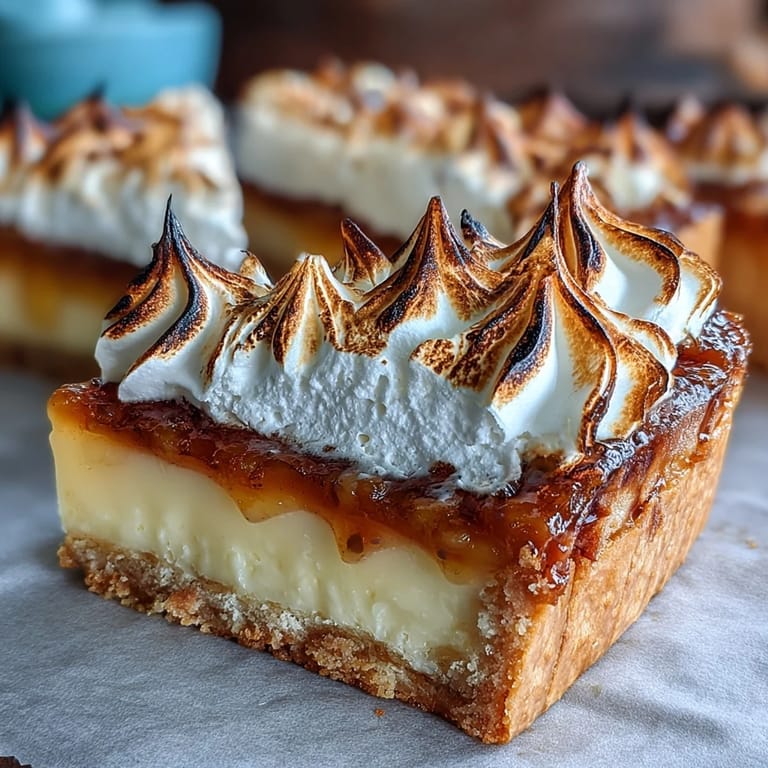
- Spoon or pipe the meringue onto your chilled tart in decorative swirls, then use a kitchen torch to brown the peaks until they're golden, or place it under a preheated broiler for 1 to 2 minutes, watching like a hawk so nothing burns. The moment it turns golden, you're done—take it out immediately and chill for 30 minutes before slicing.
 Save
Save There's a particular quiet that happens around a dinner table when someone takes their first bite of this tart and just stops talking for a moment. That silence is when you know you've created something worth the effort—something that made people pause and really taste what's in front of them.
Pastry Tips That Actually Matter
The pastry shell is where most home bakers stumble, usually by overworking the dough or letting the butter get too warm. I keep my bowl in the freezer for five minutes before starting, and I use my fingertips because they're cooler than the whole hand. The dough should look shaggy and rough when you add the wet ingredients—if it's smooth and cohesive, you've gone too far and will end up with something tough.
The Curd Temperature Game
Watch the curd carefully as it cooks, whisking constantly without stopping; the heat needs to be gentle enough that you're never in a rush, but steady enough that you'll see it thicken gradually over those eight minutes. If your heat is too high, the eggs will scramble and you'll have a grainy mess; too low and you'll stand there forever wondering if anything is happening. The trick is medium-low and patience—I learned this after making the whole recipe twice with different results.
Meringue Mastery and Serving Secrets
Meringue is forgiving once you understand that it's essentially sugar-stabilized air, and your job is to get those egg whites to hold as much air as possible. The cream of tartar helps tremendously, and vanilla at the end adds a subtle flavor that keeps the meringue from tasting one-note. One last thing before you serve—if you need to slice it and the meringue cracks, that's completely normal and honestly looks rustic and homemade in the best way.
- A warm, damp knife works better for cutting meringue-topped desserts than a dry one.
- Fresh passionfruit seeds scattered on top right before serving add brightness and visual drama.
- Serve within a few hours of browning the meringue for the best texture contrast.
 Save
Save This tart taught me that sometimes the most memorable desserts aren't the ones with the longest ingredient lists, but the ones where a few quality components come together with care. Make this when you want to feel like you're cooking in that little patisserie, too.
Recipe FAQs
- → How do I achieve a crisp pastry shell?
Use cold, cubed butter and handle the dough minimally. Chill before baking and use pie weights to prevent puffing during blind baking.
- → Can I use frozen passionfruit pulp?
Yes, thaw frozen pulp and strain out seeds for a smooth curd texture without compromising flavor.
- → What’s the best way to brown the meringue?
Use a kitchen torch for careful, even browning or place under a hot broiler for 1–2 minutes while watching closely.
- → How long should the tart chill before serving?
Chill for at least one hour after filling and another 30 minutes after meringue application for clean slicing.
- → Can this be prepared ahead of time?
Yes, prepare the curd and pastry shell in advance, then assemble and finish with meringue shortly before serving.