 Save
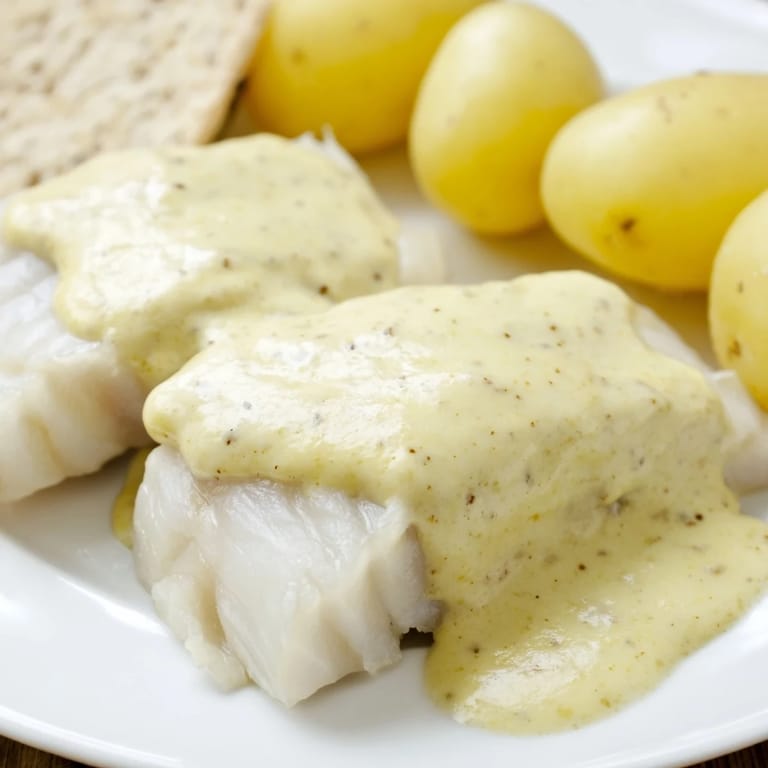
Save My grandmother used to unwrap packages of lutefisk with the same reverence some people reserve for fine chocolate, though I'll admit I didn't understand the appeal until I actually tasted it properly prepared. The fish transforms through that long soak into something impossibly delicate, almost silky on the tongue—nothing like the intimidating dried cod that arrives in your kitchen looking like driftwood. One winter, watching her work through the daily water changes with quiet patience, I realized this dish wasn't about showing off; it was about honoring a tradition that had survived generations and ocean crossings. That creamy mustard sauce she whisked together made everything click into place, and suddenly I got why people came back to this every holiday season.
I made this for friends who were skeptical—one of them had never heard of lutefisk before and was genuinely suspicious of the whole concept. But the moment we sat down and they tasted it with that golden mustard sauce spooned over the flaky fish, something shifted; suddenly everyone was quiet, really tasting it, asking for the recipe. That's when I understood that lutefisk isn't strange at all—it's just unfamiliar until you experience it the right way.
Ingredients
- Dried cod (lutefisk): A kilogram of this looks intimidating but it's the foundation—the long soak transforms it completely, so resist the urge to rush this step.
- Cold water for soaking: You'll go through a lot of it over those five to six days, and changing it daily isn't just tradition, it's what makes the fish edible and mild.
- Coarse salt: The sprinkle after soaking draws out any remaining moisture and firms up the texture beautifully.
- Unsalted butter and all-purpose flour: These make your roux, the invisible backbone that turns milk into something luxurious.
- Whole milk: Full-fat is non-negotiable here; it gives the sauce that creamy richness that makes everything taste like comfort.
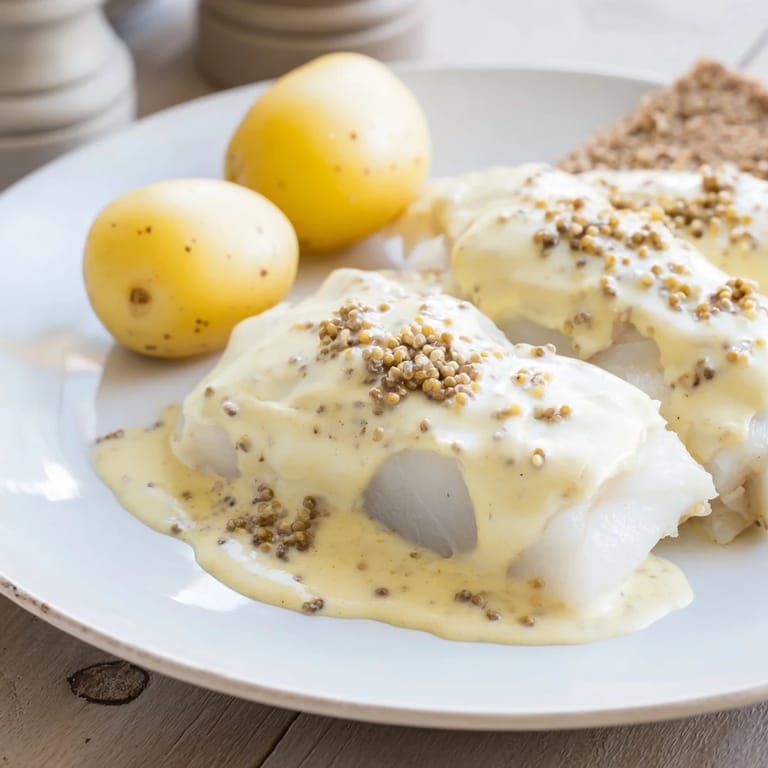
- Dijon and whole-grain mustard: The combination of smooth and textured mustard creates depth—don't skip the whole-grain version or you'll miss those little flavor bursts.
- Sugar: Just a teaspoon balances the mustard's sharpness so it complements rather than overwhelms the delicate fish.
- White pepper: Regular black pepper works but white pepper keeps the sauce looking pristine and tastes cleaner somehow.
- Boiled potatoes and crispbread: These aren't optional sides; they're part of the experience, little anchors that make the meal feel complete.
Tired of Takeout? 🥡
Get 10 meals you can make faster than delivery arrives. Seriously.
One email. No spam. Unsubscribe anytime.
Instructions
- Start the transformation with water:
- Rinse that dried fish thoroughly under cold water, then submerge it completely in a large container filled with fresh cold water. This is the beginning of the magic—over the next five to six days, change the water daily without fail; you'll watch the fish gradually plump up and soften as the salt leeches out, and trust me, those daily water changes are what separate delicate lutefisk from something funky.
- Prepare the fish for baking:
- After soaking, drain everything well and sprinkle the fish generously with coarse salt, letting it sit for thirty minutes while that salt draws out extra moisture. Rinse it off thoroughly, pat the fish dry with paper towels (this step matters more than you'd think), then preheat your oven to 200°C.
- Bake gently until flaky:
- Arrange the fish pieces in a baking dish in a single layer, cover everything with foil to trap steam, and slide it into the oven for twenty-five to thirty minutes. The fish is done when it's opaque throughout and flakes easily with a fork—you'll know because it goes from looking translucent to snowy white.
- Build the mustard sauce:
- While the fish cooks, melt butter in a saucepan over medium heat, then whisk in flour and cook for about a minute, stirring constantly but never letting it brown. Slowly pour in milk while whisking steadily to prevent lumps, then let it bubble gently for three to four minutes until it thickens enough to coat the back of a spoon.
- Season to perfection:
- Stir in both mustards along with a teaspoon of sugar, then season with salt and white pepper to taste. The sauce should taste balanced—tangy from the mustard but not sharp, with the sugar rounding out the edges, and you want to be generous because this sauce is what makes the whole dish sing.
- Come together at the table:
- Plate each piece of hot fish alongside boiled potatoes and crispbread, then spoon that warm mustard sauce generously over everything. A shower of fresh parsley on top is optional but it adds a fresh brightness that cuts through the richness beautifully.
 Save
Save There's a moment when everything is ready—the fish just coming out of the oven still steaming, the sauce glossy and perfect, the potatoes hot and buttery—and you plate it up and realize you're about to share something genuinely special. That's when lutefisk stops being a weird old-country dish and becomes exactly what it's always been: an act of care.
The Rehydration Journey
The most important part of this dish happens before you even turn on your oven. That week-long soak is where all the transformation happens—the fish goes from rock-hard and intimidating to tender and mild, and every single day you're literally watching tradition happen in your refrigerator. I learned the hard way that cutting corners here doesn't work; I once tried to rush it with a warmer soak and the fish came out tasting like a salt lick. The slow, cold method isn't old-fashioned for nostalgia's sake—it actually works.
Why the Mustard Sauce Matters
This sauce is what converts skeptics. The fish itself is mild and delicate, which is beautiful but also means it needs something with personality to really shine. The mustard sauce brings tang, richness, and a subtle heat that makes every bite interesting without overpowering anything. I've seen people who thought they hated lutefisk have complete changes of heart the moment they taste it with this sauce—it's not masking the fish, it's complementing it perfectly and giving it permission to be unforgettable.
Making It Your Own
While lutefisk is steeped in tradition, there's still room to play around. Some families add a touch of horseradish to the sauce for extra kick, others serve it with crispy bacon bits on top for textural contrast, and plenty of people splash in a bit of aquavit or serve it alongside pickled vegetables for brightness. The core technique stays the same, but the details can shift based on what your family loves or what you're craving that particular holiday. These little variations are how traditions evolve without losing their soul.
- Try adding a tablespoon of creamed horseradish to the sauce if you want extra depth and a subtle heat.
- Crispy bacon bits scattered on top add texture and a salty-savory note that plays beautifully with the mild fish.
- Don't skip the white pepper—it really does make a difference in the final flavor of the sauce.
 Save
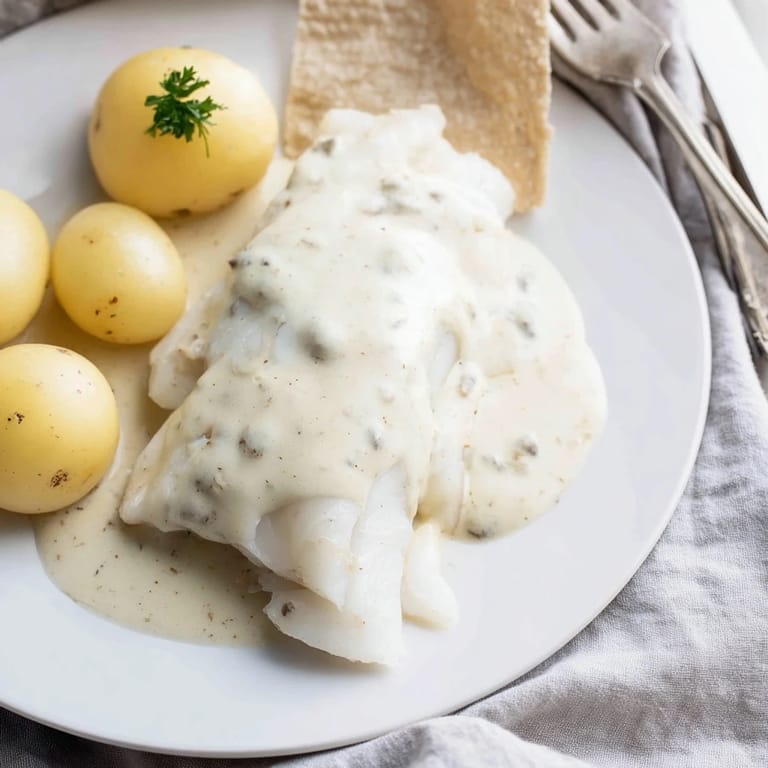
Save Lutefisk is the kind of dish that connects you to everyone who's made it before you, and every time you sit down to eat it, you're part of something bigger. Make it once and you'll understand why people keep coming back to it, year after year.