 Save
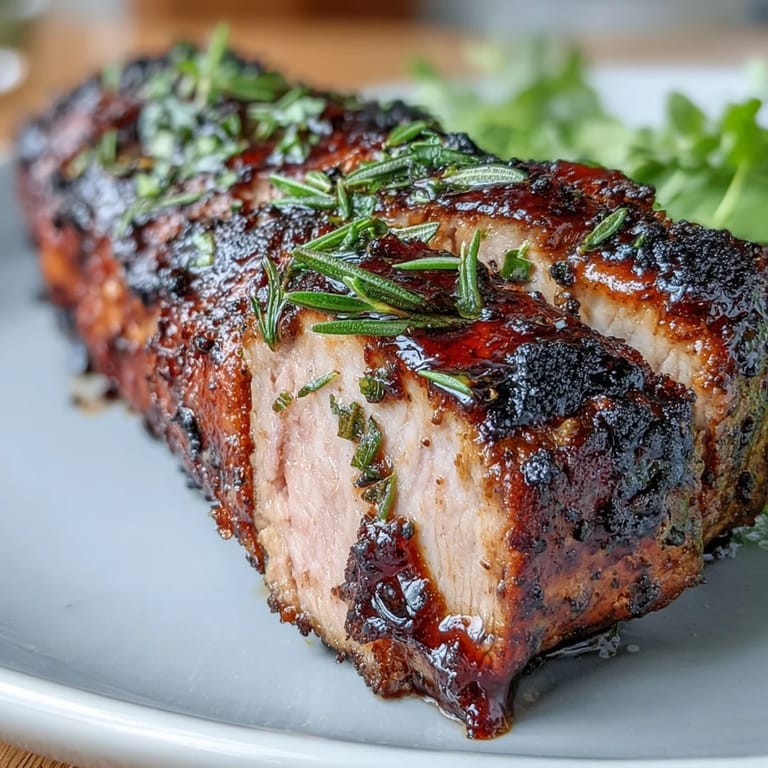
Save My kitchen filled with smoke the first time I attempted jerk seasoning, not from burning anything, but from the sheer intensity of Scotch bonnet peppers hitting a hot pan. That chaotic afternoon taught me that Caribbean cooking isn't subtle, and I've been chasing that bold, aromatic magic ever since. Jerk pork tenderloin became my way of capturing island heat without the chaos, letting the oven do the work while the spices transform lean meat into something impossibly juicy and craveable. The beauty of this dish is how quickly it comes together once you understand the marinade, which reads like a flavor equation that somehow just works.
I made this for friends who were skeptical about spiced pork, and watching their faces when they took that first bite was worth every minute of prep work. One guest asked if I'd somehow traveled to Jamaica that morning, and I realized then that good jerk seasoning doesn't need pretense or complicated techniques, just honest ingredients and patience. That dinner became the meal everyone still asks me to repeat.
Ingredients
- Pork tenderloin: Choose a piece that's evenly sized so it cooks uniformly; ask your butcher to trim the silver skin, which saves you frustration and ensures better marinade absorption.
- Olive oil: This carries the fat-soluble flavors of the spices, making them cling to the meat rather than just sitting on the surface.
- Soy sauce: Adds umami depth and saltiness that balances the heat; tamari works beautifully if you need gluten-free.
- Fresh lime juice: Never use bottled here; fresh lime juice brightens the whole marinade and helps tenderize the pork gently.
- Brown sugar: Creates the caramelized crust when roasted and rounds out the spice blend with subtle sweetness.
- Green onions: Their mild onion character won't overpower like raw garlic alone, and they add texture to the paste.
- Garlic and ginger: Mince these finely so they distribute evenly; they're the aromatic backbone that makes people ask what's in here.
- Scotch bonnet pepper: This is the heat source and flavor identifier of true jerk seasoning, but wear gloves and seed it to control the burn; jalapeño works if you're building up to full heat.
- Allspice, thyme, cinnamon, and nutmeg: Together these create the warm, complex profile that defines jerk spicing; don't skip any, even in small quantities.
- Kosher salt and black pepper: Season boldly here since the marinade won't be cooked down before hitting the meat.
Tired of Takeout? 🥡
Get 10 meals you can make faster than delivery arrives. Seriously.
One email. No spam. Unsubscribe anytime.
Instructions
- Blend your jerk paste:
- Combine everything except the pork in a blender or food processor and blend until completely smooth, about 1 to 2 minutes. The paste should look uniform without visible pepper chunks, which ensures even flavor distribution.
- Coat the pork:
- Pat the tenderloin dry with paper towels so the marinade adheres properly rather than sliding off wet meat. Place it in a resealable bag or shallow dish, pour the marinade over it, and turn to coat every surface.
- Marinate with patience:
- Refrigerate for at least 2 hours, though overnight is genuinely better if your schedule allows. The longer the spices sit, the deeper they penetrate.
- Prepare your oven:
- Preheat to 425°F and line a baking sheet with foil or parchment paper for easy cleanup and even heat distribution.
- Roast until perfect:
- Remove the pork from marinade, letting excess drip back into the bag, then place on the sheet. Roast for 20 to 25 minutes, turning halfway through, until an instant-read thermometer reads 145°F in the thickest part.
- Rest and serve:
- Transfer the cooked pork to a cutting board, tent loosely with foil, and let it rest for 5 to 10 minutes so the juices redistribute. Slice against the grain and serve with rice and peas, grilled vegetables, or mango salsa.
 Save
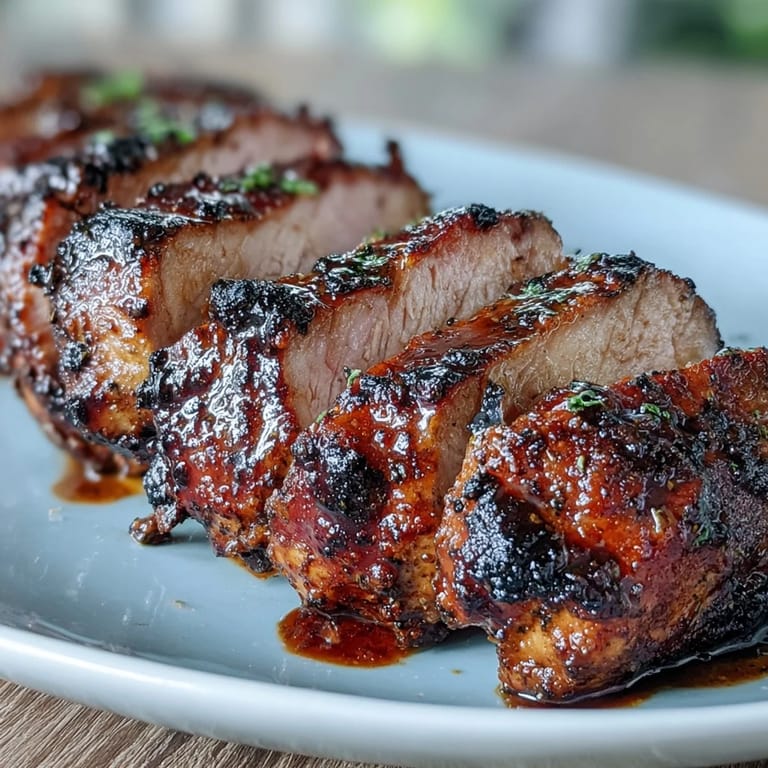
Save There's a moment when you slice into the pork and see that perfect pink center while the outside gleams with a caramelized crust, and you realize this simple technique has delivered something far more impressive than it had any right to. That's when jerk pork stops being dinner and becomes the meal people remember.
The Spice Blend Story
Authentic jerk seasoning evolved in Jamaica as a way to preserve meat and add bold flavor with what was available, and every component here has a reason. The allspice was a colonial discovery, thyme grew wild, cinnamon and nutmeg came through trade, and together they create a warm, slightly sweet backdrop for the heat. Understanding this history helps you respect the balance instead of just grinding through steps, and you'll start making instinctive adjustments based on what you taste.
Tailoring Heat to Your Preference
The Scotch bonnet pepper is the wildcard here, and honestly, knowing your own tolerance matters more than following any rule. I've made this with friends who went for full heat and others who doubled the jalapeño substitute, and both versions turned out beautifully because the rest of the spice profile is strong enough to shine either way. Start conservative if you're uncertain, taste the blended marinade before committing, and remember you can always add heat but you can't take it back.
Serving and Pairing Ideas
Jerk pork plays well with bright, tropical sides that echo the Caribbean origin without feeling forced or overly themed. I've served it with coconut rice, charred lime green beans, and even simple black beans with cilantro, and each combination felt right depending on what else I had going on. The key is adding something acidic or fresh to cut through the richness and heat, which is why mango salsa, lime-dressed greens, or a crisp salad becomes essential rather than optional.
- A cold lager or crisp Sauvignon Blanc pairs wonderfully and cools the palate between bites.
- Leftover sliced pork makes outstanding tacos with cabbage slaw and lime crema the next day.
- Make extra marinade paste and freeze it in ice cube trays for quick flavor boosts on chicken or fish later.
 Save
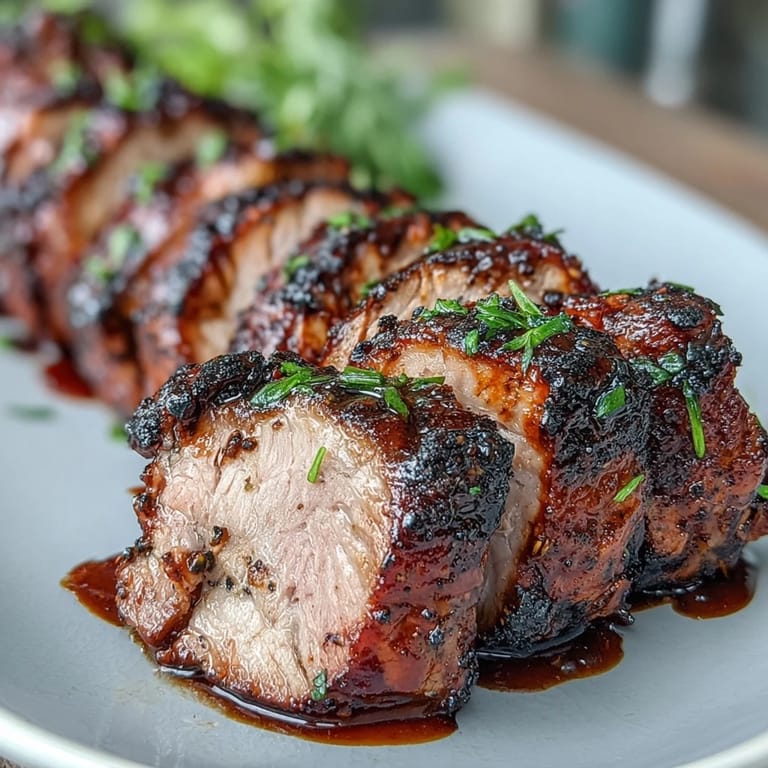
Save This dish bridges the gap between weeknight simplicity and company-dinner impressiveness, which is why it's become my go-to when I want to cook something that feels both authentic and achievable. Once you nail the marinade, you're basically coasting on flavor from there.
Recipe FAQs
- → What cut of pork is best for this dish?
Pork tenderloin is ideal due to its lean, tender texture that absorbs marinade well and cooks evenly.
- → How long should the pork marinate?
Marinating for at least 2 hours enhances flavor, but overnight marination will yield the most flavorful results.
- → Can the heat level be adjusted?
Yes, substitute Scotch bonnet pepper with jalapeño or reduce the amount for milder heat.
- → What temperature should the pork be cooked to?
Roast until the internal temperature reaches 145°F (63°C) for safe, juicy, and tender pork.
- → Are there recommended side dishes?
Pair with rice and peas, grilled vegetables, or mango salsa to complement the seasoning.
- → Can this dish be finished on a grill?
Yes, grilling for 2-3 minutes per side after roasting adds extra smoky flavor and caramelization.