 Save
Save I still remember the holiday party where I first served cheese ball ornaments instead of the usual boring appetizers. My sister walked in, saw those jewel-toned clusters catching the light like actual Christmas decorations, and said, "Did you just turn cheese into art?" That moment—when food becomes a conversation starter—is exactly why I make these every December now.
Last year, I brought these to a cookie exchange, and three people asked for the recipe before dessert was even served. One guest told me she'd been making them ever since, serving them at her book club every month. That's when I realized this wasn't just a holiday thing—it was something worth perfecting and sharing year-round.
Ingredients
- Cream cheese (8 oz), softened: This is your foundation, so let it sit on the counter for 20 minutes before mixing. Soft cream cheese blends into clouds, while cold cream cheese fights you the entire way.
- Sharp cheddar cheese (1 cup shredded): The word sharp matters here—it gives that little bite that makes people say "what is that amazing flavor?" Mild cheddar gets lost.
- Mozzarella cheese (1 cup shredded): This adds creaminess and helps everything bind together without being heavy. Fresh mozzarella won't work; stick with the standard shredded kind.
- Fresh chives (2 tbsp, finely chopped): These are the secret onion note that makes everything taste more intentional. Don't skip them for dried; the difference is noticeable.
- Dijon mustard (1 tbsp): Just a tablespoon, but it adds sophistication and depth. It's barely detectable but people will feel it on their palate.
- Garlic powder (1/2 tsp): Fresh garlic will weep and make the mixture watery, so trust the powder here. It's about control.
- Salt and pepper, to taste: Taste as you go—you need enough salt to make the cheeses sing, but not so much that it overshadows the delicate flavors.
- Coating choices (choose 3-4: pistachios, cranberries, poppy seeds, parsley, roasted red peppers, or walnuts): Each coating tells a different story. Pistachios feel luxe and green, cranberries are festive red, poppy seeds are elegant black, parsley brings freshness, roasted red peppers add sweetness, and walnuts bring earthiness.
- Rosemary sprigs (12 small ones): These are the hooks that make them look like actual ornaments. Fresh rosemary stays pliable; dried gets brittle.
Tired of Takeout? 🥡
Get 10 meals you can make faster than delivery arrives. Seriously.
One email. No spam. Unsubscribe anytime.
Instructions
- Build Your Base:
- Combine your softened cream cheese with both cheeses in a bowl. This is where you use a spatula or spoon to fold and blend until completely smooth—no lumps, no streaks of white cream cheese visible. Add the chives, mustard, and garlic powder, then taste. Adjust salt and pepper until it tastes like the best cheese spread you've ever had, because that's what this is.
- Portion with Purpose:
- Divide the mixture into 12 roughly equal portions. I use a small ice cream scoop, which makes them uniform and takes the guesswork out. Roll each portion between your palms until it's a smooth sphere. If it's sticky, wet your hands slightly with cool water. If it's dry, you rushed the softening step—go back.
- Create Your Palette:
- Pour each coating ingredient into its own shallow bowl. Now comes the meditative part: take 3 or 4 cheese balls and roll them in one coating until they're completely covered in color and texture. The coating should stick to the cheese mixture like it was meant to be there. If it's sliding off, the cheese is too warm—chill it for 10 minutes.
- Arrange as Art:
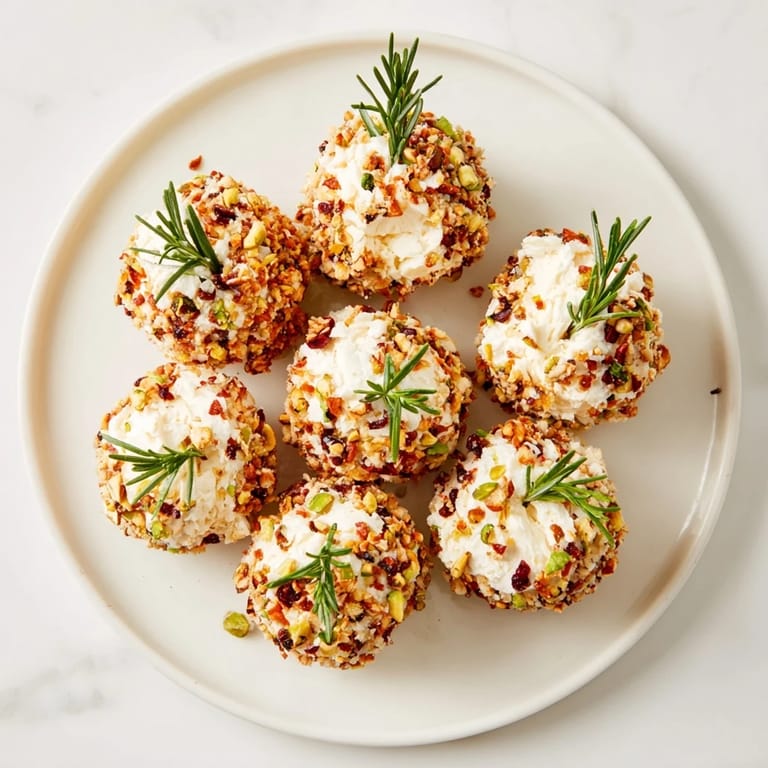
- On your serving platter, gather 3 or 4 coated balls together in tight clusters, nestling them close to create that ornament bunch effect. The tightness matters—leave gaps and they look scattered; cluster them and they look intentional. Step back and look. Does it look like something you'd want to eat at a fancy party? If yes, continue.
- Add the Final Touch:
- Insert a small fresh rosemary sprig into the top of the cluster, positioning it so it looks like the hook on an ornament. A little pressure helps it nestle in, but don't force it. These little green sprigs are your punctuation mark.
- Serve or Save:
- These are best served immediately while the textures are still distinct and the rosemary is still fragrant. If you made them ahead, refrigerate them uncovered (so condensation doesn't make them wet), and pull them out 10 minutes before serving. Arrange with crackers or bread on the side, or serve them alone as finger food.
 Save
Save I'll never forget when my niece, who's seven, asked if we could make them together for her school holiday party. We sat at the kitchen table, her little hands pressing the coatings onto the cheese balls while I guided from beside her. When the teacher told me every single one disappeared within minutes, I realized this recipe had given us something even better than appetizers—it gave us a memory.
The Magic of Visual Presentation
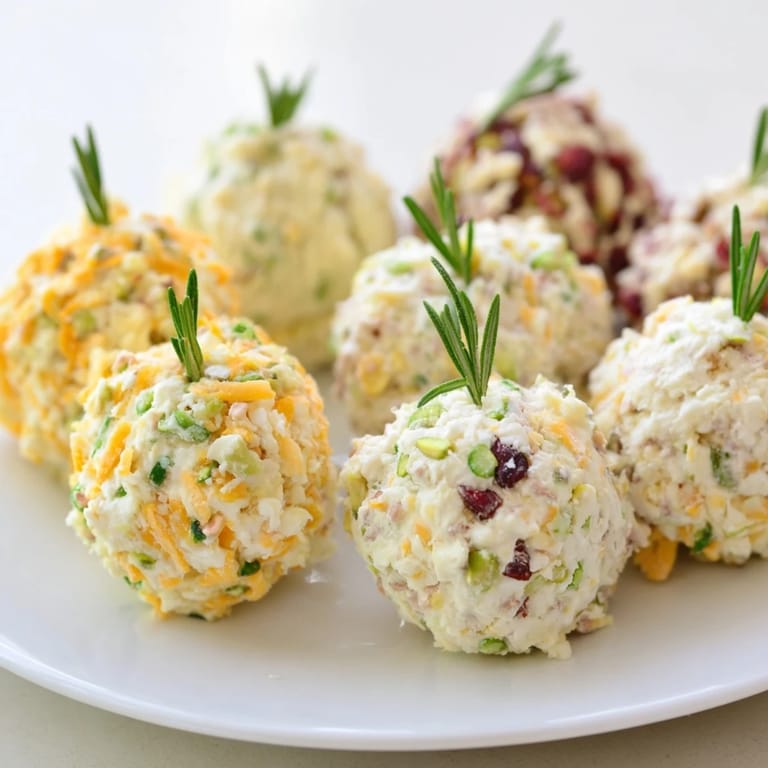
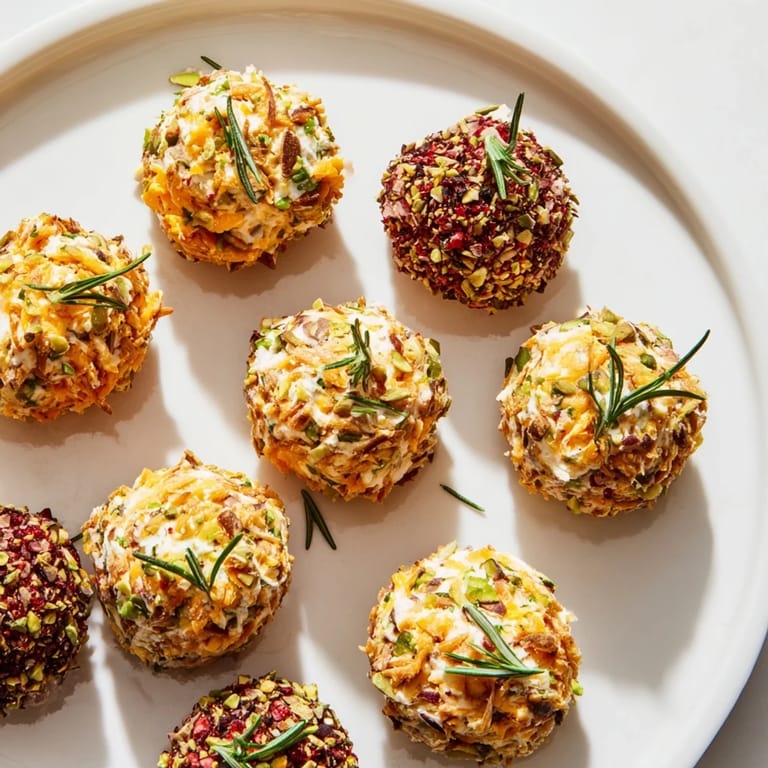
What makes this recipe special isn't the ingredient list—it's the presentation. These cheese balls become edible ornaments because of contrast and intentionality. The variety of coatings creates a visual story that tells guests you cared enough to create something beautiful. Mix and match your coatings based on your table colors: if your tablecloth is white and gold, lean into pistachios and cranberries. If you're going traditional red and green, use parsley and roasted red peppers. This is food that speaks before anyone takes a bite.
Make-Ahead Wisdom
The beauty of this recipe is its flexibility with timing. You can prepare the cheese mixture up to three days ahead, storing it covered in the refrigerator. You can roll the balls and coat them several hours before serving, then refrigerate them uncovered on a parchment-lined baking sheet. The final assembly—inserting the rosemary sprigs—is a 5-minute task right before guests arrive. This means you can be in the kitchen with your guests instead of frantically assembling appetizers while they arrive. That's the real luxury here.
Variations That Feel Like New Recipes
Once you master the base, you can shift the flavor profile entirely by changing the coating combinations. For a Mediterranean version, use sun-dried tomatoes, fresh basil, and toasted pine nuts. For an autumn version, swap in candied pecans, dried apricots, and seeds. For a spring gathering, use fresh dill, lemon zest, and crushed pistachios. Each variation tastes like a completely different dish, even though you're starting with the same cheese base.
- Always taste your cheese mixture against your chosen coatings—the flavors should complement, not fight each other.
- Make more of the coating mixtures than you think you need; they distribute more than expected and you'll want generous coverage.
- If you're serving these to people with nut allergies, stick with cranberries, poppy seeds, parsley, and roasted red peppers for your coatings instead.
 Save
Save These cheese ball ornaments have a way of becoming tradition. Make them once, and people will ask for them every year. Make them thoughtfully, and they become the thing people talk about at next year's party.
Recipe FAQs
- → What cheeses are used in the ornament clusters?
They combine cream cheese, sharp cheddar, and shredded mozzarella for a creamy, flavorful base that holds shape well.
- → Can I customize the coatings on the cheese balls?
Yes, choose from finely chopped pistachios, cranberries, poppy seeds, parsley, roasted red peppers, or walnuts to create colorful, textured coatings.
- → How does the rosemary sprig enhance the clusters?
Rosemary sprigs act as decorative hooks, giving each cluster the appearance of festive ornaments and adding a subtle herbal aroma.
- → Is any cooking required to prepare these clusters?
No cooking necessary; the clusters assemble by mixing, rolling, coating, and garnishing, making this a quick and easy option.
- → Can these clusters accommodate dietary restrictions?
They are vegetarian and can be gluten-free if served with gluten-free crackers or bread, but contain dairy and possible nuts depending on coatings chosen.