 Save
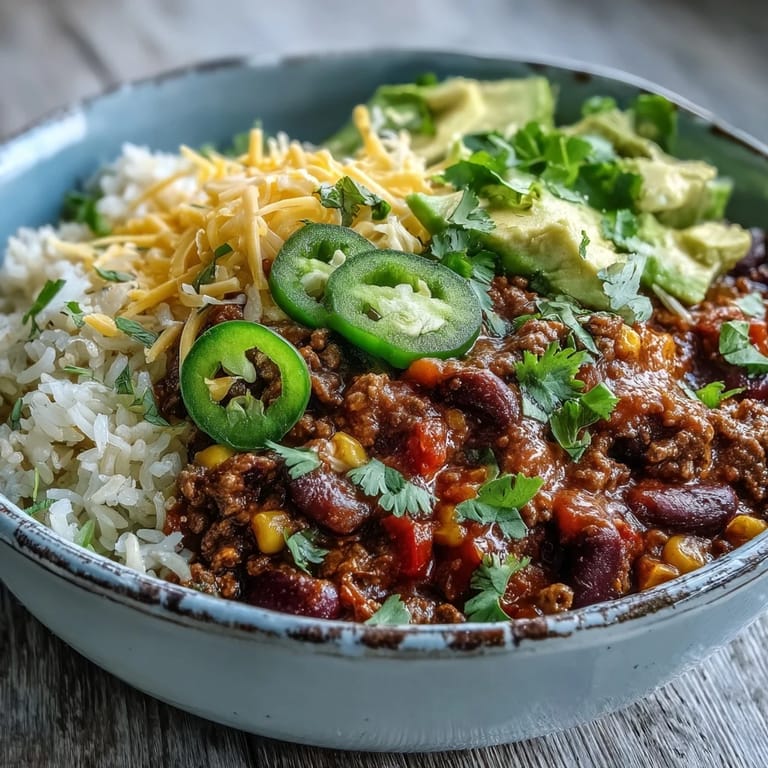
Save There's something about a chili bowl that stops time in the kitchen. One Sunday afternoon, I was standing in front of the stove, the smell of cumin and smoked paprika filling my tiny apartment, and I realized my roommate had wandered in three times just to hover near the pot. That's when I knew this wasn't just dinner—it was the kind of meal that makes people linger. This chili bowl became our answer to everything: a bad day, a lazy weekend, a gathering that needed warming up.
I'll never forget the winter night when my friend brought her new partner over and asked what she could do to help. I handed her the knife for the bell peppers, and by the time they were diced, she'd heard three kitchen stories and felt like part of something. That's the magic of this chili—it's humble enough that everyone can contribute, yet somehow it still feels special.
Ingredients
- Olive oil: Two tablespoons is your starting point, and it should shimmer in the pot before anything else joins the party.
- Medium onion: Dice it into pieces roughly the size of a chickpea—they'll soften into the chili and become almost invisible.
- Garlic cloves: Mince these fine so they dissolve into the oil and wake up everything around them.
- Red and green bell peppers: The colors matter here, not just for looks but because they add different sweetness notes as they cook down.
- Ground beef: A pound of it, though turkey or plant-based ground works just as well if that's your preference.
- Tomato paste: This concentrated stuff is the depth-giver; don't skip it or rush past it.
- Diced tomatoes: One can provides body and acidity that balances everything.
- Kidney beans and black beans: Each brings its own texture—kidney beans are meaty, black beans are creamy—so both matter.
- Corn kernels: Fresh or frozen, these add sweetness and a slight pop of texture that surprises people.
- Chili powder, cumin, smoked paprika, oregano: These four spices are the backbone; they should smell warm and inviting when you combine them.
- Salt and black pepper: Start conservative and taste as you go—you can always add more.
- Cayenne pepper: This is optional, but even a quarter teaspoon builds heat that creeps up on you in the best way.
- Beef or vegetable broth: This liquid brings the whole thing together and prevents the chili from becoming thick paste.
- Rice or cooked grains: The base that transforms chili from side dish into a full, satisfying bowl.
- Toppings: Cheese, sour cream, green onions, cilantro, avocado, jalapeños, and lime—these are where people make it their own.
Tired of Takeout? 🥡
Get 10 meals you can make faster than delivery arrives. Seriously.
One email. No spam. Unsubscribe anytime.
Instructions
- Heat the oil and build your base:
- Pour two tablespoons of olive oil into a large pot over medium heat and listen for that gentle sizzle. Add your diced onion and let it soften for a couple of minutes, stirring occasionally—you'll notice the sharp onion smell mellowing out.
- Add aromatics and peppers:
- Stir in the minced garlic and both bell peppers, letting them cook together for about three to four minutes until everything is fragrant and the peppers are slightly tender. This is when your kitchen starts smelling like something good is happening.
- Brown the meat:
- Increase the heat slightly and add your ground beef, breaking it up with a wooden spoon as it cooks—this takes about five to seven minutes, and you want to see no pink remaining. If you're using plant-based meat, follow the package instructions for cooking time.
- Bloom the tomato paste:
- Stir in the tomato paste and let it cook for just one minute, allowing it to deepen slightly in color. This small step concentrates the flavors and prevents the paste from tasting raw.
- Build the chili:
- Add the diced tomatoes, both types of beans (drained and rinsed to remove excess sodium), corn, chili powder, cumin, smoked paprika, oregano, salt, pepper, and cayenne if you want heat. Stir everything together thoroughly so the spices distribute evenly.
- Simmer and meld:
- Pour in the broth, bring everything to a simmer, then reduce the heat to low, cover, and let it cook for twenty-five to thirty minutes. Stir occasionally and taste along the way—this is your chance to adjust seasonings if needed.
- Prepare your grains:
- While the chili simmers, cook your rice or grains according to package directions so everything finishes around the same time.
- Serve and top:
- Spoon warm grains into bowls and ladle the chili generously over the top, then let everyone customize with their favorite toppings.
 Save
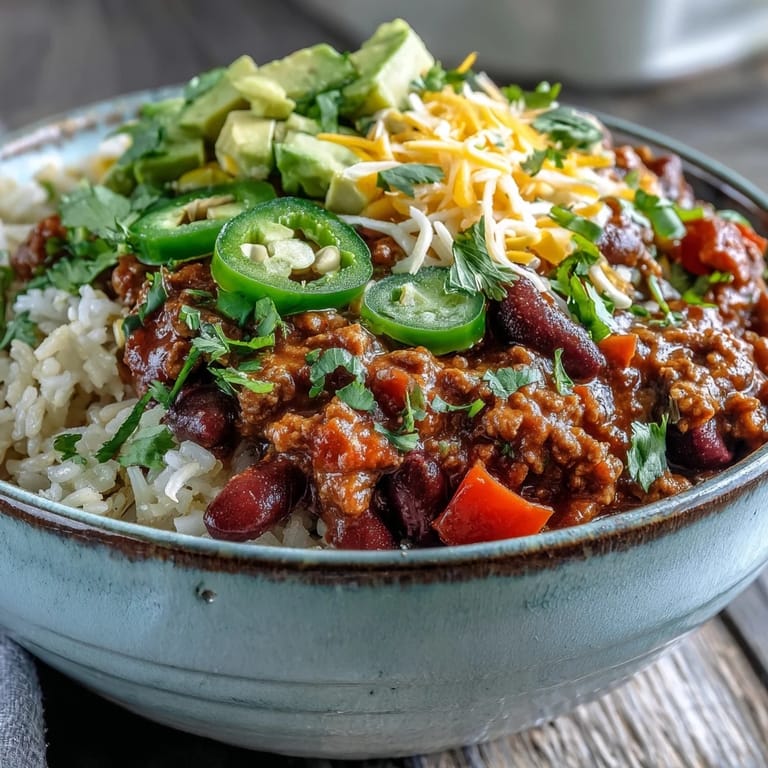
Save One evening, I watched someone take a spoonful of chili, add a dollop of sour cream, scatter some cilantro, squeeze lime over the top, and close their eyes for a moment. That's when food becomes a small kindness. This chili bowl has a way of doing that.
Building Layers of Flavor
The secret to this chili tasting deeper and richer than the sum of its parts is respecting the order of operations. When you sauté the onion first, it releases its natural sugars and becomes sweet instead of sharp. When you add garlic and peppers after, they cook in that sweetness and absorb it. When you brown the meat, it picks up color and flavor from the pan's bottom. Each step builds on the last, creating complexity that would never happen if you just threw everything in at once.
Customizing for Your Table
I've made this chili for vegetarians by doubling the beans and adding finely diced mushrooms for umami depth, and honestly, no one missed the meat. I've made it for spice lovers who add hot sauce and jalapeños at the table, and for cautious eaters who prefer theirs mild. The beauty of chili is that it's forgiving enough to adapt but structured enough that it never feels like you're guessing. The base does the heavy lifting; everything else is just playing with possibilities.
The Toppings Are Where People Linger
I learned this the hard way when I served chili without thinking much about toppings and watched people eat their bowls quickly and leave. The next time, I laid out a small board with shredded cheese, sour cream, sliced green onions, cilantro, avocado, jalapeños, and lime wedges. Suddenly people slowed down, mixing and matching flavors, debating combinations, enjoying the ritual of customization. That's when I understood that toppings aren't optional extras—they're part of the experience.
- Set out toppings in small bowls so people can add as much or as little as they want without the excuse of not knowing how much to grab.
- Fresh lime juice is the secret weapon that lifts all the flavors and adds brightness that cuts through the richness.
- Cold sour cream or Greek yogurt against warm chili is comfort in a contrast, so don't skip it even if you think dairy isn't your thing.
 Save
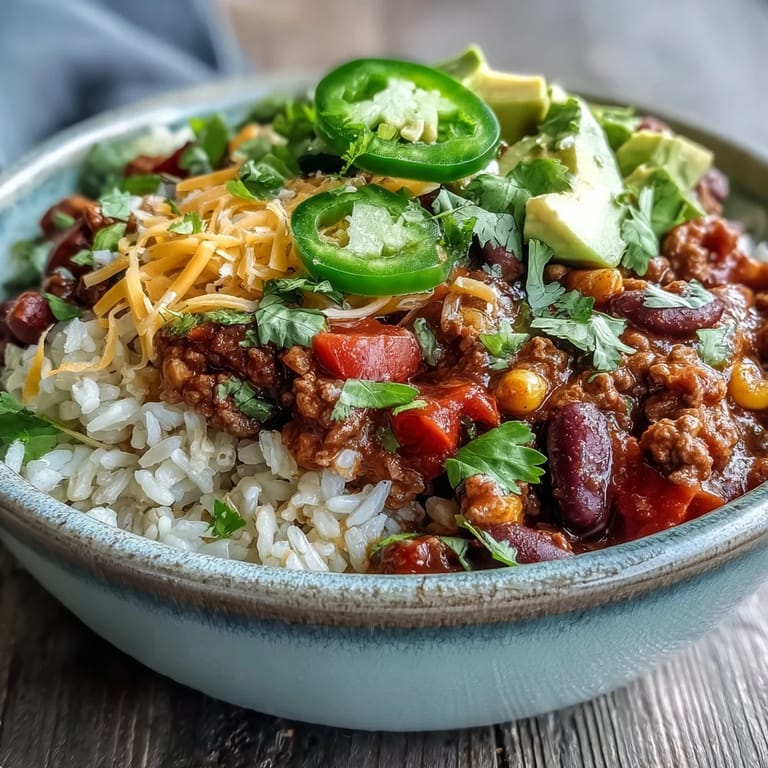
Save This chili bowl is the kind of meal that becomes background music to conversation, something people want to make again at home, something that tastes like you've been cooking it for years. Make it tonight.
Recipe FAQs
- → Can I make this chili vegetarian?
Absolutely. Replace the ground beef with plant-based crumbles or simply add an extra can of beans. Use vegetable broth instead of beef broth for a completely meatless version that's just as hearty and satisfying.
- → How spicy is this dish?
The spice level is moderate and family-friendly. The heat primarily comes from chili powder and a touch of cayenne. You can easily adjust this by reducing the chili powder, omitting the cayenne, or adding fresh jalapeños as a topping for those who want extra heat.
- → What grains work best as a base?
White and brown rice are classic choices that absorb the chili flavors beautifully. Quinoa adds extra protein and a lighter texture, while farro and barley provide nutty notes and chewy texture. Even polenta or mashed potatoes can work for a comforting twist.
- → How long does this keep in the refrigerator?
The chili portion stores beautifully for 4–5 days in an airtight container. The flavors actually deepen and improve after a day or two. Store the rice or grains separately and reheat both gently before serving, adding a splash of broth or water if the chili thickens too much.
- → Can I freeze this chili bowl?
The chili freezes exceptionally well for up to 3 months. Let it cool completely, then portion into freezer-safe containers. Thaw overnight in the refrigerator and reheat on the stovetetop. For best results, freeze the chili separately from the rice and prepare fresh grains when serving.
- → What other toppings work well?
Beyond the classics, try crushed tortilla chips for crunch, pickled red onions for tang, hot sauce for extra kick, or a drizzle of olive oil. A dollop of guacamole, sliced radishes, or crumbled bacon also make excellent additions to customize your bowl.