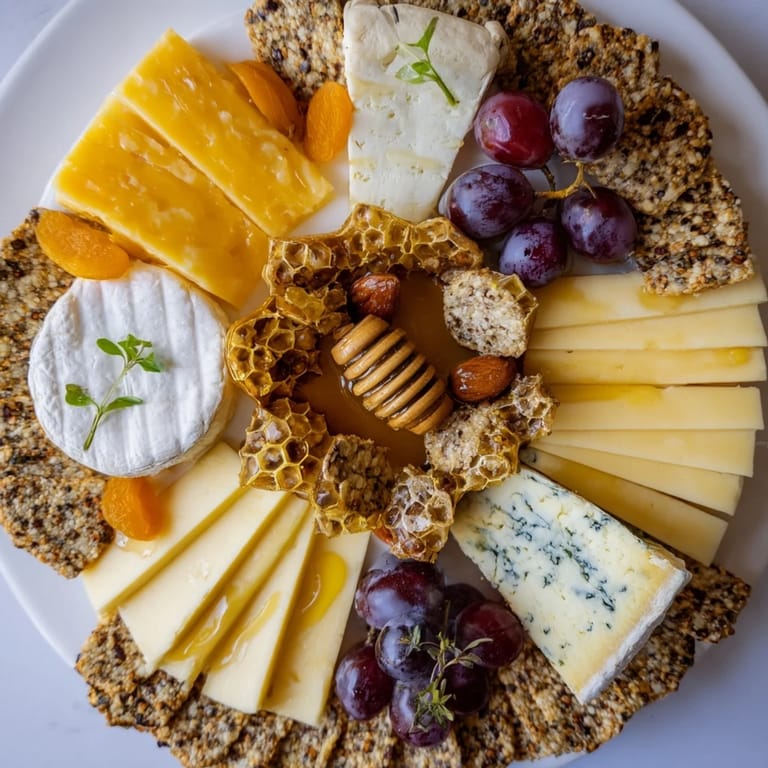
 Save
Save I discovered the joy of geometric cheese boards at a gallery opening where the appetizer table was as carefully curated as the art on the walls. That night, watching people pause to admire the pattern before eating, I realized a board could be both beautiful and delicious. Years later, I finally attempted my own hexagon-themed arrangement, and it clicked—the structure made everything feel intentional, like I'd actually planned something rather than just thrown cheese on wood.
The first time I made this for my sister's book club, I spent so long cutting that I nearly missed the actual gathering. But when I set it down, the whole room went quiet for a second—not because it was fancy, but because the pattern made sense. Someone said it looked like something bees would design if they understood cheese, and that stuck with me.
Ingredients
- Manchego cheese: Firm enough to cut clean hexagons, with a nutty sweetness that anchors the board's flavor profile.
- Aged cheddar: The backbone of color contrast; its slight crumble at the edges proves it's been loved by time.
- Gruyère: Don't skip this one—it bridges the gap between mild and intense, and its crystalline bits catch the light beautifully.
- Brie: The softness is essential; it needs to be cold before cutting or it'll smear instead of slice.
- Blue cheese: A small amount goes far; its veining adds visual drama and taste complexity.
- Goat cheese log: Slice it thin and prop the hexagons at slight angles so they catch shadows and light differently.
- Whole wheat crackers: Look for large, sturdy ones that won't shatter when you press the cutter down; they're the frame for everything else.
- Seeded crackers: These add texture and prevent the board from feeling too uniform in flavor.
- Edible honeycomb: This is your centerpiece and your flavor statement; the wax cells melt slightly on your tongue and taste exactly like honey should.
- Runny honey: Drizzled in threads, it catches light and acts as edible glue holding the eye to the center.
- Marcona almonds: Buttery and slightly sweet, they're there to echo the honey's warmth and fill visual gaps.
- Dried apricots: Tart enough to balance richness, and their amber color complements the gold-tone cheese palette.
- Fresh grapes: They add juice and freshness; choose colors that contrast with your chosen cheeses.
- Edible flowers or microgreens: Optional, but they whisper sophistication without shouting about it.
Tired of Takeout? 🥡
Get 10 meals you can make faster than delivery arrives. Seriously.
One email. No spam. Unsubscribe anytime.
Instructions
- Chill your soft cheeses first:
- Pop the Brie and goat cheese in the freezer for 10 to 15 minutes; you want them firm enough to hold an edge without shattering. This is the move that separates a neat board from a messy one.
- Cut with confidence:
- Press your hexagon cutter straight down through each cheese slice, wiggling slightly if needed, then pop out the shape. Wipe your cutter clean between cuts so you don't drag cheese residue into your next cut.
- Sort your crackers:
- Cut all your hexagons and lay them on a separate board, choosing the cleanest ones for the most visible spots. Set aside the slightly broken ones for personal snacking.
- Build from the center out:
- Place your honeycomb piece dead center, then arrange your first circle of cheese hexagons around it in a radial pattern. Alternate cheese types as you go so no two identical flavors sit side by side.
- Add your cracker rays:
- Between each cheese wedge or in concentric circles outward, lay your hexagon crackers pointing toward or away from the center. The pattern should feel like rays of light or the cells of the honeycomb itself.
- Fill the gaps thoughtfully:
- Scatter almonds, apricots, and grapes into any remaining space, using them to add color pops and balance visual weight. A few grapes tucked between crackers look intentional, not accidental.
- Honey the finish:
- Drizzle thin lines of honey over the honeycomb and near a few cheese pieces so light catches it when guests approach. This final step makes everything look freshly made.
- Garnish and serve:
- If using edible flowers, place them just before serving so they don't wilt or lose their vibrance. Serve immediately while cheeses are still at their best texture.
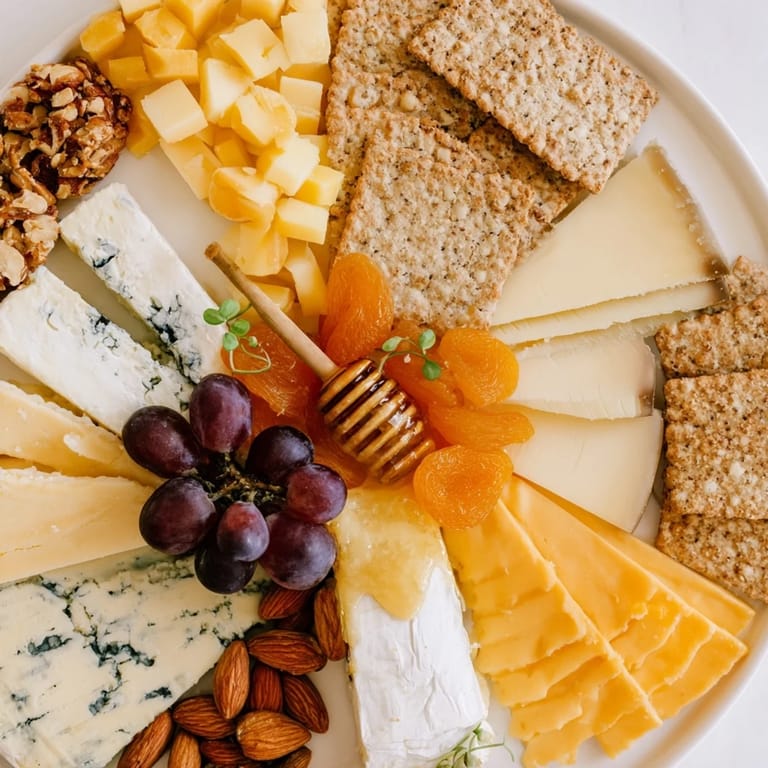 Save
Save What surprises people most is how the hexagon shape makes the board feel planned and precious, even though it's just cheese and crackers. There's something about geometry that tricks the eye into seeing luxury, and honestly, I'm not mad about it.
Why Hexagons Matter
The hexagon isn't just a pretty shape—it's the most efficient way to pack a plane with equal pieces, which means less wasted space and a more abundant-looking board. When your pieces are the same size and shape, the eye reads it as intentional instead of improvised. Plus, hexagons have this geometric satisfaction that makes people want to pause before eating.
Playing with Your Cheese Selection
You don't need to use exactly these six cheeses; the formula is simply one soft, one blue, one aged, and a couple in between. If you can't find Manchego, any firm cheese with clean lines works. The key is mixing textures and colors so the board reads as sophisticated rather than monotonous. Think of it like a flavor conversation where every piece offers something slightly different.
Timing and Storage
This is a same-day assembly, and that's actually its strength—you're not wrestling with stale crackers or sweating cheese. I cut all my pieces an hour or two ahead, store them separately in the fridge, then assemble everything right before my guests arrive. This way, the cheeses taste perfect and the board looks freshly made.
- Keep cut cheeses covered and cold until the last moment.
- If you make this more than once, you'll develop a rhythm and shave your assembly time down to 20 minutes.
- Leftover cheese hexagons don't keep the same appeal, but they taste just as good on toast the next morning.
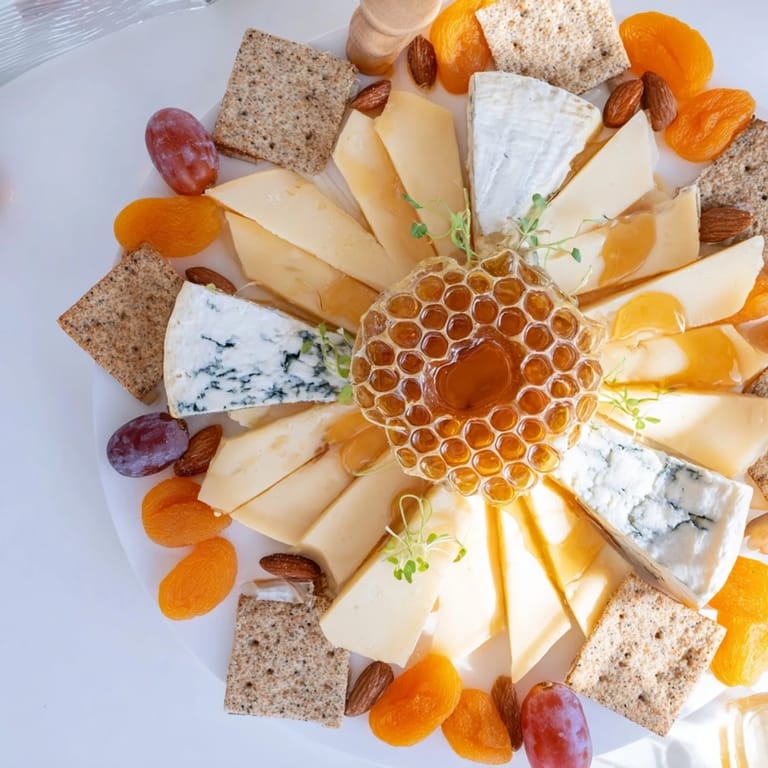 Save
Save Every time I make this board, I remember why I fell in love with the idea—it's beautiful without being fussy, generous without being wasteful, and it tastes like you actually tried. That's the real magic here.
Recipe FAQs
- → How do I achieve clean hexagon cuts on soft cheeses?
Chill soft cheeses like Brie and goat cheese briefly before cutting to get cleaner edges when using the hexagon cutter.
- → Can I substitute the cheeses used in this board?
Yes, you can swap cheeses based on preference or season, ensuring a variety of textures and flavors for balance.
- → What crackers work best for hexagon cutting?
Large whole wheat and seeded crackers hold their shape well when trimmed into hexagons, though some breakage may occur; select the best pieces for display.
- → How should I arrange the components for visual appeal?
Start with the honeycomb at the center, then place cheese hexagons in a radiating circular pattern, followed by crackers in concentric circles or rays around the cheeses.
- → What accompaniments complement the cheese board?
Marcona almonds, dried apricots, fresh grapes, and a drizzle of runny honey add color and balance to the presentation and flavors.
- → Are there any recommended tools for preparation?
Use a sharp 2–3 inch hexagon-shaped cookie cutter, a sharp cheese knife, and small spreaders for easy cutting and serving.