 Save
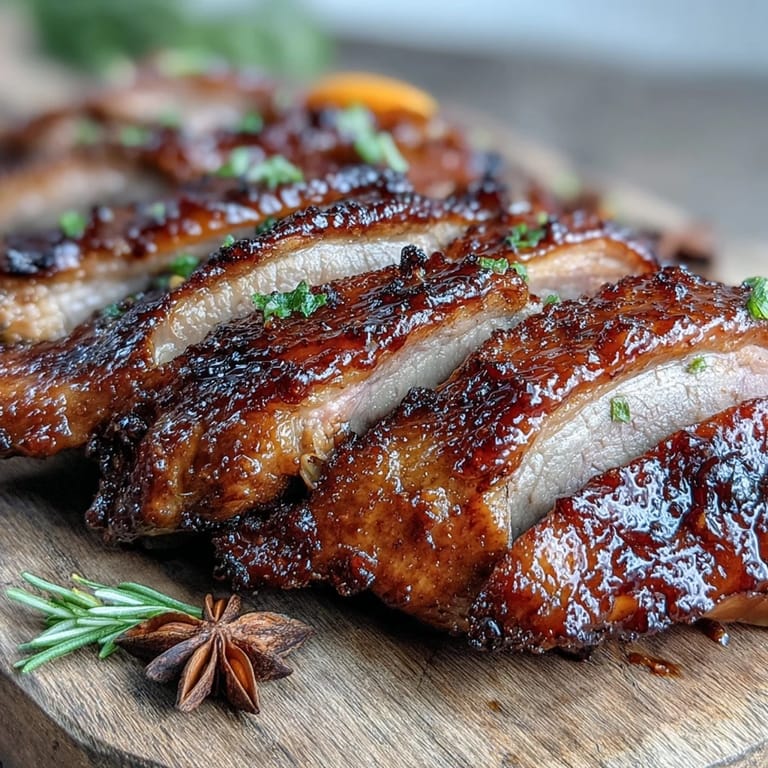
Save The steam fogging up my kitchen window, the scent of star anise curling through the air like incense, I stood there basting a whole duck for the first time and wondering if I'd bitten off more than I could chew. My partner had mentioned offhand that they'd never had proper roast duck at home, and somehow that became my Valentine's mission. The five-spice powder sat open on the counter, its fragrance already promising something far beyond my usual weeknight dinners. I pricked the skin carefully, each little puncture a small act of faith that this would actually work.
I'll never forget sliding that first duck into the oven and setting a timer, feeling equal parts excited and terrified. My kitchen smelled like a dim sum parlor within the hour. When I basted it the first time, the juices sizzled and the honey began to caramelize, and I knew I was onto something good. By the time I cranked up the heat for the final roast, the skin had turned a deep mahogany, crackling under the broiler like autumn leaves underfoot.
Ingredients
- Whole duck (about 1.5 to 2 kg): Look for one that's been cleaned well and patted completely dry, moisture is the enemy of crispy skin.
- Chinese five-spice powder (2 tbsp): This warm, aromatic blend of star anise, cloves, cinnamon, Sichuan pepper, and fennel is the soul of the dish.
- Sea salt (1 tsp): Coarse salt helps draw out moisture and seasons the meat deeply.
- Light soy sauce (1 tbsp): Adds umami and a subtle saltiness, use gluten-free if needed.
- Dark soy sauce (1 tbsp): This gives the duck its rich, glossy color and a hint of molasses-like sweetness.
- Honey (2 tbsp): Caramelizes beautifully under high heat, creating that sticky, crisp skin.
- Shaoxing wine or dry sherry (2 tbsp): A splash of this rice wine cuts through the richness and adds aromatic depth.
- Garlic (4 cloves, minced): Fresh garlic brings a pungent warmth that balances the sweet and spicy notes.
- Fresh ginger (2-inch piece, grated): Ginger's zing cuts the fat and adds a bright, clean heat.
- Orange (1, zested and juiced, plus 1 quartered): Citrus brightens the marinade and perfumes the cavity as it roasts.
- Spring onions (2, chopped): Mild onion flavor that sweetens as it cooks inside the bird.
- Star anise pods (4): These go into the cavity and infuse the meat with their licorice-like fragrance.
Tired of Takeout? 🥡
Get 10 meals you can make faster than delivery arrives. Seriously.
One email. No spam. Unsubscribe anytime.
Instructions
- Mix the marinade:
- In a small bowl, whisk together the five-spice powder, salt, both soy sauces, honey, Shaoxing wine, garlic, ginger, orange zest, and juice until it forms a thick, fragrant paste. The smell alone will make you hungry.
- Prepare the duck:
- Place the duck on a rack set in a roasting pan, then prick the skin all over with a fork, being careful not to pierce the meat underneath. This helps the fat render out and the skin crisp up beautifully.
- Marinate:
- Rub the marinade all over the outside and inside the duck, really working it into every crevice. Stuff the cavity with the orange quarters, chopped spring onions, and star anise pods, then let it marinate uncovered in the fridge for at least an hour, or overnight if you can wait.
- Preheat and start roasting:
- Preheat your oven to 180°C (350°F). Roast the duck breast-side up for 1 hour, basting with the pan juices every 30 minutes to build up that lacquered glaze.
- Crisp the skin:
- Increase the oven temperature to 220°C (425°F) and roast for another 20 to 30 minutes until the skin turns deep golden brown and crackles when you tap it. Watch closely so it doesn't burn.
- Rest and carve:
- Remove the duck from the oven and let it rest for 10 minutes before carving. This keeps the juices inside the meat where they belong.
 Save
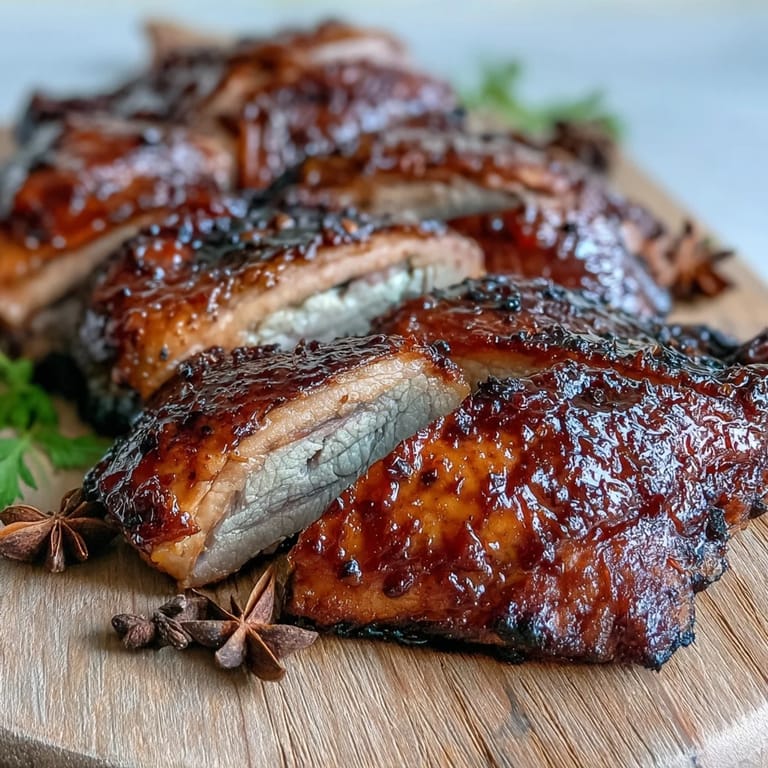
Save The first time I brought this to the table, still glistening and crackling, my partner just stared. We carved into it together, the skin shattering under the knife, the meat pulling away tender and fragrant. It became our Valentine's tradition after that, the one meal we'll always make time for no matter how busy life gets. There's something about the ritual of it, the patience, the aroma filling the house, that turns dinner into something more.
Getting the Crispiest Skin
The secret to that restaurant-quality crackling is all about moisture control and high heat at the end. After marinating, don't cover the duck, let it sit in the fridge exposed to the cold, dry air. When you're ready to roast, start low and slow to render the fat, then finish hot and fast to crisp everything up. If you skip that final high-heat blast, you'll end up with rubbery skin no matter how good the marinade is.
What to Do with Leftovers
Leftover five-spice duck is a gift that keeps on giving. Shred the meat and toss it into fried rice, tuck it into steamed buns with hoisin and cucumber, or pile it onto crusty bread with pickled vegetables for an unforgettable sandwich. The rendered duck fat in the pan is liquid gold, save it in a jar and use it to roast potatoes or sauté greens. I've even used cold slices in a salad with sesame dressing and they were perfect.
Pairing and Serving Suggestions
This duck shines alongside steamed jasmine rice, which soaks up all those lovely pan juices, and a simple stir-fry of bok choy or gai lan. A light Pinot Noir complements the richness without overwhelming the spices, though I've also served it with chilled jasmine tea for a more traditional feel. If you want to go all out, add some steamed buns, pickled radish, and a drizzle of hoisin sauce for a full feast.
- Don't rush the resting time, those 10 minutes let the juices redistribute so every slice stays moist.
- If your oven runs hot, check the duck earlier during the high-heat phase to avoid burning the skin.
- A sharp carving knife makes all the difference when cutting through the crispy skin cleanly.
 Save
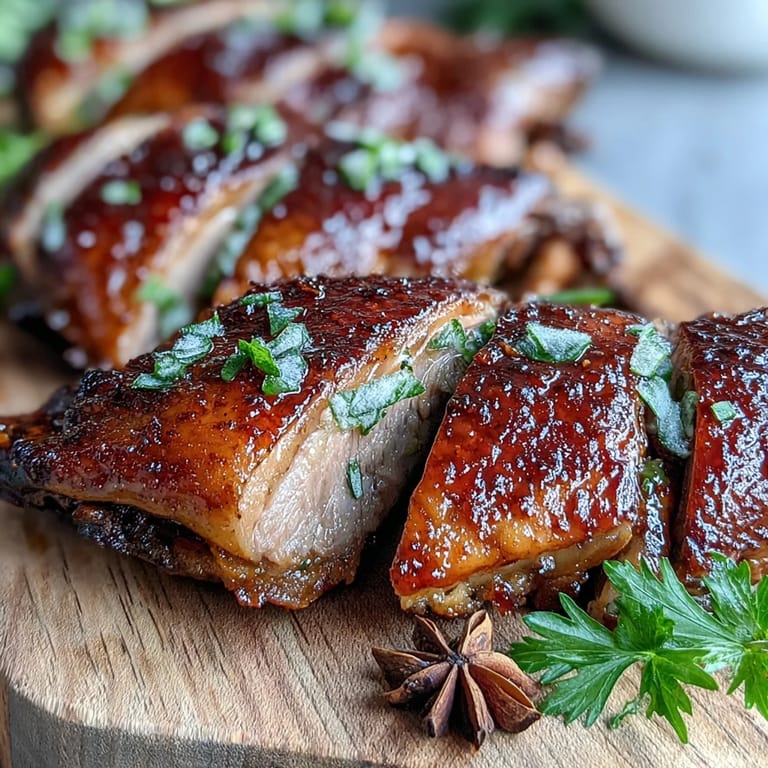
Save This dish taught me that patience and a little courage in the kitchen can turn an ordinary night into something you'll remember for years. I hope it brings as much joy to your table as it has to mine.
Recipe FAQs
- → How do I get the duck skin extra crispy?
Leave the duck uncovered in the refrigerator overnight before roasting. Pricking the skin all over with a fork also helps render the fat during cooking, resulting in crispier skin.
- → Can I substitute the Shaoxing wine?
Yes, dry sherry works as an excellent substitute for Shaoxing wine. You can also use a dry white wine or rice wine vinegar diluted with a bit of water.
- → How long should I marinate the duck?
Marinate for at least 1 hour, but for deeper flavor penetration, leave it uncovered in the refrigerator overnight. The longer marination enhances the aromatic five-spice notes.
- → What should I serve with this dish?
Steamed jasmine rice and stir-fried greens complement the rich duck beautifully. Consider pairing with a light Pinot Noir or chilled jasmine tea for beverages.
- → Is this dish gluten-free?
It can be gluten-free if you use gluten-free soy sauce. Regular soy sauce contains wheat, so always check labels if preparing for someone with gluten sensitivities.
- → Can I use maple syrup instead of honey?
Absolutely. Maple syrup provides a different but equally delicious flavor profile, adding a subtle earthiness to the marinade while maintaining the sweet glaze.