 Save
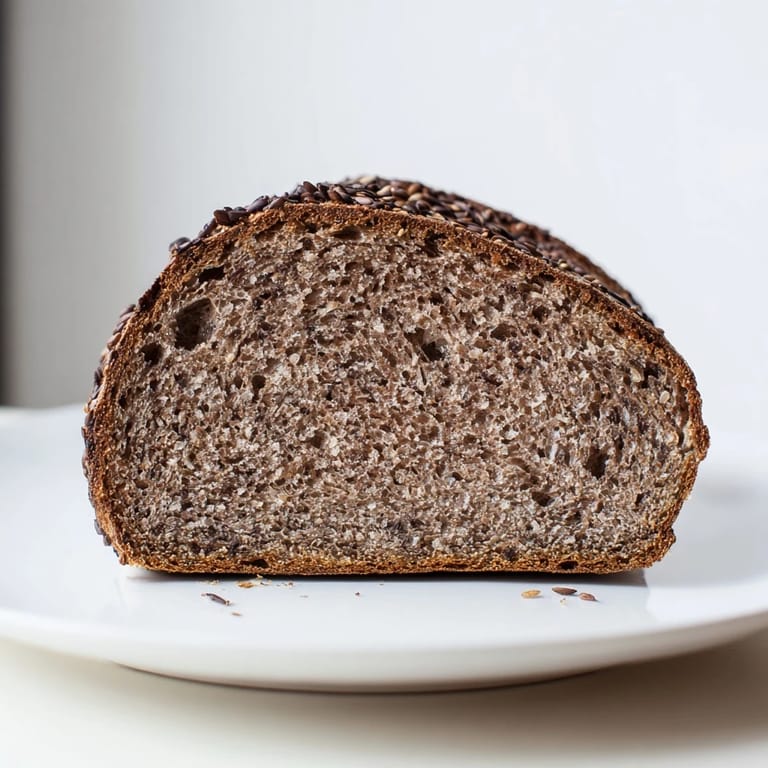
Save My grandmother's kitchen in Tallinn always smelled like dark bread and caraway—that persistent, almost medicinal warmth that seeped into your clothes and stayed with you all day. When I finally asked for her sourdough recipe, she laughed and said it wasn't really hers to give, that it belonged to every Estonian grandmother before her. This rye bread, dense and honest, taught me that some recipes are less about precision and more about listening to the dough as it breathes through the night.
I baked this bread for the first time during a particularly quiet winter when my partner was away, and I found myself setting alarms for the bulk fermentation—not because the recipe demanded it, but because I wanted to witness those bubbles rising in the bowl, that living proof that a three-day-old starter still had work to do. By morning, the kitchen had transformed into something that felt almost sacred, and I understood why this bread appears on every Estonian table.
Ingredients
- Active rye sourdough starter (100 g): This is your living foundation—it should smell tangy and active, doubling in size within 4–6 hours of feeding. If yours is sluggish, feed it more frequently a few days before baking.
- Dark rye flour (400 g): The soul of this bread, darker and earthier than wheat flour, with a subtly bitter undertone that balances the molasses beautifully.
- Bread flour (100 g): This wheat flour provides enough gluten structure to hold the dense rye together without making it tough or chewy.
- Lukewarm water (300 ml): Temperature matters more than you'd think—too cold and fermentation drags; too hot and you'll kill your starter.
- Dark rye malt or barley malt powder (50 g): This adds that deep, toasted character you can't fake; look for it in specialty stores or online, as it's not usually in regular supermarkets.
- Molasses or dark honey (2 tbsp): Beyond sweetness, this feeds the fermentation and deepens the crust color, almost like a secret ingredient nobody mentions.
- Caraway seeds (1 tbsp, plus optional 1 tsp for topping): Toast them lightly in a dry pan first if you want their flavor to pop; otherwise, they stay subtle and almost medicinal.
- Fine sea salt (2 tsp): This slows fermentation slightly and strengthens gluten development, so don't skip it or rush past it.
Tired of Takeout? 🥡
Get 10 meals you can make faster than delivery arrives. Seriously.
One email. No spam. Unsubscribe anytime.
Instructions
- Wake up your starter and build the base:
- In a large bowl, combine your active starter, lukewarm water, and molasses, stirring until the molasses dissolves into dark ribbons. You'll feel the mixture become almost glossy, and that's when you know it's ready for the flour.
- Bring the dough together:
- Add the rye flour, bread flour, malt powder, caraway seeds, and salt all at once, mixing with a wooden spoon until you have a thick, sticky dough that's almost too heavy to stir. Don't worry if it looks rough—this isn't a smooth dough, and that's exactly right.
- Let time do the heavy lifting:
- Cover the bowl with a damp cloth and set it somewhere at comfortable room temperature, away from drafts and direct sun. Check it after 6 hours, and you'll see the magic beginning—tiny bubbles rising to the surface, the dough expanding slowly but decisively. Leave it alone for the full 10–12 hours or overnight, resisting the urge to peek more than twice.
- Shape and prepare for the second rise:
- Line your loaf pan with parchment paper or give it a light grease. Scrape the dough from the bowl using a wet spatula or dough scraper—it will be sticky and almost reluctant to move—and transfer it to the pan. Smooth the top gently with your wet hands, then sprinkle additional caraway seeds across the surface if you'd like that rustic, seeded look.
- The final rise:
- Cover the pan loosely with a cloth and let it sit for 2–4 hours at room temperature. You'll know it's ready when the dough has risen noticeably, nearly reaching the rim of the pan but not spilling over. This is when the bread begins to smell almost intoxicating.
- Prepare your oven for steam and heat:
- Preheat your oven to 220°C (430°F) and place a shallow pan of hot water on the bottom rack. The steam is crucial—it keeps the crust flexible during the initial bake, allowing it to rise fully before setting into that dark, crackling exterior.
- Bake with intention:
- Slide the loaf pan onto the middle rack and bake at 220°C for 15 minutes without opening the door. You'll hear the bread crackle slightly as it hits the heat. After 15 minutes, lower the temperature to 190°C (375°F) and continue baking for another 30 minutes, until the crust is deep brown—almost mahogany—and the loaf sounds distinctly hollow when you tap the bottom. If the crust seems to be browning too quickly, tent it loosely with foil.
- Cool completely before slicing:
- Remove the bread from the oven and turn it out onto a wire rack. This is the hardest part—the steam is still working inside, and cutting into warm bread releases all that moisture, making it gummy. Wait at least an hour, preferably two, before slicing.
 Save
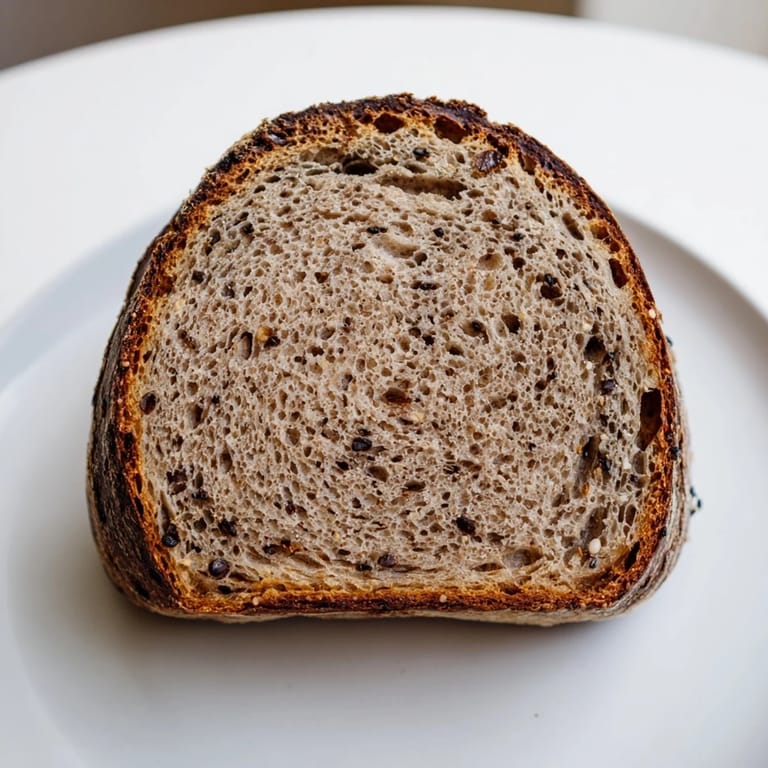
Save The first person to taste a slice of my bread—my partner had just come home—closed his eyes and said, without irony, that it tasted like history. I'd spent maybe thirty minutes of actual work and sixteen hours of waiting, and somehow that transformed flour and water into something that made someone feel like they belonged to a long line of people who'd made this same bread in the same way.
The Magic of Malt and Molasses
What makes this bread distinctly Estonian is the combination of dark malt and molasses—ingredients that seem subtle until you taste them together. The malt brings a toasted, almost coffee-like note without any bitterness, while the molasses adds a deep sweetness that doesn't announce itself loudly but settles into the background of every bite. This pairing is what elevates a simple rye bread into something with character and depth. When you bite into a slice, you're not tasting a single ingredient; you're tasting the sum of generations who understood that fermentation and time coax out flavors that rushing never could.
Fermentation as a Conversation
Working with sourdough is less like following instructions and more like having a quiet conversation with something alive. Your starter is a culture of wild yeast and bacteria, and it responds to temperature, feeding schedule, and even the humidity in your kitchen. The long, slow fermentation of this bread—12 to 16 hours—isn't an inconvenience; it's the entire point. During those hours, enzymes break down the rye flour's proteins and starches, making the bread easier to digest and more flavorful. You'll notice the dough getting airier, the smell deepening and becoming more complex, almost wine-like. This is what you're waiting for. Rushing this process results in bread that tastes flat and doesn't keep as well.
Serving and Keeping
Estonian sourdough was built for generosity and longevity. Thick slices, spread with salted butter and topped with thin-shaved smoked fish or aged cheese, disappear quickly once you slice into it. The bread's density and slight moisture mean it keeps exceptionally well—wrapped in a clean cloth on your counter, it actually improves over a day or two as the crumb continues to absorb residual moisture from the crust, becoming even more tender and flavorful. I've kept loaves for five, even six days, and they've only gotten better. This is bread meant to linger in your kitchen, to be part of breakfast and lunch and unexpected moments of hunger, not something that stales into an afterthought.
- Slice with a serrated knife using a gentle sawing motion, never pressing down hard, or the dense crumb will compress.
- Store wrapped in a cloth rather than plastic, so the crust stays crispy while the crumb stays moist.
- If it somehow lasts more than a week, slice it and toast it for breakfast—it becomes almost nutty and deeply satisfying.
 Save
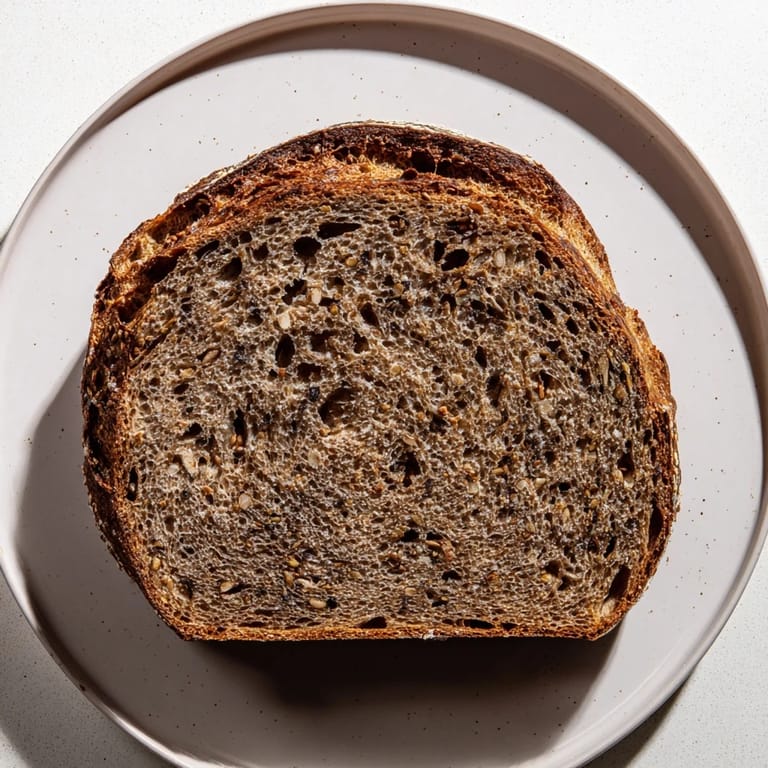
Save This bread taught me that the best recipes aren't the quickest ones—they're the ones that ask you to slow down and pay attention. Every time you bake it, you're part of an unbroken chain of people who understood that good bread is worth the wait.
Recipe FAQs
- → What type of flour is used in Estonian dark rye bread?
The bread is made primarily with dark rye flour combined with bread (wheat) flour to achieve the desired texture and structure.
- → How does malt influence the bread's flavor?
Dark rye malt or barley malt powder adds a subtle sweetness and depth of flavor, enhancing the bread’s rich, aromatic character.
- → Why are caraway seeds added to this loaf?
Caraway seeds provide a distinctive, slightly sweet and herbal aroma that complements the dark rye, enriching the bread’s traditional profile.
- → What’s the purpose of steaming the bread during baking?
Placing a pan of hot water in the oven creates steam, which helps develop a crisp, dark crust while keeping the crumb moist.
- → How long should the dough rise for best results?
A first rise of 10–12 hours at room temperature allows fermentation to develop flavor, followed by a second rise of 2–4 hours for optimal texture.
- → Can the molasses be adjusted in this bread?
Yes, increasing molasses adds sweetness and deepens the bread’s color; it can be adjusted according to taste preferences.