 Save
Save I still remember the first time I created a charcuterie board that made my guests pause mid-conversation. It wasn't just the ingredients—it was the way I'd arranged them, leaving the center of my grandmother's marble board completely bare while everything elegant danced around the rim. That evening, watching people reach for the Manchego and prosciutto, I realized that sometimes the most sophisticated presentations are born from a simple idea: let the board itself be the star.
The first time I made this for our anniversary dinner, my partner walked into the kitchen and just smiled at the sight of it. Not because it was complicated—it wasn't—but because it felt personal. Every cheese, every fold of prosciutto, every grape was placed with intention. That's when boards stopped being just food and became gatherings.
Ingredients
- Triple-cream Brie, 120 g, cut into slim wedges: This is the anchor of your board—creamy, forgiving, and universally loved. Cut your wedges while the cheese is slightly chilled; it slices cleanly without crumbling
- Aged Manchego, 120 g, sliced: The nuttiness here balances everything. Spanish and proud, it deserves to be seen
- Blue cheese, 100 g, crumbled or sliced: The bold statement. If your guests are adventurous, slice it; if you're unsure, crumble it for less commitment
- Goat cheese, 100 g, formed into small rounds: Tangy and elegant. I form mine using a small spoon dipped in water—three seconds of effort, endless payoff
- Prosciutto, 100 g, folded into ribbons: Paper-thin and draped like silk. The folding matters; it catches light and adds dimension
- Thinly sliced salami, 120 g: Choose one with character—peppercorn if you love texture, or something softer if your crowd is gentle
- Coppa or bresaola, 100 g: The underrated hero. Coppa is buttery; bresaola is lean and peppery. I choose based on my mood
- Red and green grapes, 1 small bunch each: Nature's color palette. The slight tartness cuts through the richness beautifully
- Pear and apple, 1 each, thinly sliced: Slice these last—just before serving. They oxidize, so a quick brush with lemon juice keeps them pristine
- Dried apricots, 1 small handful: Chewy sweetness. They bridge the gap between fruit and dessert
- Marcona almonds, 1/4 cup: Buttery and Spanish. Worth the splurge
- Salted pistachios, 1/4 cup: Their green is stunning against marble. The salt keeps people reaching
- Castelvetrano olives, 1/4 cup: Buttery green olives that taste like olives should taste. Pitted, because your guests deserve to relax
- Cornichons, 1/4 cup: Tiny pickles that refresh the palate between bites. Essential
- Fig jam or quince paste, 1/4 cup: The secret weapon. Pair it with the blue cheese and watch people's eyes light up
- Honeycomb or honey drizzle: For those moments when someone needs a touch of golden sweetness. Honeycomb is more dramatic
- Baguette, 1, thinly sliced and lightly toasted: Toast it just before serving so it stays crisp. Warm bread with cold cheese is a small miracle
- Assorted crackers, 1 box: Choose three textures—something sturdy, something delicate, something seeded
Tired of Takeout? 🥡
Get 10 meals you can make faster than delivery arrives. Seriously.
One email. No spam. Unsubscribe anytime.
Instructions
- Choose Your Canvas:
- Select a board with a commanding rim—marble, wood, or ceramic. The rim is where the magic happens. A large round or oval board, at least 14 inches across, gives you breathing room. This isn't just a board; it's the stage
- Toast Your Bread:
- Slice your baguette on a bias—thin, elegant, about 1/4 inch thick. Brush lightly with olive oil if you'd like, then toast in a 375°F oven for 3–4 minutes until they're crisp but still tender inside. This step takes three minutes and changes everything
- Prepare Your Cheese:
- Take your cheeses out of the refrigerator 15 minutes before arranging. They'll taste fuller, creamier, more like themselves. Cut the Brie into slim wedges—they should look generous but not overwhelming. Slice the Manchego. Crumble or slice the blue cheese based on texture preference. Form the goat cheese into small rounds using a warm, damp spoon
- Arrange the Perimeter:
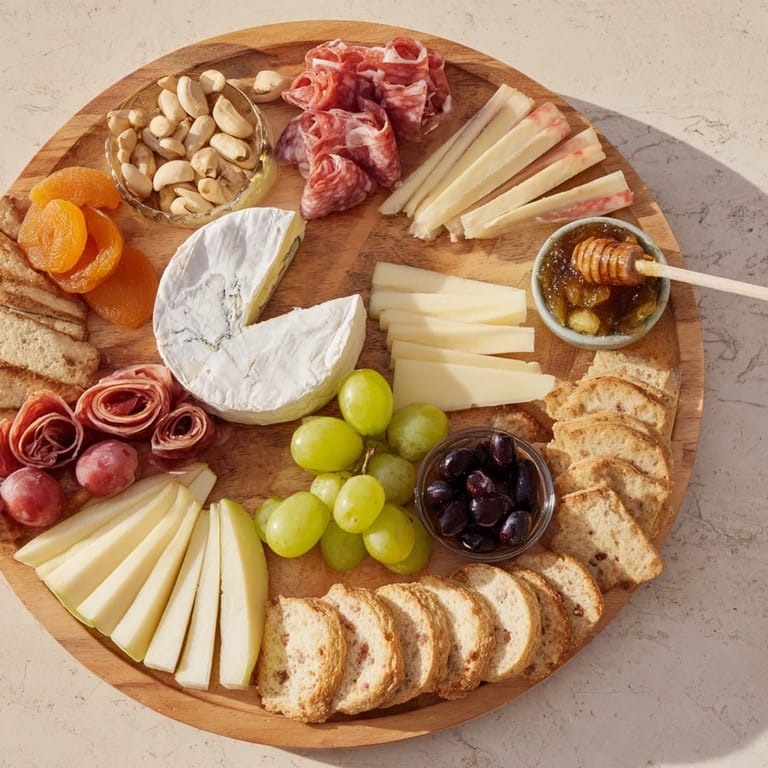
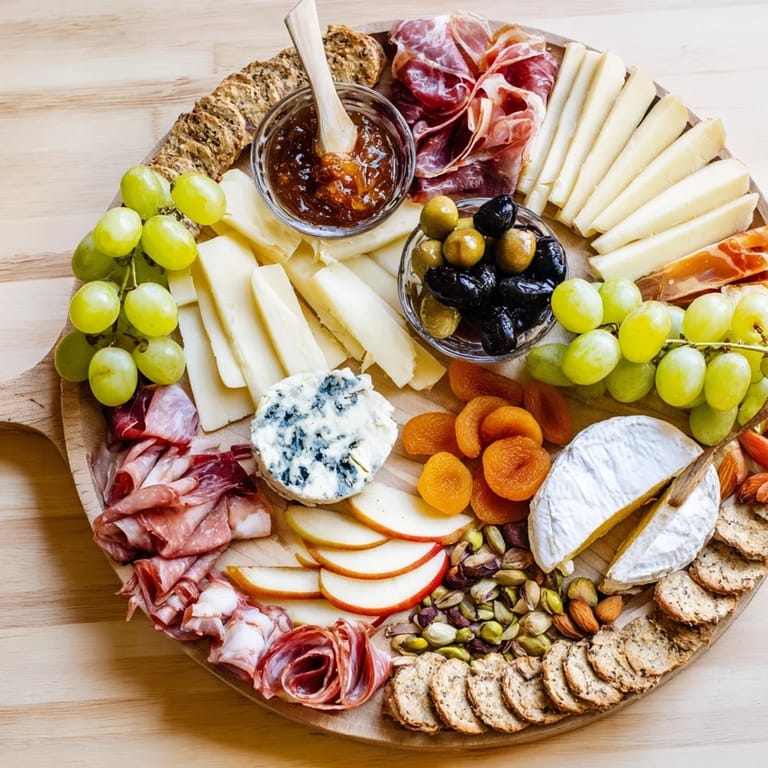
- Start with your board in front of you. This is where intention meets artistry. Begin with your cheeses, spacing them around the rim with purpose—not too tight, but not floating. Fold your prosciutto into soft ribbons and nestle it between the cheeses. Arrange your salami in overlapping slices. Each element should lean slightly toward the center, creating a sense of movement
- Add Your Fruits:
- Place your grape clusters strategically—they're nature's garnish, visual anchors. Slice your pear and apple at the last possible moment. Arrange them in a casual cascade along the rim. Scatter your dried apricots where you want warmth and color
- Fill the Spaces with Intention:
- Almonds in one corner, pistachios in another. Olives and cornichons in small ramekins positioned within the perimeter arrangement. This isn't random; it's a conversation in food. Every item should feel like it belongs exactly where you've placed it
- Add Your Sweet and Savory Anchors:
- Place your jam or quince paste in a small bowl—ceramic is prettier than glass. Drizzle or place honeycomb nearby. These are the secret moments, the flavor bridges
- Frame with Crackers and Bread:
- Lean your toasted baguette slices and assorted crackers around the outer edge, creating a textured border. They should look abundant but not chaotic
- Step Back and Admire:
- The center should be completely empty—a dramatic statement that this board is about design, not filling every inch. This emptiness is what makes it elegant. If you feel the urge to fill it, resist. That void is the point
- Serve with Grace:
- Set out cheese knives and tongs. Place small plates nearby. Serve immediately, while the bread is still warm and the cheeses are at their best
 Save
Save I'll never forget my mother's expression when she saw the board laid out this way for her birthday. She traced the rim with her finger, following the arrangement, then looked at the empty center and smiled. She understood immediately what I was saying without words: this board is beautiful because it respects its own form. That realization—that less can truly be more—transformed how I approach every table I set.
The Art of Arrangement
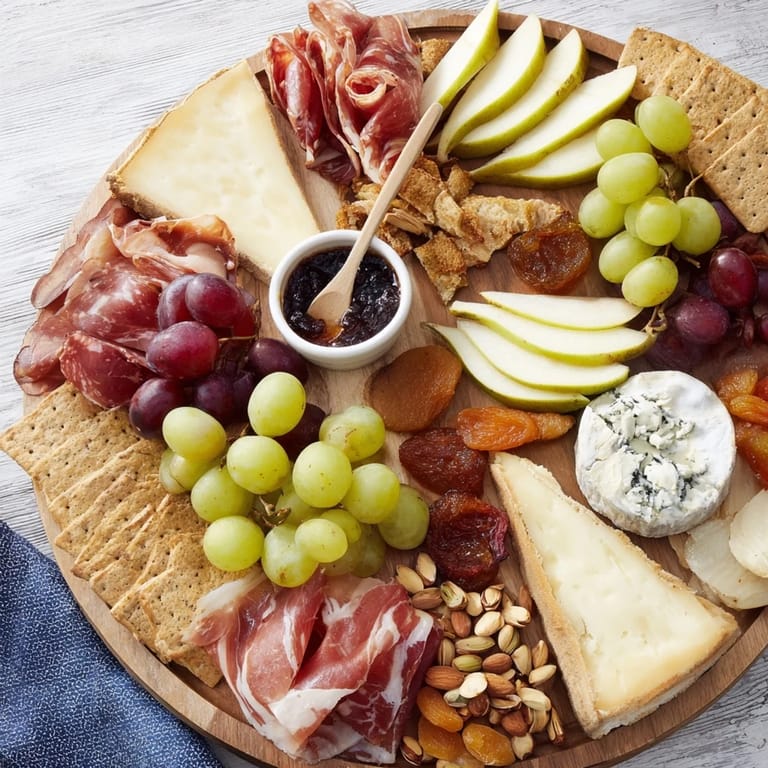
Creating a charcuterie board that feels intentional rather than haphazard comes down to understanding contrast and balance. Think in terms of color: the deep blues of the cheese against the golden prosciutto, the emerald pistachios next to the ruby grapes. Think in terms of texture: the creamy softness of Brie against the firm snap of a cracker. Think in terms of flavor: sweet apricots paired with salty almonds, tangy goat cheese balanced by the richness of coppa. When you arrange with these relationships in mind, the board tells a story instead of just offering options.
Pairing This Board with Wine
I learned early on that the right wine transforms a board from food into an experience. Champagne is always elegant—the bubbles feel celebratory, and the acidity cuts through the richness of the cheeses. Sparkling wine, especially Prosecco, brings a lighter touch and costs less than Champagne. For something still, a crisp Sauvignon Blanc from the Loire Valley is my secret weapon. The herbaceous notes complement the goat cheese and olives in ways that feel sophisticated without being pretentious. Whatever you choose, serve it cold, sip it slowly, and let the board and wine become a conversation together.
Making It Your Own
The beauty of this board is its flexibility. Making it vegetarian? Remove the charcuterie entirely and replace it with marinated artichoke hearts, roasted red peppers, and perhaps some fresh mozzarella. Want to make it festive? Add edible gold leaf or gold-dusted nuts around the cheeses—it feels luxurious without being over the top. Going seasonal? In autumn, add candied pecans and a small bowl of honey with a cinnamon stick. In spring, add fresh berries and a lemony ricotta. The structure stays the same; the ingredients become your own.
- For a vegetarian board, swap charcuterie for marinated vegetables and extra cheese varieties
- Edible gold adds festivity without changing the flavor profile
- Adjust seasonally—autumn nuts, spring berries, summer stone fruits
 Save
Save A charcuterie board arranged this way is more than food—it's an invitation to slow down, to taste intentionally, to enjoy the company of the people around your table. The empty center isn't wasted space; it's a reminder that sometimes elegance is about knowing what not to fill.
Recipe FAQs
- → What type of board works best for this arrangement?
A large wooden or marble board with a prominent rim is ideal to emphasize the layout and keep items contained.
- → How should the cheeses be prepared?
Cut triple-cream Brie into slim wedges, slice aged Manchego and blue cheese, and form goat cheese into small rounds for variety and easy serving.
- → Can this display accommodate vegetarian preferences?
Yes, omit charcuterie and substitute with marinated artichoke hearts, roasted peppers, or additional cheeses for a vegetarian-friendly option.
- → How should the ingredients be arranged?
Arrange all elements exclusively along the board’s outer rim, alternating colors and textures to create visual appeal while leaving the center empty.
- → What beverages pair well with this selection?
Champagne, sparkling wine, or a crisp Sauvignon Blanc complement the creamy cheeses and salty cured meats perfectly.
- → Are there any allergen concerns to be aware of?
This arrangement contains dairy, tree nuts, gluten, and possible sulfites; always check ingredient labels if sensitive.