 Save
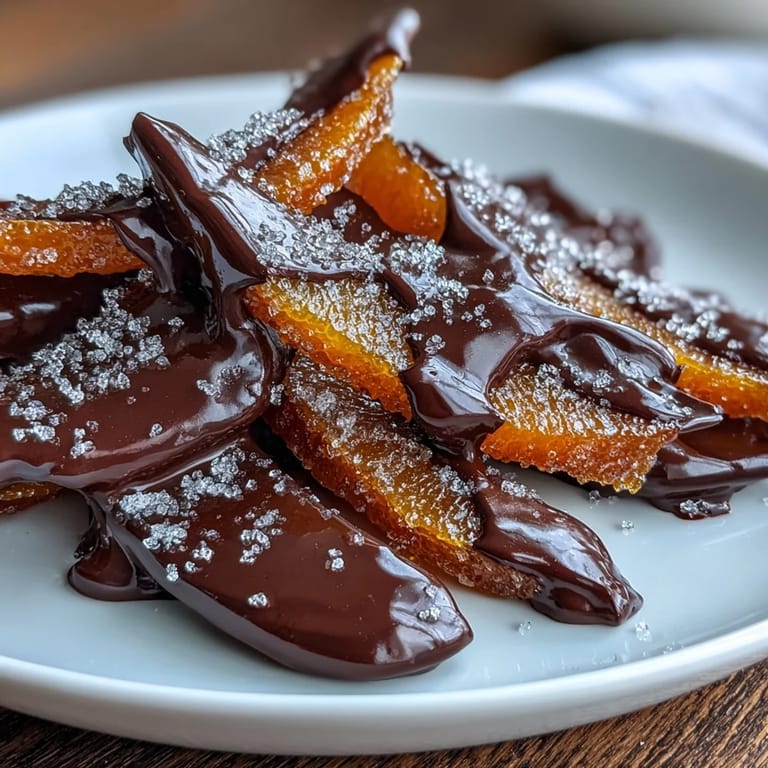
Save My neighbor brought over a tin of candied orange peels one winter afternoon, and I remember the precise moment I bit into one—how the bitter-sweet citrus burst against the dark chocolate coating, so elegant and simple I couldn't believe I'd never made them before. That tin disappeared in two days, and by the third day I was already in my kitchen with four organic oranges, determined to recreate that magic. These little strips took patience, yes, but not the kind that feels like a chore; more like a meditation where you're rewarded with something genuinely special at the end.
Last December, I made a triple batch of these for my book club, and watching everyone's faces light up when they realized I'd made them from scratch felt better than receiving a compliment myself. One friend asked if I sold them, which led to a lovely conversation about how the best treats are the ones made with actual time and intention, not shortcuts. That afternoon taught me that homemade confections carry a weight of care that store-bought versions simply cannot match.
Ingredients
- 4 large organic oranges: This is where you save yourself from bitterness—non-organic peels often taste like chemicals, and organic ones have a brighter, cleaner flavor that shines through all that candying.
- 2 cups granulated sugar: The sugar isn't just sweetener; it's a preservative that keeps these peels shelf-stable for weeks, which is half the magic.
- 1 cup water: You'll use this to make your simple syrup, and the ratio matters because it needs to concentrate slowly without caramelizing.
- 7 oz high-quality dark chocolate (70% cocoa or higher): Don't skimp here—cheap chocolate tastes waxy, and the whole point is that contrast between bitter cocoa and sweet peel.
- Extra granulated sugar (optional): This is purely for aesthetics, but it does catch the light beautifully and adds a subtle crunch.
Tired of Takeout? 🥡
Get 10 meals you can make faster than delivery arrives. Seriously.
One email. No spam. Unsubscribe anytime.
Instructions
- Start with impeccable oranges:
- Wash them under warm water and dry thoroughly—any water clinging to the peel will dilute your syrup later. Using a sharp knife, score the peel into quarters and gently work it away from the flesh, keeping that white pith attached because it prevents the peel from tearing and adds subtle bitterness that balances the sweetness.
- Cut into elegant strips:
- Slice lengthwise into 1/4-inch wide pieces, and try to keep them roughly the same thickness so they cook evenly. The uniformity matters more than perfection here.
- Blanch three times to reduce bitterness:
- Place strips in a saucepan, cover with cold water, bring to a boil, and drain completely—repeat this entire process two more times. Each blanch mellows the flavor without removing the essential citrus character.
- Prepare your candying syrup:
- In a clean saucepan, combine sugar and water, then simmer gently while stirring until every grain dissolves completely. You want a clear, smooth syrup that looks almost invisible in the pan.
- Simmer the peels into translucency:
- Add your blanched peels and reduce heat to low, simmering for 45 to 60 minutes while stirring occasionally—they'll gradually become glassy and tender, and you'll smell that concentrated orange sweetness building. Watch carefully so the syrup never darkens to caramel; if it starts turning amber, lift the pan off heat immediately.
- Dry thoroughly on a rack:
- Transfer each peel to a wire rack set over parchment paper using tongs, and let them sit undisturbed for at least an hour until they're no longer sticky. This is when they develop their final texture—slightly chewy but firm enough to dip cleanly.
- Optional sugar coating:
- If you want that sparkle, toss the dried peels in extra granulated sugar, coating both sides lightly. This step isn't essential, but it does catch light and adds a pleasant texture.
- Melt chocolate with care:
- Place chopped dark chocolate in a heatproof bowl set over barely simmering water—never let the bottom touch the water, and never let steam get into the chocolate. Stir gently until completely smooth and glossy, which takes patience but prevents seized, grainy chocolate.
- Dip with a light hand:
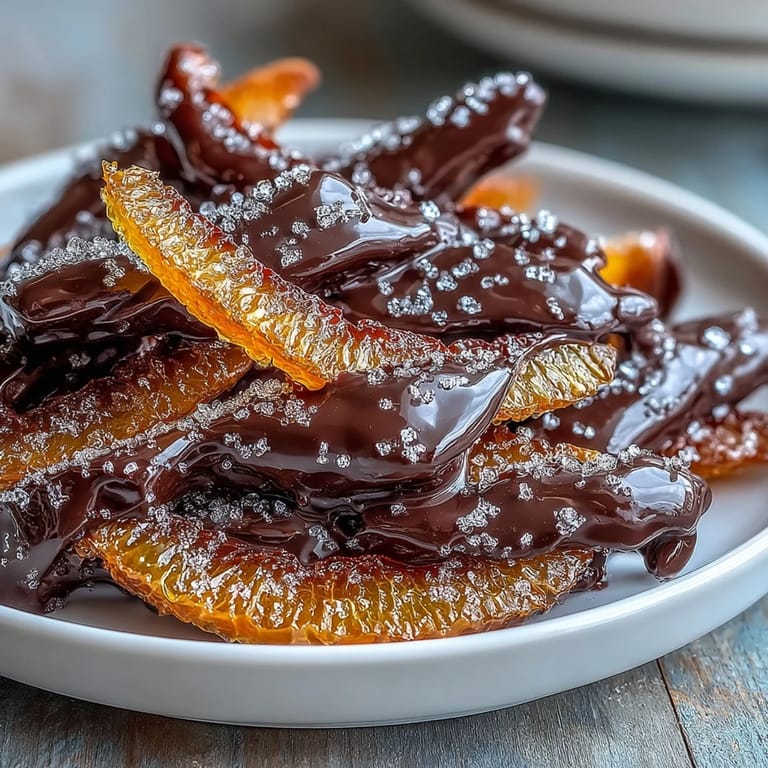
- Hold each candied peel by one end and dip it halfway into melted chocolate, letting excess drip back into the bowl, then place it on fresh parchment. The chocolate should set to a thin, elegant shell.
- Let chocolate set completely:
- Leave them at room temperature for about 30 minutes, or move them to the refrigerator for 10 minutes if you're impatient like me. Either way, the chocolate will harden to a satisfying snap.
 Save
Save I once made these on a grey, quiet morning when everything felt too much, and the rhythmic motion of stirring, the warmth of the steam, the smell of orange gradually becoming sweeter—somehow it reset my entire day. Cooking can do that, especially when you're making something meant to bring joy to someone else.
Flavoring the Syrup
The basic recipe is perfect as written, but once you've made it once, you'll start thinking about variations. I've simmered the peels with a cinnamon stick and a few whole cloves, which creates this warm spice note that plays beautifully against the citrus and chocolate—just remember to fish them out before the peels dry or you'll end up crunching down on cardamom. A vanilla bean split lengthwise adds another dimension entirely, though it's subtle enough that you mostly notice it as something you can't quite name.
Chocolate Selection and Substitutions
Dark chocolate at 70% cocoa creates the most sophisticated contrast, where bitterness and sweetness actually elevate each other, but I've made batches with 85% cocoa for people who like drama with their dessert. Milk chocolate works if you're making these for someone who finds dark chocolate intimidating, and it creates this smoother, more approachable sweetness that's honestly lovely—just know it shifts the entire character of the treat from elegant to playful.
Storage and Shelf Life
These keep beautifully in an airtight container at room temperature for up to two weeks, which means you can make them ahead of time without stress. I've stored them in a pretty tin with parchment between layers, and they've traveled well as gifts without the chocolate cracking or the peels drying out further.
- Keep them away from direct sunlight and excessive heat, or the chocolate may develop a white bloom.
- Never refrigerate in an airtight container because condensation will make them weep.
- If they do soften slightly in warmer months, a 10-minute chill before serving returns them to perfect texture.
 Save
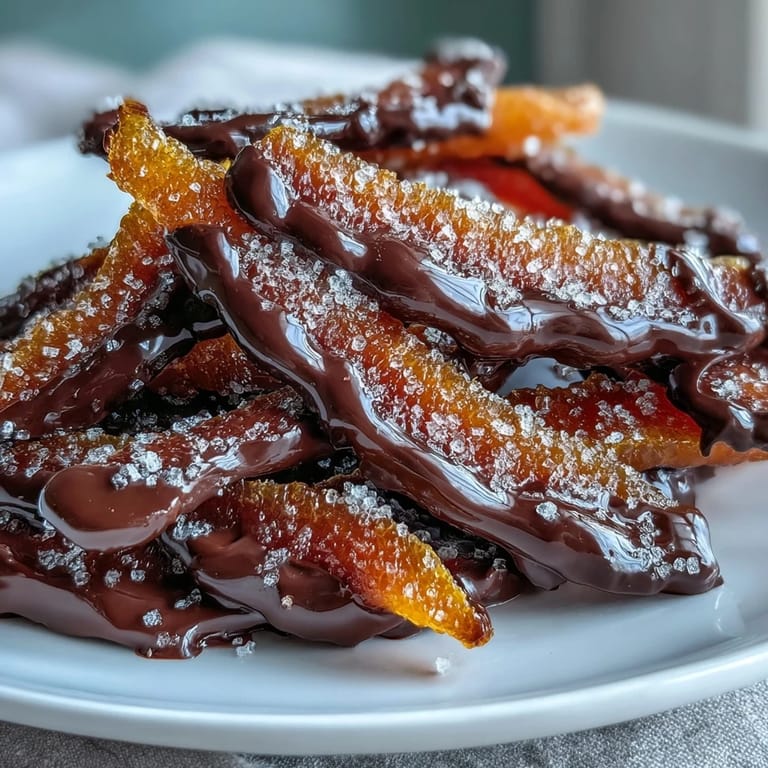
Save These candied orange peels have become my default thoughtful gift, the thing I bring to potlucks when I want people to remember that I was there. They're proof that extraordinary treats don't require complicated techniques or obscure ingredients—just time, intention, and the willingness to do something simple extraordinarily well.
Recipe FAQs
- → How do I reduce bitterness in orange peels?
Blanch the peel strips by boiling and draining them three times to soften and lessen bitter compounds.
- → What type of chocolate works best for coating?
High-quality dark chocolate with at least 70% cocoa provides a rich flavor that complements the citrus sweetness.
- → Can I add spices for extra flavor?
Yes, simmering the peels with cinnamon sticks or cloves infuses aromatic notes while candying.
- → How should I dry the candied peels before chocolate coating?
Place the strips on a wire rack over parchment and dry for at least one hour until not sticky.
- → What is the best way to melt chocolate smoothly?
Melt chocolate using a double boiler method to avoid burning and ensure smooth texture.