 Save
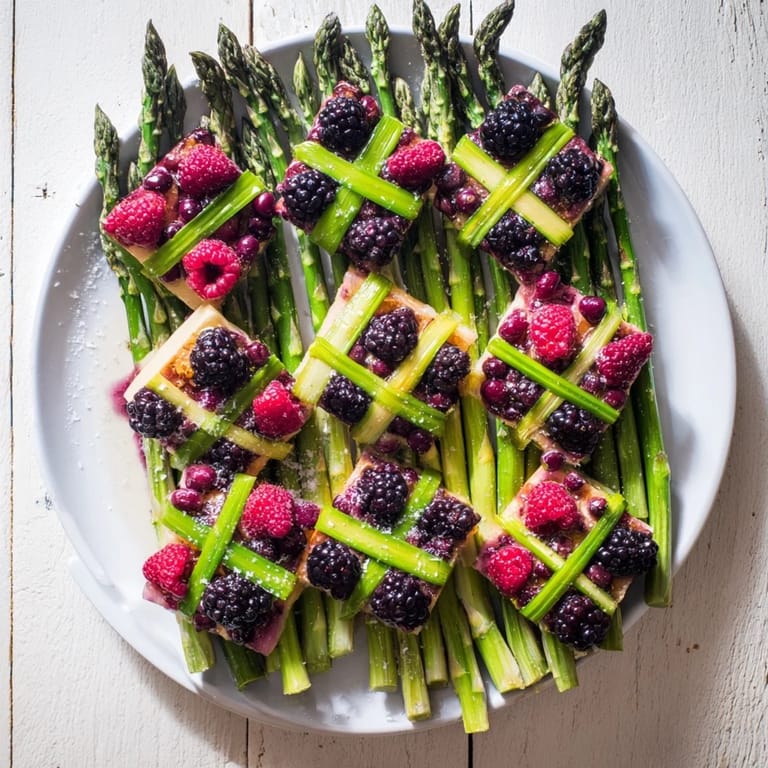
Save The first time I attempted something this intricate, I was hosting a spring brunch and wanted to move beyond the usual cheese board. I'd been arranging flowers that morning, weaving stems into a makeshift garland, when it struck me: what if I could do the same with vegetables? The idea of asparagus forming a grid with chives as delicate ties felt almost architectural. By afternoon, I had my first lattice standing on a platter, crowned with jewel-toned berries catching the light. It looked like something from a gallery opening, not my kitchen table.
My neighbor Sarah came over just as I was finishing the second lattice and her jaw actually dropped. She kept circling the platter, photographing it from different angles, and I realized in that moment that food doesn't always have to taste complicated to feel special—sometimes it just needs to surprise the eye first. That one lattice led to three more dinner party invitations that spring.
Ingredients
- Asparagus stalks: Choose medium thickness so they're pliable enough to weave but sturdy enough to hold their shape; thinner ones snap mid-arrangement.
- Fresh chives: Long, uncut stems work best for tying—they're forgiving and won't bruise like delicate herbs.
- Mixed berries: Blueberries, raspberries, strawberries, and golden berries create visual contrast and varied sweetness; buy them a day ahead so they're at peak firmness.
- Extra virgin olive oil: The good stuff matters here since there's nothing to hide behind—it's the final whisper of flavor.
- Flaky sea salt and black pepper: These season both the vegetables and the fruits, bringing everything into harmony.
Tired of Takeout? 🥡
Get 10 meals you can make faster than delivery arrives. Seriously.
One email. No spam. Unsubscribe anytime.
Instructions
- Awaken the asparagus:
- Bring salted water to a rolling boil and slip the asparagus in for just 1-2 minutes—you want them to brighten and soften slightly, not become limp. The moment they turn that vivid spring green, scoop them into an ice bath to stop the cooking.
- Soften the chives:
- A quick 5-second dip in hot water makes them pliable without cooking them fully. Let them cool in ice water so they stay bright and won't snap when you tie.
- Build the grid:
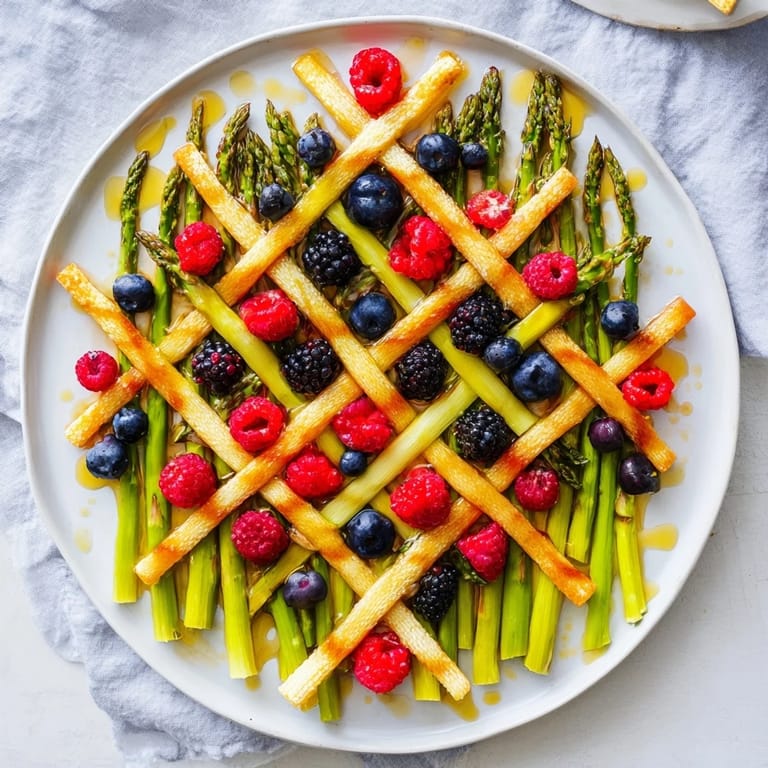
- Lay 8 asparagus stalks parallel on your platter with even spacing—think of them as the warp on a loom. Then weave the remaining 8 stalks perpendicularly, threading them over and under like you're playing a vegetable game of cat's cradle.
- Anchor with chives:
- At each intersection where asparagus crosses, gently loop a chive stem around the point and tie it with a soft knot. You're not trying to strangle it, just secure it.
- Jewel the lattice:
- Nestle your berries into the open squares—let colors dance together, mixing clusters of blueberries with raspberries and strawberries. Aim for balance without overthinking it.
- Final flourish:
- Just before guests arrive, drizzle with olive oil, scatter sea salt across the top, and give it a few grinds of black pepper.
 Save
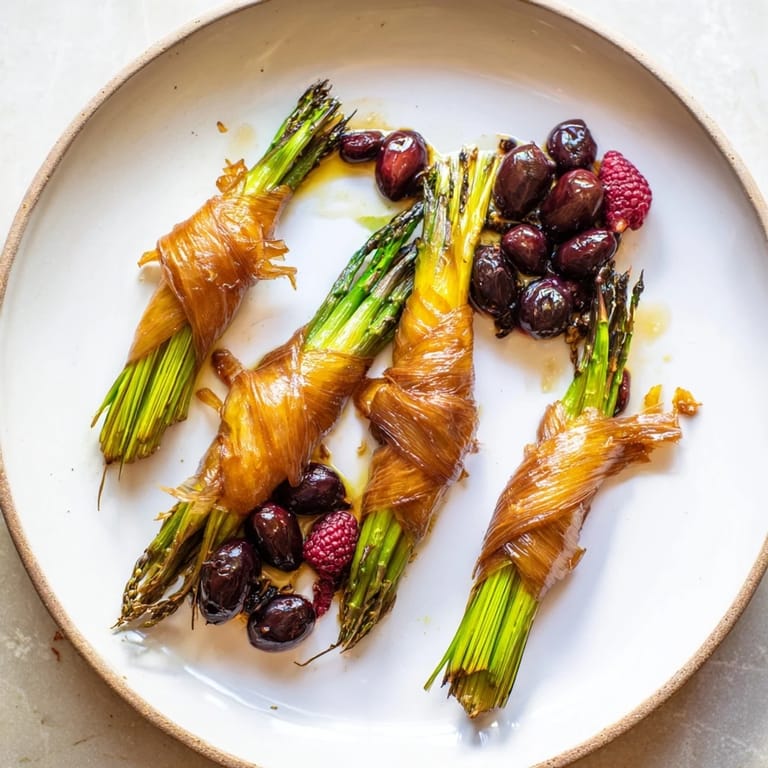
Save The memory that stays with me most isn't about a perfect lattice—it's about my eight-year-old nephew asking if the berries were real because they looked like they belonged in a toy kitchen. That's when I understood: this dish bridges the gap between art and appetite, making people pause before they eat.
Choosing Your Berries
The beauty of this recipe is its flexibility with fruit. I've used pomegranate seeds, blackberries, and even halved red currants when what I had on hand didn't match the original plan. The only rule is firmness—soft berries collapse into the lattice gaps and lose their visual pop. Shop a day or two ahead so fruit is at its peak without being overripe, and always reserve the prettiest pieces for the top where they'll be seen.
Timing and Presentation
This is the kind of dish that rewards a little advance planning. You can blanch asparagus and prepare chives several hours ahead, storing them separately on paper towels in the fridge. The actual assembly takes about 10 minutes, which means you can build the lattice right before guests arrive or up to 2 hours before and keep it chilled. The vegetables stay crisp, and the berries hold their brightness.
Beyond the Table
I've made this lattice for everything from casual spring brunches to wedding showers, and it always becomes a conversation starter. One guest asked if I'd studied floral design; another wanted to know if I made this every weekend. The truth is simpler: this recipe taught me that impressive cooking isn't always about complex techniques or rare ingredients—sometimes it's just about seeing an everyday vegetable differently and trusting your instincts to weave something beautiful. Serve it chilled and let it be the opening act that sets the tone for everything that follows.
- For a flavor boost, drizzle with aged balsamic glaze or scatter torn fresh mint leaves before serving.
- Substitute asparagus with thin green beans or even thick chive stems for an all-green version if that appeals to you.
- This recipe scales easily—double or triple the lattice for a larger gathering without adding complexity.
 Save
Save This recipe reminds me why I love cooking: the chance to turn simple ingredients into something that makes people stop and look twice. That moment, every single time, is worth the effort.
Recipe FAQs
- → How do you prepare the asparagus for the lattice?
Blanch asparagus stalks in boiling salted water for 1-2 minutes until tender and bright green, then cool in ice water to retain crispness.
- → What is the purpose of the chives in this dish?
Chives are softened briefly in hot water and used to tie and secure the asparagus lattice intersections, adding subtle herbaceous notes.
- → Can other fruits be substituted in the lattice?
Yes, small firm fruits like blackberries, red currants, or pomegranate seeds can be used as alternatives to the original berries.
- → Is this dish served warm or chilled?
It is best served chilled, allowing the fresh fruits and vegetables to maintain their natural textures and flavors.
- → What seasoning complements the lattice?
A drizzle of extra virgin olive oil, a sprinkle of flaky sea salt, and freshly ground black pepper enhance the fresh ingredients harmoniously.