 Save
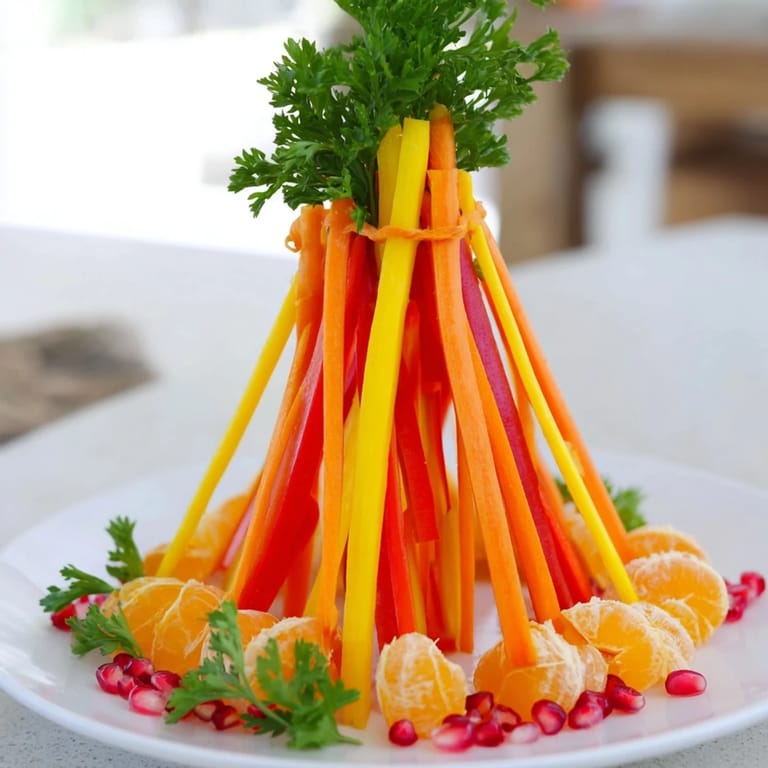
Save I remember the first time I created this arrangement at a friend's dinner party. I'd spent hours agonizing over what to bring—something beautiful, something edible, something that would make people stop and stare when they walked into the room. I was arranging carrots on a plate when it hit me: these bright orange sticks, layered with crimson peppers and golden mandarins, looked exactly like flames dancing in a campfire. That night, the centerpiece became the conversation starter before anyone had even tasted a bite, and I watched guests unconsciously reach for it throughout the evening, realizing they could actually eat the decoration.
I'll never forget serving this at a harvest gathering where someone said, 'I've never seen vegetables look so alive before.' That's when I understood the real magic wasn't the arrangement itself—it was how it made people feel warm and gathered, like we were all sitting around an actual bonfire together, even though we were in a climate-controlled dining room.
Ingredients
- Carrots (2 large, peeled and cut into sticks): These are your foundational flames—the longer and thinner you cut them, the more they'll lean and sway like real fire. Peeling them ensures a smooth, almost glowing appearance that catches the light.
- Yellow bell pepper (1, seeded and sliced into strips): This is where the lighter, hotter part of your fire comes from. The natural glossiness of peppers makes them look almost luminous when arranged against the plate.
- Red bell pepper (1, seeded and sliced into strips): The deep red creates depth and drama, mimicking the core of the fire where the heat is most intense.
- Mandarins (3, peeled and segmented): These are your glowing embers scattered throughout. Their natural sweetness is a delightful surprise for anyone who takes a bite, and they add moisture and brightness that other ingredients can't provide.
- Fresh parsley or mint sprigs (a small handful): These scattered around the base represent ash and cooler embers. They also add freshness and a hint of herbal brightness that balances the natural sugars of the peppers and fruit.
- Pomegranate seeds (optional, for sparkle): If you can find them, these are the jewels of the arrangement—tiny bursts of color and juice that make the whole centerpiece feel precious and festive.
- Hummus or yogurt-based dip (1/2 cup, optional): Serve this on the side as an anchor for dipping. It grounds the raw vegetables in something creamy and substantial.
Tired of Takeout? 🥡
Get 10 meals you can make faster than delivery arrives. Seriously.
One email. No spam. Unsubscribe anytime.
Instructions
- Prepare your canvas:
- Start with a large, round plate or platter—something with a bit of depth that can hold all your beautiful work. The plate itself is part of the story, so choose something you love looking at. Have all your vegetables prepped and waiting nearby, because once you start building, you'll want to work with rhythm and intention.
- Build the core:
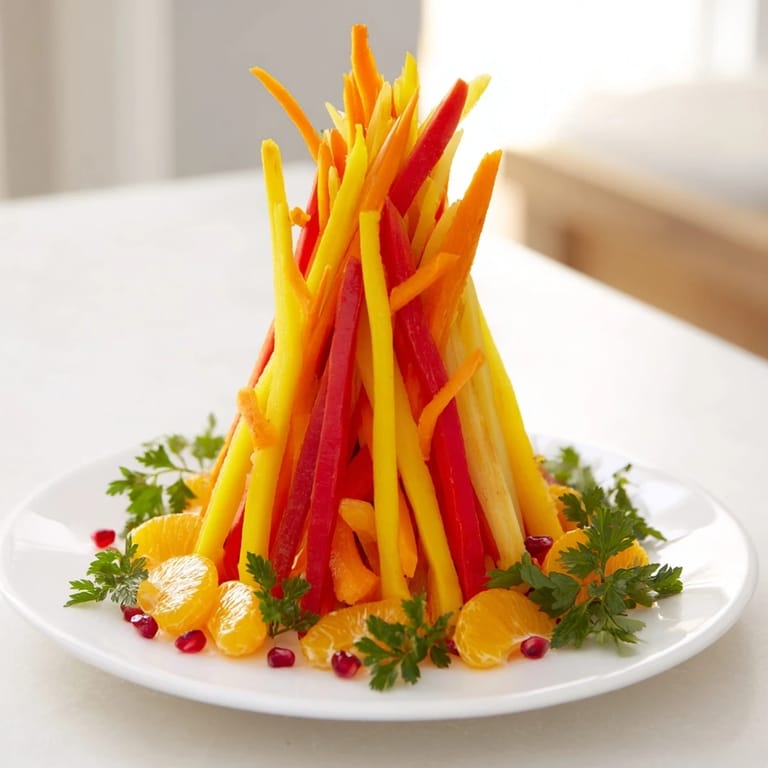
- Take those carrot sticks and stand them up in the center of the plate, leaning them together like they're warming themselves in the middle. They should lean inward, creating a little teepee of flame. This is the spine of your fire, so don't be timid—let them lean, let them touch, let them create actual height and dimension. You're building something three-dimensional here, not laying things flat.
- Layer the colors:
- Now comes the fun part. Weave your yellow and red pepper strips in and around those carrot sticks, starting from the bottom and working your way up. Alternate colors as you go—yellow, red, yellow, red—like you're watching real flames flicker and dance. Let some strips lean back with the carrots, and let others stand more vertically. There's no 'right' way here; you're creating movement and life, not precision.
- Add the glow:
- Tuck mandarin segments at different heights throughout the arrangement. Some should nestle at the base like embers that have fallen to the ground, while others should be tucked higher up where they catch the light. This is where the magic happens—these bright orange segments suddenly make the whole thing feel warm, like you're actually looking at something glowing.
- Finish with ash:
- Scatter your fresh parsley or mint sprigs around the base, between the vegetables and right at the plate level. These represent the ash and cooler embers that surround any fire. They also add a pop of green that makes the warm colors pop even more dramatically.
- Final sparkle:
- If you're using pomegranate seeds, sprinkle them over the arrangement right before serving. They're your final touch, the thing that makes people lean in closer and say, 'Wait, what is this?' Serve your optional dip in a small bowl on the side, letting guests decide when and how they want to eat from this beautiful creation.
 Save
Save There was a moment at a winter holiday gathering when a child asked if the centerpiece was real fire. The adults all laughed, but I understood what she meant—we'd created something that looked alive, that sparked joy before anyone even took a bite. That's when I realized this arrangement was never really about vegetables at all.
The Science of Stacking
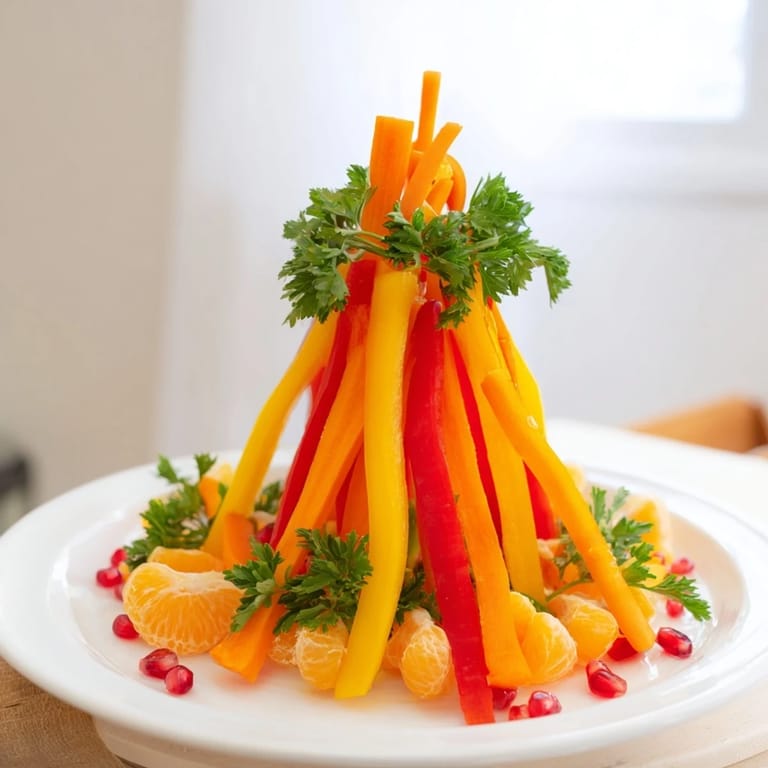
When you arrange vegetables vertically like this, you're using a principle that chefs call 'height and horizon.' Your eye naturally travels upward, so the taller your arrangement, the more commanding it becomes on the table. But here's what I've learned through trial and error: the height also creates pockets and valleys where smaller pieces can hide, creating visual interest and surprise. When someone leans in close to look at your centerpiece, they discover mandarin segments nestled in places they didn't expect. That moment of discovery is the whole point.
Variations and Seasonal Swaps
This arrangement is endlessly adaptable to whatever season you're in and whatever your garden or market offers. In autumn, I've added thin slices of golden beet or yellow carrot to intensify the fire effect. In spring, I've woven in thin asparagus spears and used blood oranges instead of mandarins. The framework stays the same—vertical arrangement, warm colors, scattered herbs—but the specific ingredients tell the story of what season you're in.
Serving and Pairing Ideas
This centerpiece is versatile enough to work at nearly any gathering, from casual weeknight dinners to formal holiday parties. Serve it alongside crisp white wine that echoes the brightness of the vegetables, or pair it with a citrusy mocktail that mirrors the mandarin sweetness. For dipping, hummus adds an earthy anchor, while a yogurt-based dip brings coolness that contrasts beautifully with the warm colors. Some friends have served it with assorted crackers and thin sliced baguette, turning it into a full appetizer station rather than just a centerpiece.
- The key is letting guests know they can eat it—never assume people realize the decoration is food until you explicitly invite them to enjoy it.
- If you're making this more than an hour ahead, store the vegetables separately and assemble just before guests arrive so everything stays crisp.
- Remember that this is as much about creating a moment as it is about feeding people—the beauty is part of the nourishment.
 Save
Save Every time I make this, I'm reminded that some of the most meaningful gatherings aren't about complicated recipes or fancy techniques—they're about taking simple, honest ingredients and arranging them with intention and care. This centerpiece does that beautifully.
Recipe FAQs
- → How do I create the bonfire effect with vegetables?
Cut carrots into long thin sticks and arrange vertically as the fire's base. Layer yellow and red bell pepper strips among the carrots to mimic flickering flames.
- → What fruits enhance the warm glow appearance?
Mandarin segments scattered around provide an orange glow and add dimension to the arrangement.
- → Can I add garnishes for extra visual interest?
Yes, fresh parsley or mint sprigs placed around the base resemble green embers or ash, while pomegranate seeds add sparkle.
- → Is this suitable for special diets?
Yes, it is vegan and gluten-free, naturally free from major allergens when served without dips containing allergens.
- → What dips pair well with this arrangement?
Hummus or a yogurt-based dip served on the side complements the fresh vegetables and fruits nicely.