 Save
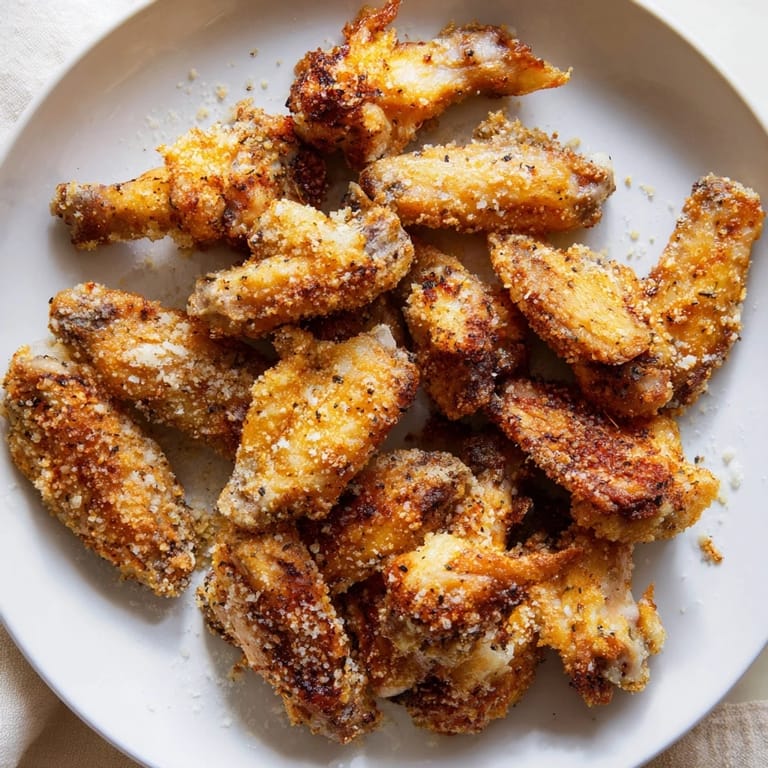
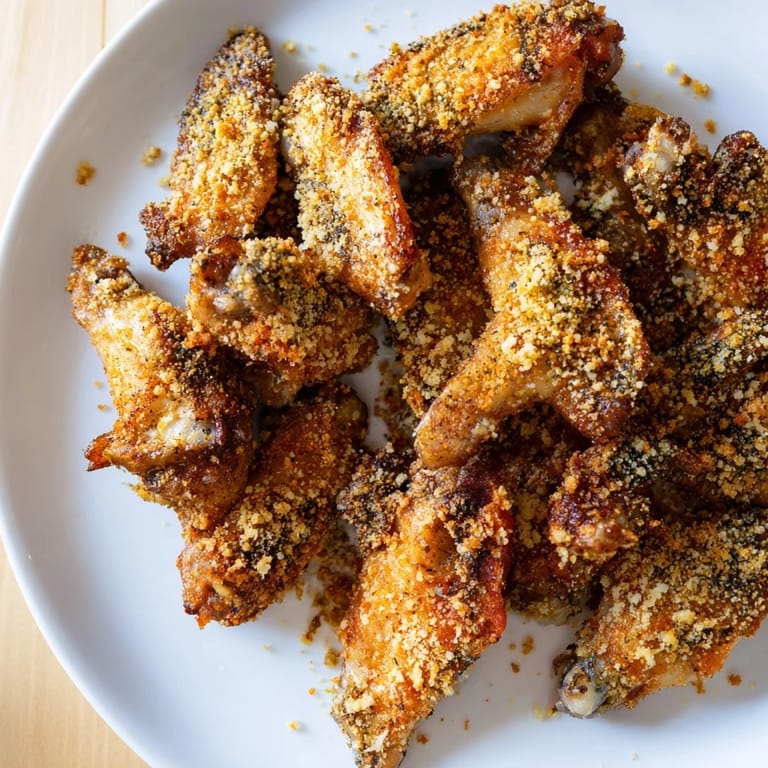
Save There's something about the smell of Parmesan crisping in the oven that stops me mid-conversation. My kitchen fills with this nutty, almost toasted aroma that pulls everyone toward the counter, and suddenly people are hovering, asking when they'll be ready. These baked Parmesan chicken wings were born from a lazy Sunday when I wanted something impressive but refused to stand over hot oil. The result was golden, crunchy, and somehow even better than the fried versions I'd chased for years.
I made these for a watch party last autumn when my brother insisted he'd eat "just three." He ended up sitting on the kitchen counter with the baking sheet, working through them with a smile, pausing only to grab napkins. That moment—when food stops being food and becomes part of how people connect—that's when I knew this recipe was a keeper. The ease of it made it feel almost like cheating, like I'd cracked some secret code.
Ingredients
- Chicken wings (2.5 lbs), flats and drumettes separated: Removing the tips gives you more surface area for that golden coating and honestly feels more refined, even if you're eating with your hands.
- Parmesan cheese (3/4 cup, grated): Fresh grated is worth the extra thirty seconds—it melts into the coating rather than staying powdery and separate.
- Breadcrumbs (1 cup, fine): The finer the crumb, the more uniform your crust becomes; panko works but gives you a different texture, more rustic and chunky.
- Garlic powder (2 tsp): This is your backbone flavor; resist the urge to skip it or use fresh garlic (it'll burn).
- Onion powder (1 tsp): A quiet amplifier that makes the savory notes sing without announcing itself.
- Dried Italian herbs (1 tsp): These remind you this isn't just cheese and crunch, there's a story of Mediterranean kitchens happening here too.
- Smoked paprika (1/2 tsp): A single half-teaspoon does something impossible—it adds warmth and depth without changing the color noticeably.
- Black pepper and sea salt (1/2 tsp each): Taste as you go; your palate is better than any recipe.
- Eggs (2 large) and milk (2 tbsp): This mixture is your glue; don't thin it too much or the coating slides off.
- Olive oil (2 tbsp): Just enough to kiss the wings and baking sheet, encouraging that golden finish without greasing the outcome.
Tired of Takeout? 🥡
Get 10 meals you can make faster than delivery arrives. Seriously.
One email. No spam. Unsubscribe anytime.
Instructions
- Warm the oven and prep your stage:
- Set your oven to 220°C (425°F) and line a baking sheet with parchment paper. A light brush of olive oil on the parchment prevents any sticking drama. This five-minute setup saves frustration later.
- Make your egg bath:
- Whisk two eggs with two tablespoons of milk until there's no visible white streaks. This isn't a science experiment; just a quick combine that takes thirty seconds and changes everything about how the coating sticks.
- Build the coating blend:
- In a separate bowl, combine Parmesan, breadcrumbs, garlic powder, onion powder, Italian herbs, paprika, pepper, and salt. Give it a small stir with your fingers to break up any clumps. You'll smell it and know it's right.
- Dry and dip your wings:
- Pat each wing completely dry—moisture is the enemy of crispiness. Dip into egg, then into the Parmesan mixture, pressing gently so the coating clings. This is rhythmic, almost meditative work.
- Arrange on the sheet:
- Lay wings in a single layer without crowding; they need air around them to get crispy, not steamed. A crowded pan creates disappointment.
- Oil and bake:
- Drizzle or brush wings with a light amount of olive oil, then bake for 35 to 40 minutes, turning halfway through. At around 35 minutes, start checking; every oven has moods, and you want golden, not dark.
- Optional finish:
- If you're feeling bold, broil for 2 to 3 minutes at the end to push the crispiness further. Watch them like a hawk during this step—broilers move fast.
 Save
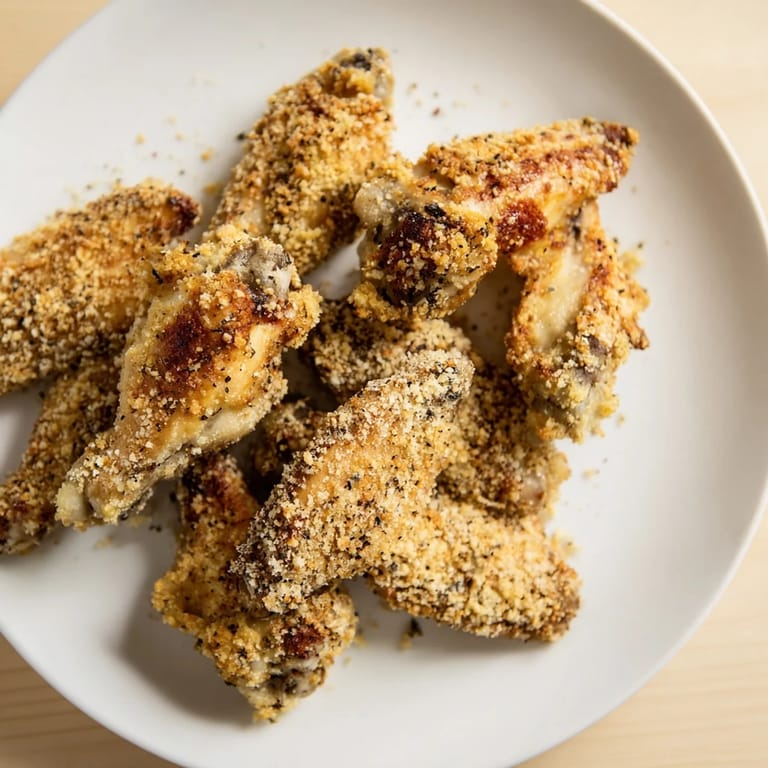
Save I learned the turning thing the hard way after ignoring it once and ending up with bottoms that were almost burned while the tops looked timid. Now I set a timer and commit to it, and the difference is remarkable. It's one of those small rituals that separates good from genuinely satisfying.
The Science of the Crust
What's happening in your oven is actually beautiful chemistry. The egg creates a barrier that helps the breadcrumb-Parmesan mixture adhere to the chicken, while the heat melts the cheese and browns the crumbs, creating that shatteringly crisp exterior. The olive oil promotes browning through a process called the Maillard reaction, which is fancy talk for making things golden and delicious. Understanding this means you stop fearing the process and start trusting it.
Variations and Flavor Swaps
These wings love improvisation. I've swapped Italian herbs for everything from cajun spices to everything bagel seasoning, and each version tastes like a completely different wing. Some days I add a pinch of cayenne for heat, other times I include lemon zest for brightness. The foundation is so solid that you can build almost anything on top of it without breaking the magic. Your kitchen isn't a test kitchen; it's yours to play in.
Serving and Storage
Serve these hot, which is when they're at their absolute best—the crust still has some give, and the inside is warm and tender. They're best fresh, but they'll keep in an airtight container for three days and reheat surprisingly well at 160°C for about ten minutes. Cold they're still good for snacking, which is how I found myself eating them straight from the fridge at midnight more times than I'd like to admit.
- Pair them with ranch for classic reliability, or marinara if you're feeling Mediterranean.
- Serve with celery sticks and blue cheese dip for a nod to tradition, though honestly they don't need anything at all.
- Make a double batch without thinking twice; they disappear faster than you'd expect.
 Save
Save These wings are proof that the simplest recipes often become the ones people ask for again and again. They're a reminder that good food doesn't require complexity, just attention and a little bit of care.
Recipe FAQs
- → How do I achieve crispy baked chicken wings?
Patting the wings dry before coating and baking at a high temperature helps develop a crispy crust. A final broil step enhances crispiness.
- → Can I make these wings gluten-free?
Yes, use gluten-free breadcrumbs to keep the coating gluten-free while maintaining the texture.
- → What is the role of the wet mix in this technique?
The egg and milk mixture helps the Parmesan breadcrumb coating adhere evenly to the wings, ensuring a flavorful crust.
- → Which herbs work well with the Parmesan coating?
Dried Italian herbs or oregano provide a classic flavor, but feel free to substitute with your preferred spice blend.
- → How can I serve these wings for best taste and presentation?
Serve hot with dips like ranch or marinara, accompanied by celery sticks to balance the rich, crispy wings.
- → Is it necessary to remove wing tips before cooking?
Removing the tips helps ensure even cooking and easier coating application, but it is optional based on preference.