 Save
Save Last summer, my friend brought these boxes to a beach day, and I watched everyone abandon their soggy sandwiches the moment they saw hers. That's when I realized: the future of convenient eating wasn't complicated—it was just knowing how to build a box that actually tastes good hours later. Now I make a batch every Sunday, and they've become my answer to the 3 p.m. slump, the quick lunch before a meeting, or that moment when I want something real but don't want to think too hard about it.
My coworker ate one of these at her desk and suddenly everyone wanted to know what was in the fancy container. That quiet moment of watching someone genuinely enjoy what you made—that's when I knew I'd figured out something worth repeating.
Ingredients
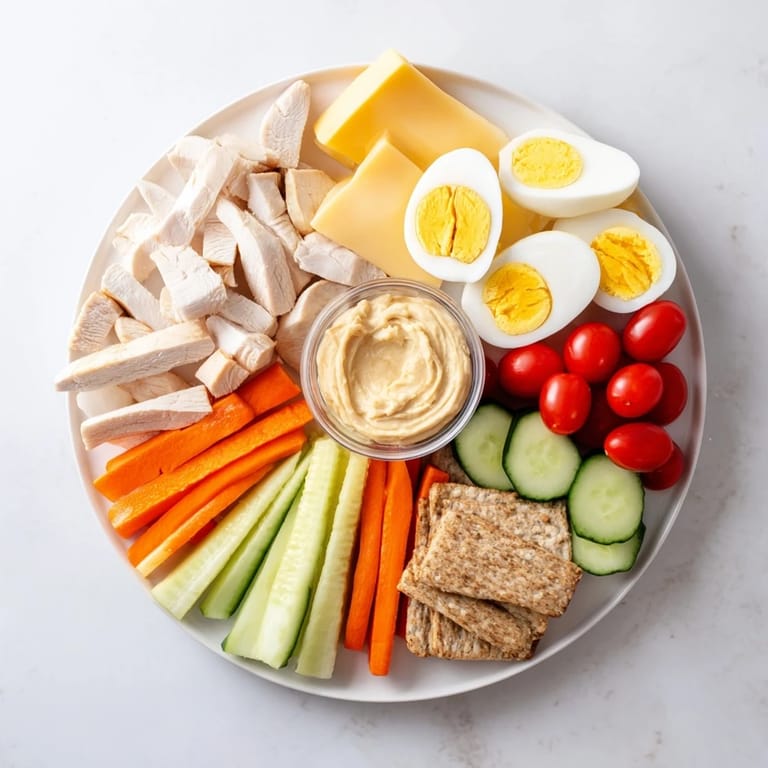
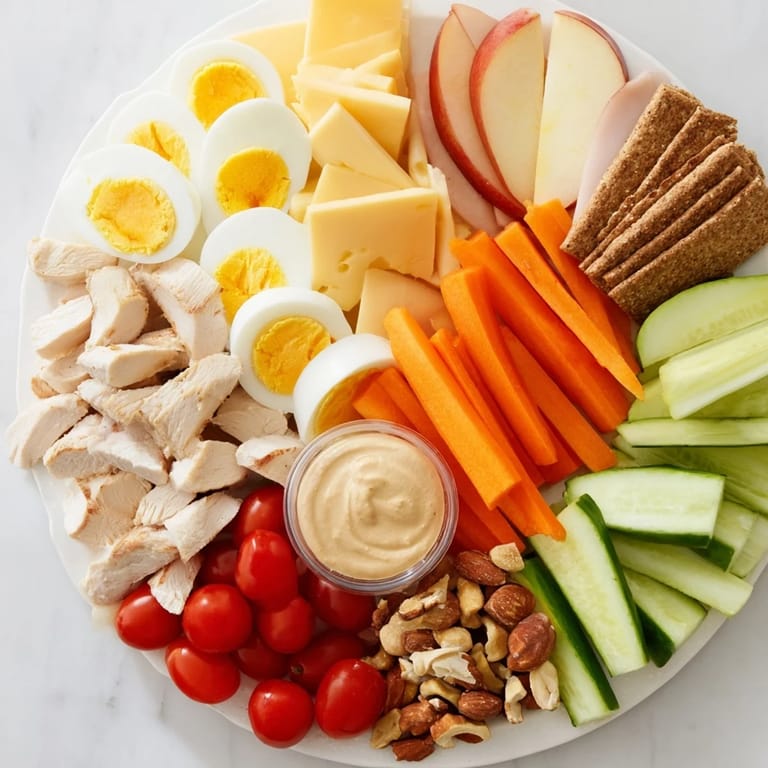
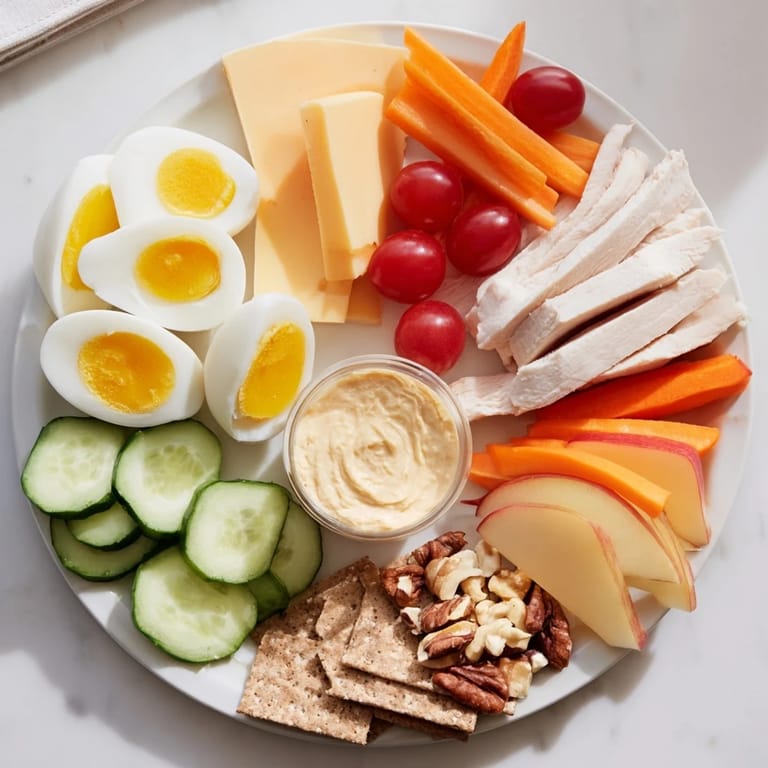
- Cooked chicken breast, sliced (8 oz): The backbone of the box—tender and filling without weighing you down.
- Hard-boiled eggs, halved (4): Boil them the night before; they're the easiest protein prep and stay fresh for days.
- Sliced turkey or ham (4 oz): Pick something you actually enjoy eating plain, because that matters here.
- Cheddar cheese, cubed (4 oz): The sharp kind holds its flavor better than mild when it's been sitting a few hours.
- Cherry tomatoes (1 cup): Leave them whole to prevent the box from getting watery.
- Cucumber slices (1 cup): Pat them dry before packing to keep everything crisp.
- Baby carrots (1 cup): They're naturally sweet and last longer than cut vegetables.
- Apple slices (1): Toss with lemon juice immediately after slicing—it's the secret that keeps them fresh and bright.
- Hummus (1/2 cup total): Divide into 4 small containers; it acts as a dip and a flavor anchor.
- Whole-grain crackers (16): Keep them separate or pack them in a tiny bag to prevent sogginess—this is non-negotiable.
- Mixed nuts (1/4 cup): About a tablespoon per box for that textural contrast everything needs.
Tired of Takeout? 🥡
Get 10 meals you can make faster than delivery arrives. Seriously.
One email. No spam. Unsubscribe anytime.
Instructions
- Set up your station:
- Lay out your four containers in front of you like you're running a small assembly line. It sounds simple, but having everything visible keeps you moving and prevents forgetting pieces.
- Build the protein layer:
- Divide the chicken, turkey, eggs, and cheese evenly—the secret is using your eyes to eyeball portions so each box feels equally generous. Take a moment to arrange them so they look intentional, not just thrown in.
- Add the fresh sides:
- Distribute tomatoes, cucumber, carrots, and apple slices next, tucking them into the remaining spaces. The variety of colors isn't just pretty; it's a visual promise that you've made something thoughtful.
- Prepare the hummus:
- Spoon hummus into small containers and nestle them into each box. This is the glue that brings flavors together, so don't skip it.
- Pack the crunch:
- Add 4 crackers to each box, or better yet, pack them separately in a small bag clipped to the outside. Your future self will thank you when they're still actually crispy at lunchtime.
- Finish with nuts:
- Sprinkle about a tablespoon of mixed nuts into each box. They add richness without making the box feel heavy.
- Seal and store:
- Cover everything tightly and refrigerate. These are best eaten within 3-4 days, but honestly, they rarely last that long.
 Save
Save There's something deeply satisfying about handing someone a box and watching their face light up because they weren't expecting to actually want to eat it. That moment when convenience becomes something you're genuinely excited about—that's what this is.
How to Customize Without Losing the Magic
The structure matters, but the ingredients are genuinely flexible. Swap the chicken for grilled shrimp or crumbled tofu if you want something lighter, or use plant-based deli slices if you're feeding someone with different preferences. Bell pepper strips, snap peas, and radishes add crunch if you're bored with cucumbers and carrots. For a Mediterranean moment, add olives or marinated artichoke hearts and swap the hummus for a whipped feta or tapenade. The point isn't rigidity—it's understanding that protein, fresh vegetables, something creamy, and something crunchy together create the framework for something that actually works.
The Packing Problem Solved
The most common mistake people make is overthinking the container situation. You don't need anything fancy—divided compartments are nice if you have them, but honestly, a regular rectangular container works fine as long as you keep the wet stuff (hummus) separate and the crispy stuff (crackers) even more separate. If you're taking these on-the-go, pack a small ice pack in the bag. Everything stays fresher, and you won't worry about food safety on the drive to the beach or the office.
Meal Prep That Doesn't Feel Like Punishment
The reason I keep making these instead of defaulting to something easier is that they actually taste like food I want to eat, not something I'm eating because I should. There's no sad lettuce, no mystery protein, no regret—just good ingredients assembled in a way that made sense to someone who actually cared about the eating part. Use rotisserie chicken if you want to save time boiling and shredding. Buy pre-cut vegetables if that's what gets this into rotation. Make them on Sunday or Wednesday, whatever fits your life.
- Protein keeps you satisfied longer, so these work as a full meal or a snack depending on your appetite and what else you've eaten that day.
- Store hummus in a separate container if possible—it acts as a protective barrier against moisture spreading through the whole box.
- Prep your proteins and vegetables the night before if you want assembly to take 5 minutes instead of 15.
 Save
Save These boxes have become my quiet rebellion against overly complicated eating. They sit in my fridge like little promises that lunch tomorrow will be something I actually want, and somehow that changes everything.
Recipe FAQs
- → What proteins are included in these snack boxes?
Sliced chicken breast, hard-boiled eggs, turkey or ham, and cheddar cheese provide a variety of protein sources for a balanced snack.
- → Can I substitute the vegetables in the boxes?
Yes, options like snap peas, bell pepper strips, or radishes can add extra crunch and variety to the boxes.
- → How should the snack boxes be stored?
Seal the containers and refrigerate until ready to eat. Consume within 3-4 days to maintain freshness.
- → Are these snack boxes suitable for gluten-free diets?
They can be gluten-free if you use gluten-free crackers instead of regular whole-grain crackers.
- → How can I add a Mediterranean twist?
Incorporate olives or marinated artichoke hearts to introduce Mediterranean flavors into the snack boxes.