 Save
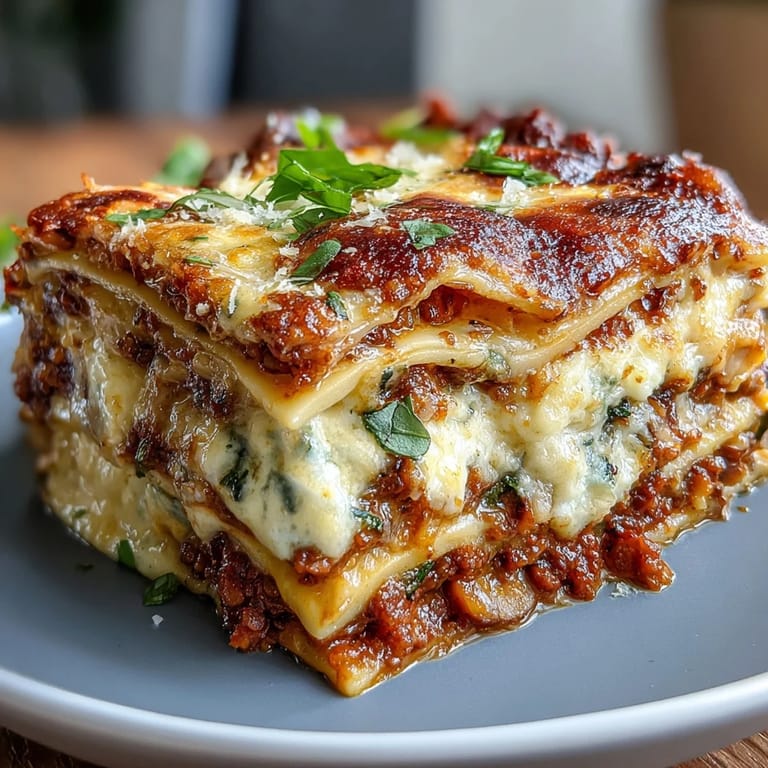
Save There's something almost magical about sliding a single pan into the oven and knowing dinner will emerge golden and bubbling without the usual lasagne chaos. I discovered this one-pan approach on a particularly hectic Tuesday when I couldn't face dragging out three separate pots, and honestly, it's ruined me for traditional lasagne ever since. The smoky lentil bolognese builds layer by layer, and you get that satisfying lasagne experience with about a quarter of the cleanup. It's the kind of dish that feels like you've spent hours in the kitchen when really you've been remarkably efficient about it.
I made this for my brother's dinner party last autumn when he'd casually mentioned his new girlfriend was vegetarian, and I watched his face as he realized he could serve something this impressive without fussing. He went back for seconds while everyone else was still savoring their first helping, and that moment when a skeptic becomes a convert is exactly why I keep making it.
Ingredients
- Olive oil: Two tablespoons is your foundation for developing flavor as the vegetables soften, and it's worth using something you'd actually taste rather than whatever's on sale.
- Onion, garlic, carrots, celery, red bell pepper: This is your aromatic base, the quartet that builds flavor before the lentils even enter, so don't skip the soffritto moment.
- Mushrooms: Finely chop them small enough that they almost melt into the sauce, adding an umami depth that makes people swear there's meat in here.
- Courgette: Diced and sautéed until it releases its moisture, it softens into the bolognese rather than staying stubbornly chunky.
- Smoked paprika, oregano, thyme, chili flakes: These aren't just seasonings, they're the character of the dish, so taste as you go rather than measuring blindly.
- Chopped tomatoes and tomato paste: The paste concentrates the tomato flavor while the canned tomatoes provide bulk and acidity that keeps everything bright.
- Red lentils: They dissolve slightly as they cook, thickening the sauce naturally while adding protein and a subtle earthiness.
- Vegetable stock: Use something you'd actually drink, as it becomes the backbone of your sauce's flavor.
- Balsamic vinegar: Just a tablespoon, stirred in at the end, rounds out all those earthy flavors with a whisper of sweetness.
- No-boil lasagne sheets: They absorb moisture from the sauce as it bakes, so don't worry about them being stiff when you layer them.
- Ricotta, mozzarella, Parmesan: Layer them generously, as they're what everyone remembers about lasagne, and the Parmesan in particular adds a salty bite that cuts through the rich sauce.
- Fresh basil: Torn just before serving, it's your final flourish that makes the whole thing taste intentional rather than accidental.
Tired of Takeout? 🥡
Get 10 meals you can make faster than delivery arrives. Seriously.
One email. No spam. Unsubscribe anytime.
Instructions
- Build your base:
- Heat the olive oil in your ovenproof skillet over medium heat, then add the chopped onion and let it soften for a few minutes, listening for that gentle sizzle that tells you it's releasing its sweetness. The kitchen will smell like the beginning of something good.
- Add the vegetables:
- Stir in the garlic, carrots, celery, and red bell pepper, cooking until they're just tender but not mushy, about five minutes. You want them to still have some dignity.
- Sauté the mushrooms and courgette:
- Add the finely chopped mushrooms and diced courgette, cooking for five to six minutes until any moisture they release has mostly evaporated. This matters because it prevents your finished lasagne from being watery.
- Toast the spices:
- Sprinkle in the smoked paprika, oregano, thyme, and chili flakes if you're using them, stirring constantly for about a minute until the kitchen smells almost intoxicatingly aromatic. Don't skip this moment, as it's where the magic actually happens.
- Bring it together:
- Stir in the chopped tomatoes, tomato paste, rinsed red lentils, and vegetable stock, then season with salt and pepper to taste. Bring everything to a simmer, cover, and let it cook gently for twenty to twenty-five minutes until the lentils are completely tender and the mixture has thickened into something saucy rather than soupy.
- Finish the bolognese:
- Stir in the balsamic vinegar, tasting as you go to make sure the flavors feel balanced. This is your last chance to adjust the seasoning before it all comes together.
- Prepare for baking:
- While the sauce finishes, preheat your oven to 180°C (350°F). Remove about half of the bolognese from the pan and set it aside, leaving about half still in the bottom.
- First cheese layer:
- Arrange a layer of no-boil lasagne sheets over the remaining sauce in the pan, breaking them to fit if necessary. Dollop half of the ricotta over the sheets, then sprinkle with about a third of the mozzarella and Parmesan combined.
- Second sauce layer:
- Spread half of the reserved bolognese over the cheese, then top with another layer of lasagne sheets. It should look a bit chaotic at this point, which is perfectly fine.
- Repeat the layers:
- Dollop the remaining ricotta, sprinkle another third of the mozzarella and Parmesan, then spread the last of the bolognese over the top. Top with a final layer of lasagne sheets.
- Crown your creation:
- Sprinkle the remaining mozzarella and Parmesan over the final lasagne layer. The cheese will melt and brown beautifully as it bakes.
- Bake covered:
- Cover the pan with foil and bake for twenty-five minutes, which ensures the lasagne sheets soften fully without the top burning.
- Finish baking:
- Remove the foil and bake for another ten to fifteen minutes until the cheese is golden and bubbly at the edges. This is when your kitchen will smell like you've been cooking all day.
- Rest and serve:
- Let the lasagne rest for ten minutes before serving, which gives it a chance to set slightly so it doesn't fall apart when you scoop it. Tear the fresh basil over the top just before plating.
 Save
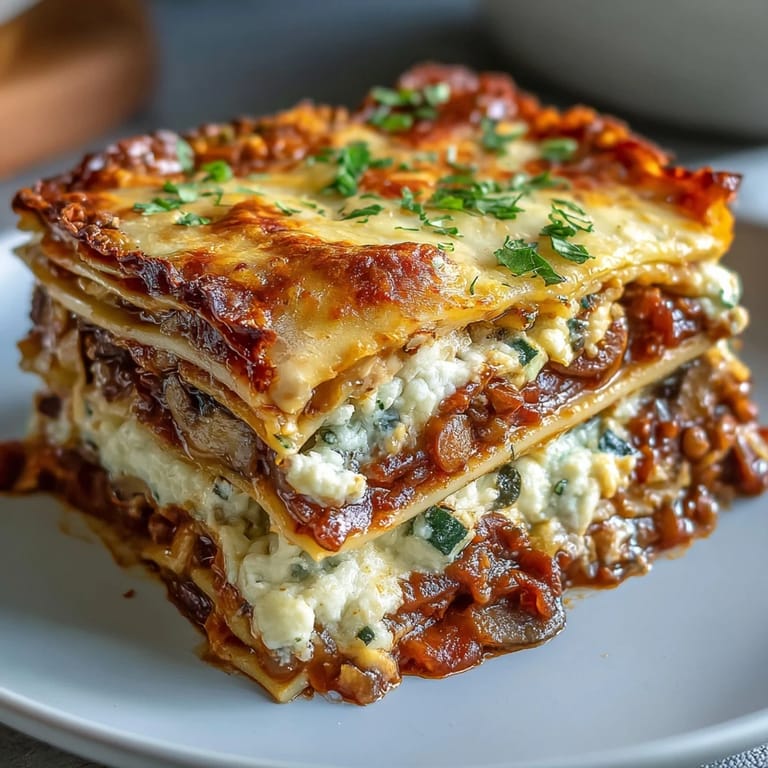
Save There's a moment when you pull this out of the oven, the foil comes off, and you see the golden cheese bubbling around the edges while steam rises up, and suddenly all those individual chopped vegetables feel like they've become something unified and remarkable. My family has declared this the official lasagne of lazy Sunday cooking, which is the highest compliment I could ask for.
Why This Works as a One-Pan Meal
The brilliance of building everything in one ovenproof skillet is that your bolognese begins its cooking on the stovetop exactly where it'll finish in the oven, creating a seamless transition. The pan's heat is already embedded in the ceramic or cast iron by the time the lasagne sheets go in, so they start absorbing moisture and softening immediately instead of sitting passively while the oven preheat catches up. Most importantly, there's no transferring, no extra vessels, no moment where you're holding a hot pot of sauce and wondering where it goes next.
The Lentil Game-Changer
Red lentils behave differently than the green or brown varieties, and that's entirely the point here. They don't hold their shape the way firmer lentils do, instead partially breaking down and thickening your sauce naturally without any cream or flour required, which means the texture becomes almost meaty rather than stewlike. I learned this by accident when I reached for red lentils assuming they were the same as whatever else was in the cupboard, and now I genuinely can't imagine making this with anything else.
Seasonings and the Smoke Factor
Smoked paprika is what makes people pause mid-bite and ask if there's somehow bacon hiding in here, and it's worth seeking out the real Spanish stuff rather than whatever generic paprika has been sitting in your spice drawer since 2019. The combination of smoked paprika with oregano and a hint of thyme creates a flavor profile that feels less like Italian tomato sauce and more like something that's been simmering in a Tuscan countryside for hours. If you want to push the smoke element even further, add a tiny pinch of liquid smoke directly to the finished bolognese, tasting as you go because a little bit goes a very long way.
- Taste your sauce after the lentils are tender and before you assemble anything, adjusting salt and pepper according to your preference.
- If the bolognese seems too thick after cooking, thin it slightly with a splash of vegetable stock before layering, as the no-boil sheets need some moisture to soften properly.
- If it seems too thin, let it simmer uncovered for another few minutes while the oven preheats.
 Save
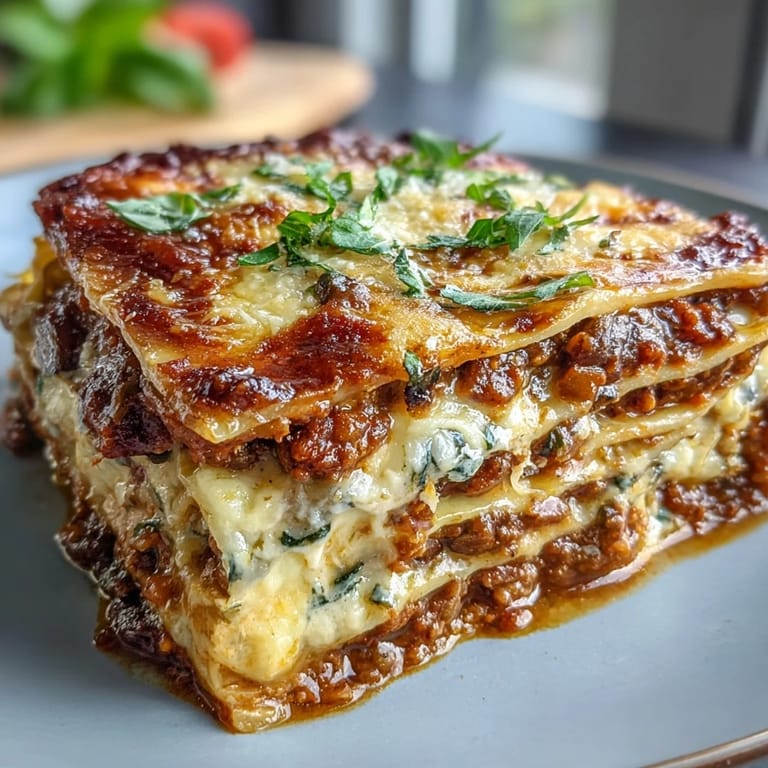
Save This lasagne has become the dish I make when I want to feel like I've accomplished something substantial without actually spending my entire evening in the kitchen. It's proof that vegetarian cooking can be just as satisfying and layered and worthy of a dinner table as anything else.
Recipe FAQs
- → Can I make this vegan?
Yes, simply substitute plant-based alternatives for ricotta, mozzarella, and Parmesan. The flavor and texture remain excellent.
- → Do I need to cook the lentils first?
No, the dried red lentils cook directly in the vegetable bolognese sauce, absorbing flavors as they simmer.
- → Can I use regular lasagne noodles?
You'll need to par-boil regular lasagne noodles before layering. No-boil sheets work best for this one-pan method.
- → How long does it keep?
Leftovers refrigerate well for 3-4 days. Reheat covered at 180°C for 15-20 minutes until hot throughout.
- → Can I freeze it?
Yes, assemble before baking, wrap tightly, and freeze for up to 3 months. Thaw overnight before baking as directed.
- → What vegetables work best?
Mushrooms, courgettes, and peppers provide texture. Feel free to add eggplant or spinach for variety.