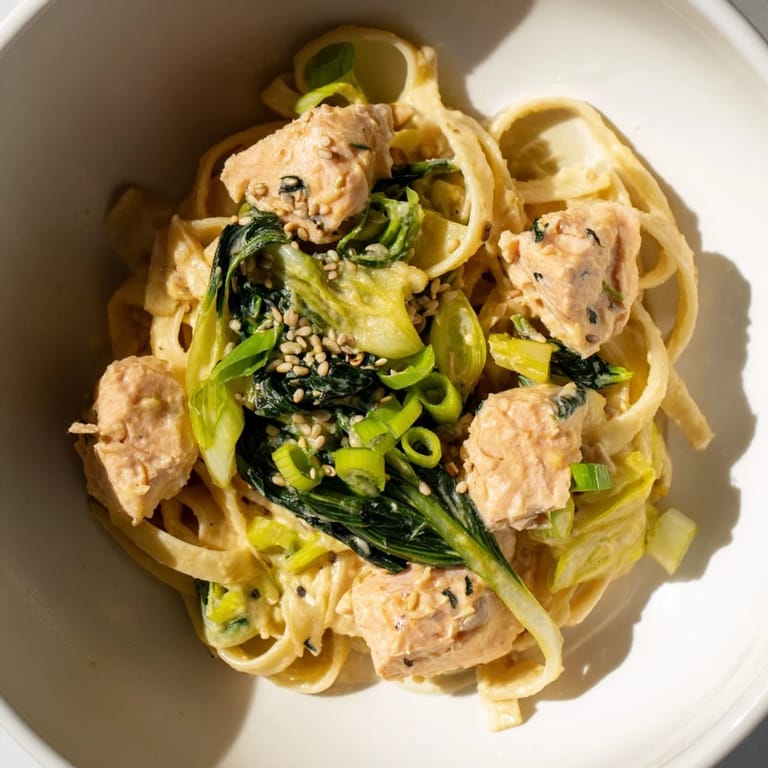
 Save
Save There's something about the first time you taste umami that changes how you cook forever. I was standing in a tiny Japanese market, overwhelmed by bottles and pastes, when an older woman reached past me for white miso. She mentioned something about butter, salmon, and how the combination would be magical. That throwaway comment stuck with me, and when I finally tried it, I understood—this wasn't fusion cooking, it was culinary revelation. The way miso sweetens and deepens butter, then wraps around fresh salmon like silk, felt like discovering a secret language in my own kitchen.
I made this for my sister on a random Tuesday when she complained about wanting something fancy but not complicated. She texted me the next day asking for the recipe, which I'd never seen her do before. Now it's the dish she requests when friends come over, and I love that something I invented in a quiet moment has become her go-to dinner party move.
Ingredients
- Salmon fillets (400g): Buy the thickest pieces you can find and cut them yourself into generous bite-sized chunks—they'll cook more evenly and stay tender than pre-cut versions.
- Linguine or spaghetti (300g): Linguine catches the sauce better than thin spaghetti, but use whatever you have; the pasta water is your secret weapon for fixing the sauce consistency.
- Baby bok choy (2 heads): The leaves wilt in seconds, so don't panic if it looks like a lot—it shrinks dramatically and adds a peppery bite that keeps the dish from feeling heavy.
- Garlic (2 cloves): Mince it fine so it disappears into the aromatics without overpowering the delicate miso.
- Scallions (2): Save these for the end; they brighten everything at the last moment.
- Unsalted butter (60g): This isn't a supporting player—it's the foundation that lets miso shine, so don't skimp or substitute.
- White miso paste (2 tbsp): White miso is milder and sweeter than red, which is exactly what you need here to avoid overpowering the salmon.
- Soy sauce (2 tbsp): Use regular or low-sodium based on preference, but taste before adding more—miso is already salty.
- Mirin (2 tbsp): This adds a gentle sweetness that balances the umami; don't skip it or substitute honey, which tastes completely different.
- Heavy cream (100ml): This transforms the sauce from thin to luxurious and softens the intensity of the miso.
- Sesame oil (1 tsp): A tiny amount is all you need to add that toasty note that makes people ask what's in this.
- Black pepper (½ tsp): Fresh grinding makes a difference—it adds a quiet bite that keeps the dish interesting.
Tired of Takeout? 🥡
Get 10 meals you can make faster than delivery arrives. Seriously.
One email. No spam. Unsubscribe anytime.
Instructions
- Get the pasta water ready:
- Fill a large pot with salted water—it should taste like the sea—and bring it to a rolling boil. Pasta water is liquid gold for this sauce, so measure out what you reserve and don't skip it.
- Cook the pasta:
- Add pasta and stir immediately so it doesn't clump. Set a timer for one minute less than the package says; you want it chewy and al dente, not soft.
- Build your aromatics:
- While pasta cooks, melt butter with sesame oil in a large skillet over medium heat. The butter will foam and smell almost nutty—that's when you add garlic and listen for the sizzle.
- Sear the salmon gently:
- Add salmon pieces and let them sit for 2 minutes before moving them; they'll develop a light golden surface without overcooking inside. Flip carefully, cook another minute, then transfer to a plate.
- Make the miso magic:
- In the same skillet, whisk miso paste with soy sauce and mirin until completely smooth—this step prevents lumps that will ruin the silky texture. Pour in cream slowly while stirring, then crack in pepper.
- Wilt the bok choy:
- Add chopped bok choy and stir constantly for 2 minutes; the leaves shrink and soften but stay slightly tender, which is the goal. Taste the sauce now and adjust seasoning if needed.
- Reunite everything:
- Gently return salmon to the pan, add drained pasta, and toss with a wooden spoon. If it looks too thick, splash in reserved pasta water a tablespoon at a time until the sauce coats every strand.
- Plate and finish:
- Divide onto warm bowls, scatter scallions and sesame seeds on top, and set lemon wedges on the side. Serve immediately while the pasta is still hot and the bok choy still has a whisper of crunch.
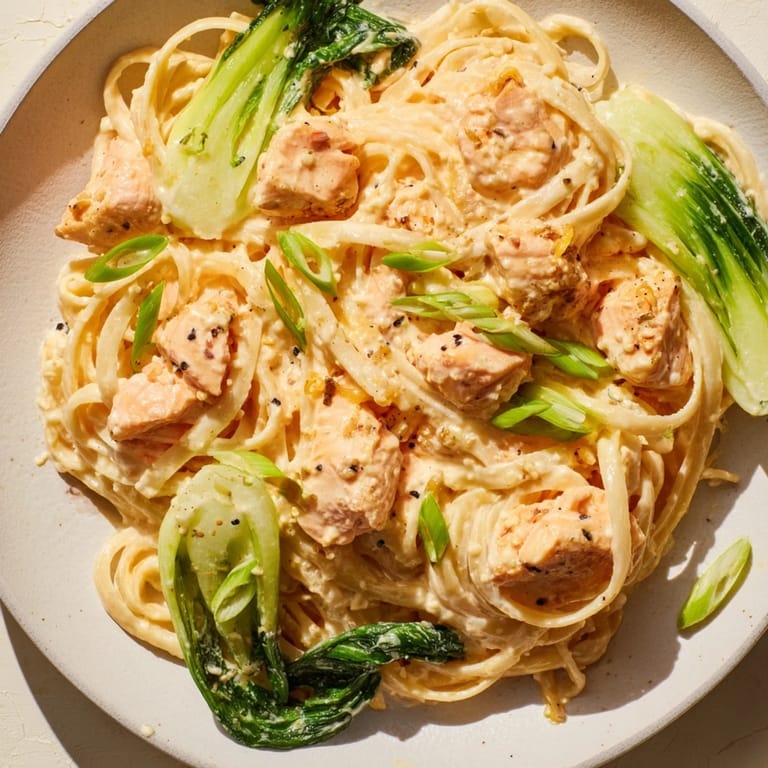 Save
Save The moment that made this dish permanent in my rotation happened when my dad, who usually watches what he eats, had his second bowl without asking. He said it tasted like fine dining but felt like home, and that's exactly what I chase when I cook now.
Why This Flavor Combination Works
Miso paste and butter shouldn't work together on paper—one is fermented funk, the other is pure fat—but they do something unexpected in the pan. The miso mellows as the butter emulsifies the cream, turning sharp and salty into something sweet and rounded. Salmon has enough richness to stand up to this intensity, and the bok choy acts as a palate cleanser with its slight bitterness. This is why the Japanese have been layering umami flavors for centuries; they understood something that took me years to taste.
Timing and Temperature Matter
Cook your salmon over medium heat, never high, because one moment of carelessness turns it from tender to flaking into nothing. The pasta water temperature is crucial too; if you add cold water to a hot sauce, the temperature drops and the sauce breaks. The best version of this dish comes together when everything is warm, the bok choy is just starting to wilt, and you haven't let the salmon sit in the sauce long enough to overcook. Have all your ingredients prepped and ready because once the pan gets hot, you're moving fast.
Variations and Swaps You Can Make
This recipe is flexible if you need it to be, though I've learned which changes matter and which ones don't. Spinach works fine instead of bok choy if that's what's in your crisper, though you lose that slight bitterness. Halibut or cod are good swaps if salmon isn't available, but use a white fish with some body so it doesn't disappear. You can skip the sesame oil if you don't have it, but don't skip the mirin—it's doing invisible work that honey or sugar can't replicate.
- For extra heat, add a pinch of chili flakes when you sauté the garlic.
- Use tamari instead of soy sauce and gluten-free pasta to make this safe for gluten-sensitive diners.
- A squeeze of fresh lemon juice at the end brightens everything if your sauce feels too rich.
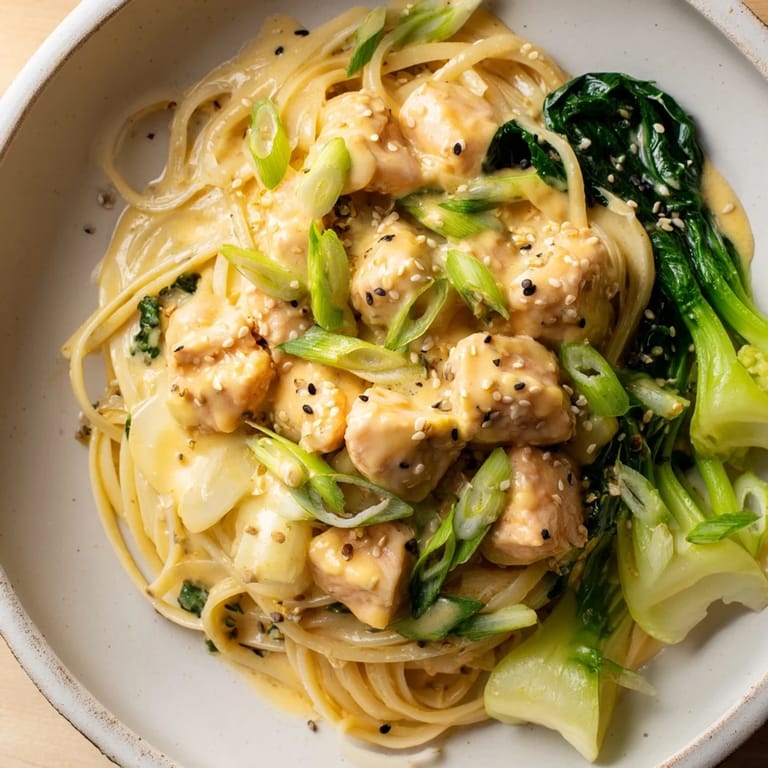 Save
Save This is the kind of dish that reminds you why cooking at home matters. It comes together in less than forty minutes but tastes like you've been planning it all week.
Recipe FAQs
- → What type of pasta works best with this dish?
Linguine or spaghetti are ideal as they hold the creamy miso butter sauce well without overpowering the salmon and vegetables.
- → Can I substitute bok choy with other greens?
Yes, spinach or Swiss chard can be used as alternatives; they wilt quickly and complement the creamy sauce while adding fresh greens.
- → How do I ensure the salmon stays tender and moist?
Cook the salmon gently over medium heat for 2–3 minutes per side until just cooked through to maintain tenderness and juiciness.
- → Is it possible to make this dish gluten-free?
Absolutely. Use gluten-free pasta and substitute soy sauce with tamari to keep the sauce gluten-free without compromising flavor.
- → What garnishes enhance the dish’s flavor and presentation?
Scallions, toasted sesame seeds, and lemon wedges add brightness, a nutty crunch, and a fresh citrus note that elevates the overall experience.
- → Can I add heat to the sauce?
Yes, a pinch of chili flakes added while sautéing garlic introduces a subtle spicy kick without overpowering the umami flavors.