 Save
Save My neighbor Klaus taught me to make schnitzel one afternoon when he caught me grilling chicken breasts that were hopelessly thick and rubbery. He gestured at my plate with gentle judgment and said, "Pound them thin, bread them, and watch what happens." That first golden cutlet that emerged from his cast-iron skillet changed everything—the crust sang when I bit into it, and the meat stayed impossibly tender. I've been chasing that moment ever since.
I made this for a dinner party once when I was nervous about impressing my partner's family, and watching everyone's faces light up when that crispy exterior crackled under their forks made me realize that sometimes the most honest food is the best food. Schnitzel isn't trying to be anything other than what it is: meat, crumbs, heat, and golden perfection.
Ingredients
- Pork chops or chicken breasts (4, about 150 g each): Pounding these thin is the secret—it helps them cook evenly and gives you more surface area for that crispy crust. Ask your butcher for boneless chops if possible.
- All-purpose flour (100 g): This creates a seal that helps the egg mixture stick; don't skip it even though it feels like an extra step.
- Eggs (2 large) and milk (2 tbsp): The milk thins the egg slightly so the coating is even and doesn't clump up—a small detail that makes a huge difference.
- Fine dry breadcrumbs (150 g): Store-bought panko works, but finely ground breadcrumbs give you a more delicate, authentic crust.
- Vegetable oil or clarified butter (120 ml): Clarified butter (Butterschmalz) tastes more authentic and handles the heat better than regular butter; vegetable oil is the practical choice for everyday cooking.
- Salt, black pepper, lemon wedges, and fresh parsley: Lemon is non-negotiable—the acid cuts through the richness and wakes up every bite.
Tired of Takeout? 🥡
Get 10 meals you can make faster than delivery arrives. Seriously.
One email. No spam. Unsubscribe anytime.
Instructions
- Pound the meat to even thickness:
- Lay each piece between two sheets of plastic wrap and use a meat mallet or rolling pin to tap it down to about 1/4 inch thick. This isn't aggressive—gentle, steady strokes work better than hard whacks.
- Season generously:
- Sprinkle salt and freshly ground pepper on both sides; don't be shy, because the breading will mute some of the seasoning.
- Set up your breading station:
- Arrange three shallow dishes in a line: flour in the first, beaten eggs mixed with milk in the second, breadcrumbs in the third. This assembly-line approach keeps your hands less messy and speeds things up.
- Bread each cutlet:
- Coat one piece in flour, tap off the excess, dip it into the egg mixture, then press it gently into the breadcrumbs. The key word is gently—you're not trying to cake it on, just create a thin, even layer.
- Heat your oil or butter:
- Use a large skillet over medium-high heat and let it get hot enough that a breadcrumb sizzles immediately when it hits the pan. This means your cutlets will fry, not steam.
- Fry until golden:
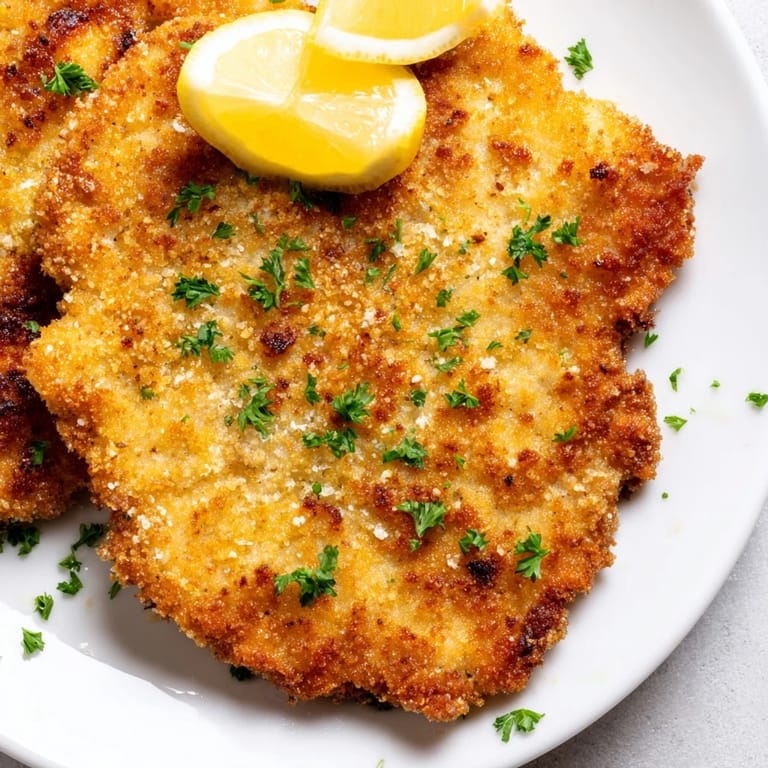
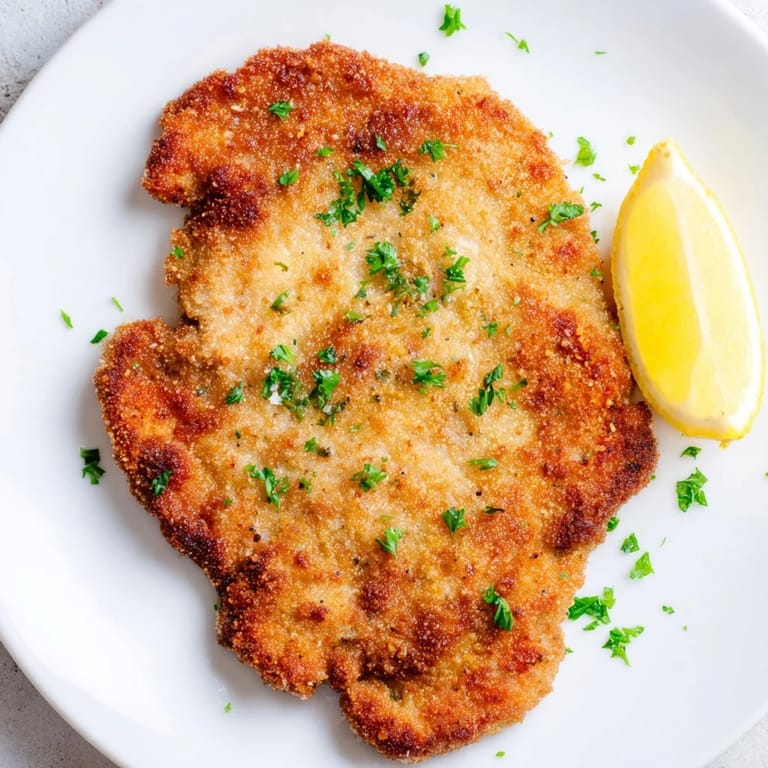
- Add the cutlets carefully (they might splatter) and fry 2 to 3 minutes per side until the crust is deep golden brown. Don't flip too early or too often; let them sit and develop that color.
- Drain and serve:
- Transfer to a plate lined with paper towels to let excess oil drip away, then serve immediately with lemon wedges and a sprinkle of parsley if you like.
 Save
Save There's a moment right after the cutlet hits the hot pan when the kitchen fills with that incredible sizzle and smell—it's the sound of water escaping the meat and the breadcrumbs browning all at once. That moment reminds me why cooking is worth doing, even on nights when everything else feels too complicated.
The Perfect Sides
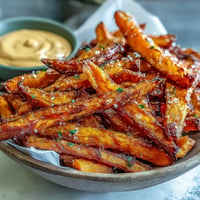
Schnitzel is simple enough that it wants equally uncomplicated companions. A cool potato salad with vinegar and onions provides contrast, or you could serve crispy fries with a squeeze of lemon and a pinch of salt. Some people add a cucumber salad dressed simply with vinegar, oil, and dill—the cucumber's brightness cuts through the richness of the fried meat and feels naturally balanced.
How to Know When It's Done
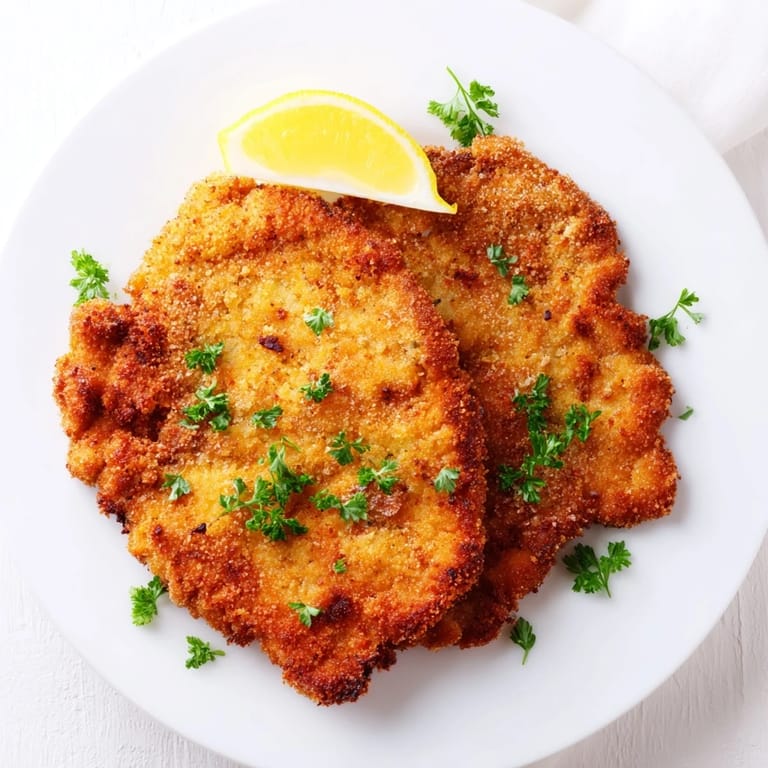
The schnitzel should be golden brown on both sides, and when you tap it with your spatula, the crust should sound crispy and hollow. If you're unsure about doneness, cut into the thickest part of the meat—it should be pale and cooked through with no pink remaining. Once you've made this a few times, your eyes and ears will tell you when it's perfect.
Variations and Swaps
The traditional Austrian version uses veal (Wiener Schnitzel) and is pounded even thinner, creating an almost translucent cutlet. German schnitzel usually uses pork and is slightly thicker. Chicken is leaner and cooks faster, so watch it carefully after the first minute. You can also experiment with the breading: some cooks add a pinch of paprika or mustard powder to the breadcrumbs for extra flavor.
- Try veal for an authentic Wiener Schnitzel experience, though it tends to be pricier.
- Swap in turkey breast if you want something even leaner than chicken.
- For extra crispiness, let the breaded cutlets sit in the refrigerator for 15 minutes before frying.
 Save
Save This dish doesn't need improvisation or finesse—it just needs heat, attention, and good ingredients. Make it the way I'm describing and it will turn out beautifully every time.
Recipe FAQs
- → What type of meat is best for schnitzel?
Thin slices of pork or chicken are ideal, pounded to about 1/4 inch to ensure tenderness and quick cooking.
- → How do I get a crispy coating?
Use fine dry breadcrumbs and avoid pressing them too firmly on the meat to maintain a light, crunchy texture.
- → Which fat is recommended for frying?
Vegetable oil or clarified butter (Butterschmalz) works well to achieve a golden crust without burning.
- → Should I season the meat before breading?
Yes, seasoning both sides with salt and freshly ground pepper enhances flavor throughout.
- → What sides pair well with this dish?
Classic pairings include potato salad, cucumber salad, or fries, complemented by a squeeze of fresh lemon.
- → Can veal be used instead of pork or chicken?
Yes, veal is traditional for Wiener Schnitzel, providing a delicate and tender variant.