 Save
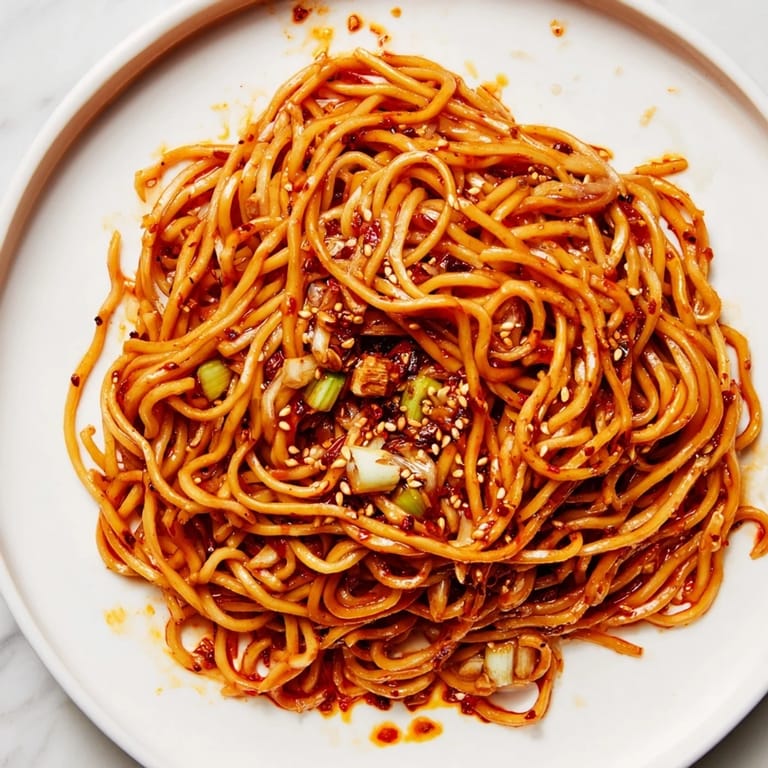
Save My kitchen was a cloud of sesame smoke the first time I made these noodles, and honestly, I'd been chasing that exact smell ever since eating them at a tiny hole-in-the-wall place in a city I can't even remember now. The owner had shuffled out with a bowl that looked almost offensively simple—just noodles glistening with red oil—but one bite and I understood why people lined up for it. It took me three tries to get the garlic infusion right, and two burnt batches before I stopped overthinking the heat, but now it's become my go-to when I want something that feels both indulgent and ready in under twenty minutes.
I remember making this for a friend who claimed they didn't like spicy food, and watching their face transform after the first twirl of chopsticks was better than any compliment. They came back three days later asking how I'd done it, and we ended up in my kitchen at eleven at night, both of us with our hair tied back, passing a bowl back and forth while the pot steamed in front of us.
Ingredients
- 200 g wheat noodles: Use something with body—Chinese egg noodles or chewy ramen work beautifully, though linguine works in a pinch; don't use the thin delicate kind that'll turn to mush.
- 4 cloves garlic, finely minced: This is where you don't skimp; the garlic is your star, and mincing it fine lets it bloom when the hot oil hits.
- 2 scallions, thinly sliced: Keep the white and green parts separate—the white goes into the oil infusion for cooked depth, the green gets sprinkled fresh for a bright pop.
- 1 tablespoon toasted sesame seeds: Buy them already toasted if you can; they add nuttiness that feels almost luxurious.
- 2½ tablespoons chili flakes: Sichuan or Korean flakes bring different vibes—Sichuan has that tingly numbing thing, Korean is cleaner heat; start with less and taste as you go.
- ½ teaspoon Sichuan peppercorns: Optional but honestly worth tracking down; they create this almost electric sensation that makes people pause mid-bite asking what that is.
- ¼ teaspoon ground white pepper: Don't skip this small amount; it adds a sharp note that keeps things interesting.
- ½ teaspoon sugar and ½ teaspoon salt: These balance the heat and make the spice sing rather than just burn.
- 3 tablespoons neutral oil: This is your heat carrier, so it matters—the oil needs to get hot enough to fully awaken the chili flakes but not so hot it burns them.
- 1½ tablespoons light soy sauce: This is your salt and umami anchor; light soy is less intense than dark, which keeps the dish balanced.
- 1 tablespoon Chinese black vinegar: Chinkiang vinegar has a depth that regular vinegar can't touch; it's woody and slightly sweet, and it's the secret nobody talks about.
- 1 teaspoon dark soy sauce: Just for color and deepness; adds that glossy finish that makes people think you've done something complicated.
- ½ teaspoon toasted sesame oil: A touch goes a long way; this is the whisper at the end that ties everything together.
Tired of Takeout? 🥡
Get 10 meals you can make faster than delivery arrives. Seriously.
One email. No spam. Unsubscribe anytime.
Instructions
- Boil the noodles with intention:
- Get a pot of salted water going and cook the noodles just until they're tender but still have that slight resistance when you bite them. The moment they're done, drain them in a fine mesh strainer and set them aside—and here's the thing nobody mentions: save about 2 tablespoons of that starchy cooking water because it's basically liquid gold for making everything silky.
- Build your chili oil base:
- In a heatproof bowl, combine the minced garlic, white parts of the scallions, chili flakes, Sichuan peppercorns if you're using them, white pepper, sugar, salt, and sesame seeds. This is your moment to inhale and appreciate the raw smell of everything before it transforms—you'll want to remember this quiet moment before the sizzle.
- Heat your oil with respect:
- Pour the neutral oil into a small saucepan and set it over medium-high heat. You're looking for that moment when the surface shimmers and moves but there's no smoking—dip a wooden spoon in and it should be gently insistent, not violently hot.
- Create the magic with the infusion:
- This is the step that looks dramatic but is actually straightforward: carefully pour the hot oil directly over your chili-garlic mixture and watch it immediately sizzle and bloom with fragrance. Stir everything together gently, letting the residual heat meld all those flavors.
- Prepare your sauce:
- In a separate large bowl, whisk together the light soy sauce, black vinegar, dark soy sauce if using it, and the toasted sesame oil. Add that reserved noodle cooking water—this mixture is your dressing, and it needs to be ready to go.
- Bring it all together:
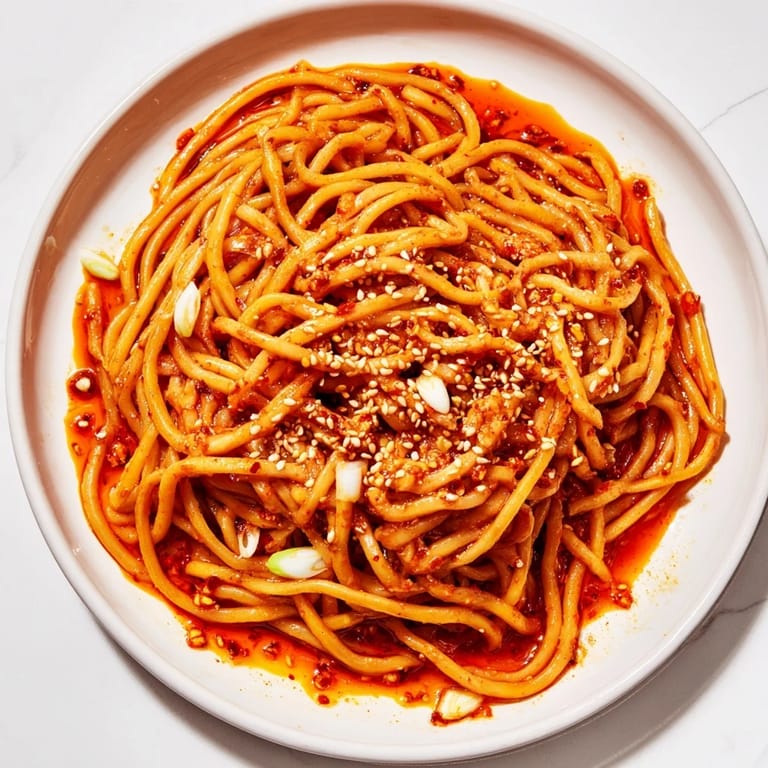
- Add your drained noodles to the sauce bowl, then pour the entire infused chili oil over top. Using chopsticks or tongs, toss everything with genuine enthusiasm until every strand is glossy and evenly coated with that gorgeous red oil.
- Finish and serve:
- Scatter the green parts of the scallions across the top along with extra sesame seeds if you're feeling generous. Serve immediately while everything is still warm and the flavors are at their peak, mixing once more right before you eat because sometimes things settle and you want maximum drama on each bite.
 Save
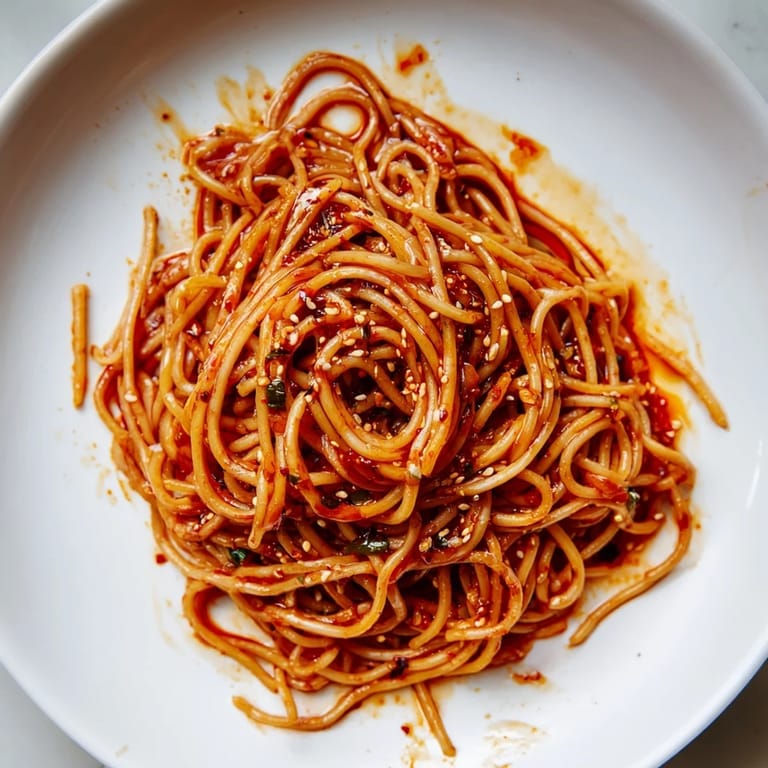
Save There's something about the smell of garlic hitting hot oil that makes you feel instantly like you've got your life together, even if you're eating standing up at the counter in yesterday's sweats. This dish has a way of doing that—making something feel fancy and intentional when it's really just smart shortcuts and knowing where to splurge.
The Heat: Finding Your Comfort Zone
Spice is personal, and I've learned this the hard way by making these noodles for people with wildly different tolerances. The truth is that starting with 2 tablespoons of chili flakes is already fairly assertive, but you can absolutely dial it back to 1½ tablespoons if you're new to this kind of heat, or bump it up to 3 if you want your mouth genuinely on fire. The beauty of making chili oil is that you taste as you go, and you can always add more heat but you can't take it back, so be honest with yourself about what you actually enjoy.
Variations That Actually Work
I've made these noodles dozens of different ways depending on what's in my fridge or what mood I'm in, and some combinations have genuinely surprised me. A handful of sautéed spinach or bok choy adds body without being heavy, and if you want protein, some quickly pan-seared tofu or shredded rotisserie chicken transforms this from a side dish into something that feels complete. Even just a soft-boiled egg cracked on top adds richness that makes it feel more substantial, and honestly, it pairs with things you wouldn't necessarily expect—leftover roasted mushrooms, quick-pickled cucumber, even crushed peanuts if you want something nuttier and more textured.
Pairing and Serving Suggestions
These noodles are bold enough that they don't need much accompaniment, but if you're serving them as part of a meal, something cool and crisp balances the heat beautifully. A chilled beer with some body to it, or jasmine tea if you want to stay lighter, both work because they cut through the richness and let your palate reset between bites.
- Serve immediately in a warm bowl, because temperature matters and these noodles are best when they're still giving off a little steam.
- Have extra chili oil on the side if you're cooking for someone brave, because people often want to adjust the heat level to their own liking right at the table.
- Consider making a double batch of just the chili oil and keeping it in a small jar—it's incredible on vegetables, eggs, or even pizza if you're feeling experimental.
 Save
Save This is the kind of dish that makes you understand why people become obsessed with noodles, why they'll travel across town for the right bowl. Once you make it once, you'll have it memorized, and you'll find yourself making it on nights when you want something that tastes like you tried but only invested twenty minutes.
Recipe FAQs
- → What type of noodles work best for this dish?
Wheat noodles such as Chinese wheat noodles or linguine are ideal for their chewy texture and ability to absorb the flavorful oil.
- → Can the heat level be adjusted?
Yes, adjust chili flakes according to your preferred spice level to make it milder or more fiery.
- → What oil is recommended for hot oil infusion?
Neutral oils like canola, sunflower, or grapeseed oil work best as they allow the aromatics to shine without overpowering flavors.
- → Is Sichuan peppercorns use mandatory?
No, Sichuan peppercorns are optional but add a distinctive numbing heat that complements the chilies well.
- → How can I add protein to this dish?
Incorporate sautéed vegetables, tofu, or shredded chicken to enhance the meal’s nutrition and texture.